Why eSIM APIs Are Moving From Reseller Tool to Product Infrastructure
For years, eSIM APIs were treated like a shortcut. A travel app, OTA, airline, fintech, or loyalty platform could plug into a provider, sell a few data plans, take a margin, and call it a connectivity add-on. eSIM API infrastructure
Useful? Yes. Strategic? Not always.
That is changing. As eSIM becomes more familiar to travelers and more normal inside smartphones, it no longer looks like an extra product sitting next to insurance or airport transfers. It is starting to look like product infrastructure: the invisible layer that lets another company build a better experience without becoming a mobile operator.
A reseller sells connectivity. A product infrastructure layer makes connectivity part of the customer journey.
From add-on to embedded moment
The first wave of travel eSIM distribution was simple: put a destination plan in front of someone before a trip. That worked because roaming was expensive, airport SIM kiosks were annoying, and travelers were already searching for cheaper data.
But the strongest eSIM moments are product moments. An airline app knows when someone has checked in for Istanbul. A hotel app knows when a guest lands in Tokyo tomorrow. A banking app can see when a customer starts spending abroad. A travel wallet knows when mobile data is the difference between “I can move” and “I am stuck.”
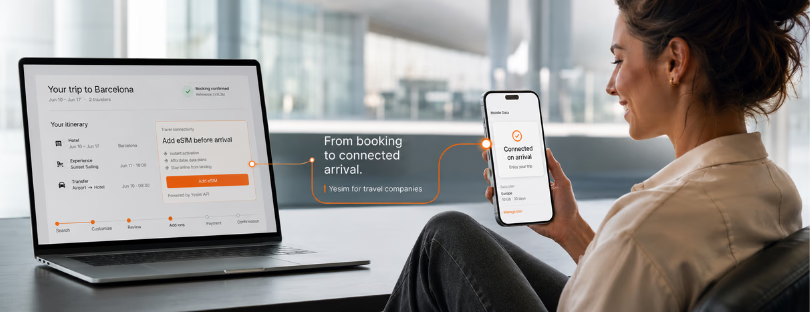
That is why APIs matter more now. They allow connectivity to appear inside the service the traveler is already using. The eSIM is no longer a separate shopping trip. It becomes part of the flow.
1GLOBAL positions its Connect API for travel and airline environments. Yesim promotes its Partner API for apps, websites, e-commerce, airlines, hotels, and other platforms. Airalo offers API partnerships for brands that want eSIMs inside their own channels. Others, including eSIM Go, Gigs, Monty Mobile, and Telna, are pushing the same idea: programmable telecom for non-telcos.

Why the timing works
Juniper Research estimated global travel eSIM revenue at $1.8 billion in 2025, with further growth expected through 2030. GSMA Intelligence has framed eSIM deployment as moving from forecast to fact, while the Trusted Connectivity Alliance reported continued growth in eSIM shipments and consumer adoption in 2025.
A few years ago, an embedded eSIM offer needed education. Today, many travelers have heard of eSIMs. Some have used one. Device compatibility is still not universal, but it is no longer exotic.
READ MORE: How the eSIM Stack Works: Providers, APIs, Infrastructure Explained
So platforms can ask a better question. Not “Can we resell eSIMs?” but “Where does connectivity reduce friction in our own product?”
For airlines, that may be pre-arrival data. For hotels, guest messaging and local navigation. For fintechs, safer card use abroad. For enterprises, employee connectivity without shipping plastic SIM cards around the world.
The API is not the strategy
Many companies still talk about APIs as if the integration itself is the innovation.
It is not.
An API with weak coverage, confusing pricing, poor support, messy activation flows, or no real recovery is just a prettier reseller feed. They care whether the plan works, whether the QR code installs cleanly, and whether someone can fix the issue before their taxi leaves the airport.
The winners will understand the lifecycle: compatibility checks, installation, activation timing, usage visibility, top-up, refund logic, support, and device transfers.

Not for everyone
Not every travel brand should rush into eSIM APIs. A small publisher with light traffic may be better off with affiliate links. A boutique hotel group may not have the support bandwidth to own the experience. A company with no meaningful international audience probably has bigger priorities.
APIs make sense when connectivity strengthens the core product. White-label storefronts, affiliate models, and marketplace partnerships still have a place. They are easier to test, easier to launch, and less risky when a brand is not ready for telecom-grade complaints.
READ MORE: API is the new SIM card
The more embedded the experience becomes, the more responsibility moves toward the platform. A customer will not blame the anonymous supplier behind the API. They will blame the app where they bought it.
The infrastructure race
Compared with classic reselling, infrastructure-led eSIM is a more serious game. Providers need to behave less like plan aggregators and more like technology partners. Documentation, SLAs, fraud controls, and network quality matter.
That is why the category is widening. Travel eSIM specialists like Airalo and Yesim bring consumer familiarity and broad destination coverage. Infrastructure-focused players like 1GLOBAL, Gigs, eSIM Go, Telna, and Monty Mobile lean harder into enablement, APIs, and embedded telecom. Operators and MVNOs are entering too, because they do not want programmable travel connectivity to be owned entirely by digital-first challengers.
The real shift in eSIM API infrastructure
The important story is not that more companies can sell eSIMs. That part is already obvious.
The bigger story is that connectivity is becoming something digital platforms can design around. Once an airline, bank, hotel, or enterprise app can issue mobile data at the right moment, connectivity stops behaving like a telecom product and starts behaving like product infrastructure.
That raises the bar. Providers can no longer win only with country counts and cheap gigabytes. Platforms cannot treat eSIM as a side widget and expect loyalty.
The next phase of eSIM APIs will be judged less by how easily companies can resell data and more by how naturally connectivity disappears into the journey. When it works, nobody thinks about the API. They just land, connect, and move.