Gigs and the Rise of Embedded Connectivity Platforms
For years, mobile connectivity has been treated as something separate from the products people already use. You buy a phone plan from a carrier. You buy a travel eSIM from a travel eSIM app. You manage roaming somewhere else. It is all fragmented, a little annoying, and very telecom.
Gigs is trying to move that whole experience into the background.
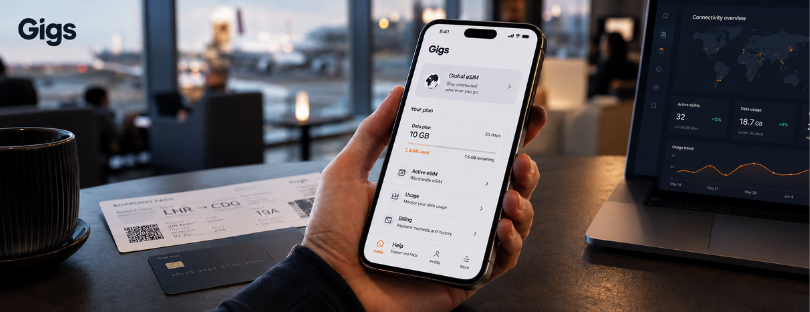
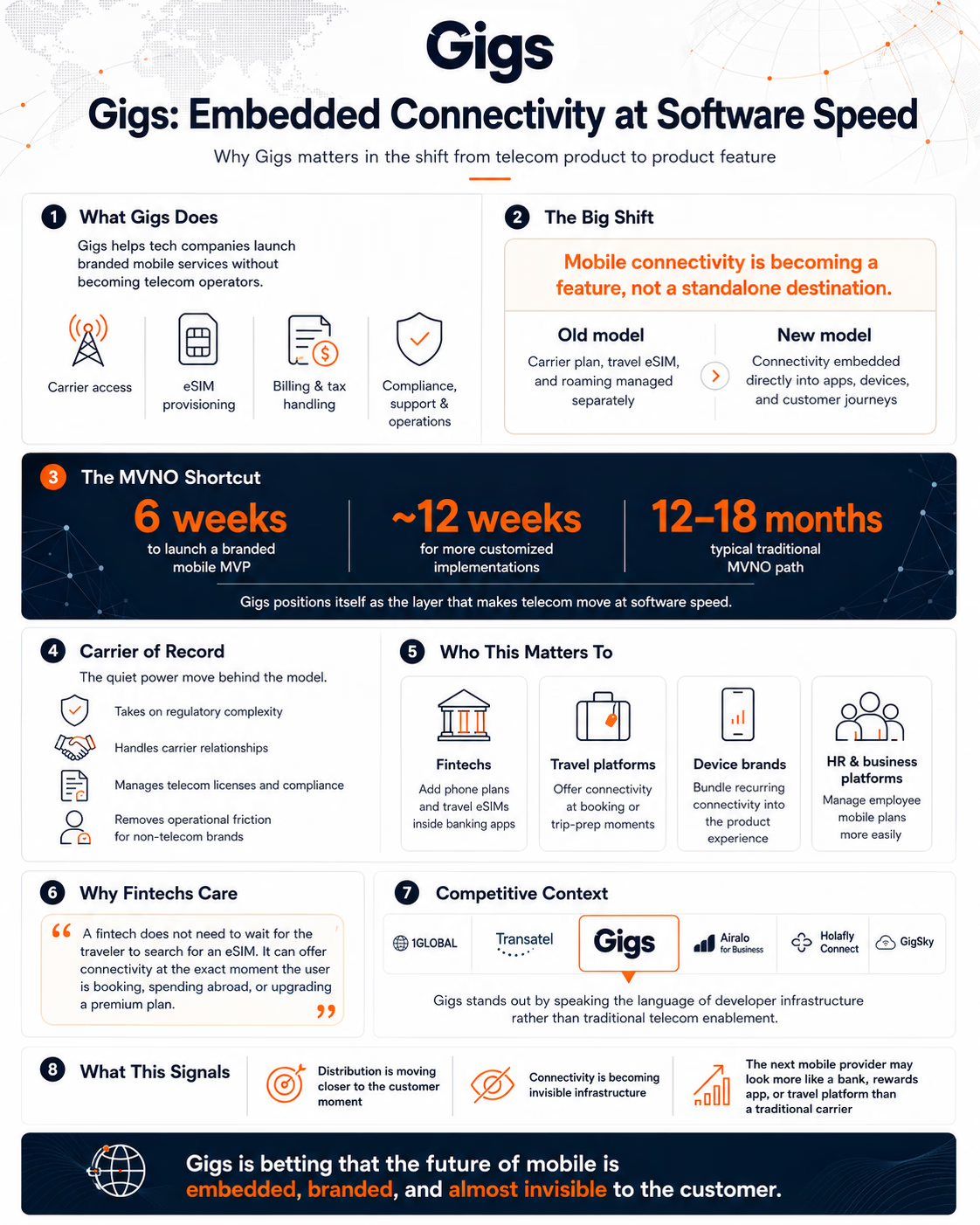
The company describes itself as an operating system for embedded telecom. In plain English, it lets tech companies launch their own branded mobile services without becoming mobile operators themselves. A fintech could add phone plans inside its app. A travel platform could sell global eSIMs at the booking moment. A device company could bundle connectivity directly into the product experience. Gigs handles the telecom layer underneath: carrier access, eSIM provisioning, billing, compliance, support, and operations through one platform.
That sounds technical, but the business idea is easy to understand: mobile connectivity is becoming a feature, not a standalone destination.
The new MVNO shortcut
The most interesting thing about Gigs is not that it supports eSIMs. Plenty of companies do that.
The interesting part is speed.
Gigs recently said tech companies can launch fully branded mobile services inside their apps in as little as six weeks, while more customized implementations typically take around 12 weeks. That is a very different rhythm from the traditional MVNO path, where companies often face carrier negotiations, telecom licensing, billing systems, tax handling, support workflows, and operational complexity before the first subscriber ever activates.
READ MORE: ShopBack Adds Travel eSIMs Through Gigs Deal
This matters because most modern brands do not think in telecom timelines. Fintechs, subscription apps, travel platforms, marketplaces, and device brands work in product sprints. They test, ship, measure, and iterate. Waiting 12 to 18 months to launch a mobile product is not just slow. It is commercially awkward.
Gigs is positioning itself as the layer that makes telecom move at software speed.
Carrier of Record is the quiet power move
One phrase on the Gigs site deserves more attention: Carrier of Record.
It is not the sexiest phrase in the world, but it is central to the model. Gigs says it can take on the regulatory and operational role that would normally make mobile launches painful for non-telecom brands. That includes areas such as telecom licenses, compliance obligations, carrier relationships, tax handling, billing, and activation infrastructure.
For a fintech or travel app, this is the difference between “we should explore mobile connectivity someday” and “we can test this as a product line this quarter.”
And that is where Gigs becomes more than an eSIM supplier. It is not only providing data access. It is providing permission, infrastructure, and operational cover for brands that want the economics of mobile without the headache of becoming telecom companies.
That is a much bigger market than travel eSIM alone.
 Why fintechs care
 Why fintechs care
Fintech is probably the cleanest use case.
Banks and neobanks already own a trusted app relationship. People open banking apps often. They already manage money, cards, subscriptions, travel insurance, currency exchange, and rewards there. Adding connectivity is not a strange stretch, especially for customers who travel or live across borders.
Gigs’ fintech messaging is built around this exact idea: embed branded phone plans and global eSIMs natively inside the app to grow revenue, increase loyalty, and bundle mobile with premium plans, travel benefits, cashback, or points.
READ MORE: Brubank Launches eSIM with Gigs Infrastructure
That is a clever distribution play. Most eSIM providers fight for attention through search, ads, affiliate rankings, or airport anxiety. A fintech does not need to wait for the traveler to Google “best eSIM for Japan.” It can offer connectivity at the moment the user is booking, spending abroad, upgrading a card tier, or preparing for a trip.
That is where mobile stops being a utility purchase and becomes part of a customer relationship.
Travel is only the entry point
Gigs also has an obvious travel angle. Its own material frames travel eSIM as one application of embedded connectivity, but not the whole story. Full embedded connectivity can include local phone plans, domestic voice and text, subscription management, and ongoing mobile services, not just temporary data for a trip.
That distinction matters.
Most travel eSIM brands still operate around a single purchase moment: destination, data package, QR code, activation. Useful, yes. But limited. Gigs is chasing a more persistent model where the customer relationship stays inside the partner’s product.
A travel rewards app could start with a travel eSIM. Later, it could offer annual connectivity benefits. A device company could bundle recurring data plans. An HR platform could manage employee phone plans. A fintech could move from roaming perks to full mobile subscriptions.
This is why embedded connectivity feels more strategic than another “global eSIM marketplace.” It gives brands a way to own the mobile experience without owning the network.
Your customers will buy connectivity. The question is: from you, or from someone else?
We help airlines, banks, and travel platforms turn that demand into a built-in product — not a missed opportunity.
The competitive landscape
Gigs is not alone in seeing this opportunity.
1GLOBAL has strong full-stack telecom capabilities and a serious presence in fintech and enterprise connectivity. Transatel, now part of NTT, has long operated in MVNO, IoT, and embedded connectivity models. Airalo for Business, Holafly Connect, GigSky, and other travel-first providers are also trying to move beyond one-off consumer purchases into business channels. Traditional MVNEs still matter too, especially for brands that want deeper telecom control or custom commercial arrangements.
But Gigs is different in its product language and target buyer. It speaks less like a traditional MVNE and more like developer infrastructure. The comparison people often make is Stripe for phone plans, and while that phrase is slightly overused, it works. Stripe made payments programmable. Gigs wants to make mobile plans programmable.
READ MORE: PicPay Launches Global eSIM for 60M Users Powered by Gigs
That is attractive to product teams. It is also attractive to investors: Gigs raised $73 million in Series B funding in late 2024 to expand its platform for companies launching mobile services.
The recent ShopBack partnership in Asia-Pacific also shows where this is going. Gigs announced an APAC expansion through ShopBack, enabling a travel eSIM experience embedded directly inside the rewards platform’s app. That is exactly the kind of distribution-led use case the market should watch.
Conclusion
Gigs is important because it points to a bigger shift in connectivity: the customer does not necessarily want “a telecom product.” They want mobile access to appear inside the app, device, wallet, booking flow, or membership they already trust.
That is uncomfortable for traditional telecom. It is also uncomfortable for travel eSIM brands that depend mainly on search demand and one-off purchases. If embedded connectivity becomes normal, the strongest distribution points may not be eSIM apps at all. They may be banks, airlines, rewards platforms, device makers, HR tools, and travel marketplaces.
Gigs is betting that the next mobile provider will not look like a mobile operator. It may look like your banking app, your cashback app, your laptop brand, or the platform you use to book a trip.
And honestly, that is the real story. eSIM made mobile activation digital. Companies like Gigs are trying to make mobile ownership invisible.