PicPay Launches Global eSIM for 60M Users Powered by Gigs
PicPay has launched a Global eSIM powered by Gigs, bringing borderless connectivity directly into one of Brazil’s largest digital banking apps.
At first glance, it may look like just another travel connectivity feature. But look closer, and something more interesting is happening: financial platforms are quietly becoming telecom distributors.
PicPay’s new offer gives Epic members access to a 10GB Global eSIM covering more than 150 countries, integrated directly into the PicPay ecosystem. Instead of buying a travel SIM at the airport or downloading a separate eSIM app, connectivity becomes another service inside the financial platform people already use every day.
For a company with over 60 million users, this is not a small experiment. It is a signal of where digital platforms are heading.
Connectivity Inside the Wallet
PicPay has grown into one of Brazil’s most influential fintech ecosystems. Originally launched as a peer-to-peer payment app, it now offers credit, investments, insurance, and international accounts.
The addition of mobile connectivity fits naturally into that strategy.
As Pedro Romero, Executive Director of Wallet and Banking at PicPay, said:
“By offering international connectivity within the Global Account for Epic clients, we expand the product’s value proposition and deliver an even more complete and premium experience for those seeking convenience, freedom, and technology in one place.”
For Epic subscribers, the eSIM becomes part of the broader premium package. Instead of treating connectivity as a separate purchase, PicPay positions it as a lifestyle feature bundled into financial services.
This approach reflects a larger shift in platform design. Banking apps are no longer just places to store money. They are becoming digital operating systems for everyday life.
Why Roaming Still Hurts Travellers
Despite years of competition and regulatory pressure, roaming remains one of the most unpredictable expenses for international travellers.
Traditional operators still charge high fees outside regional agreements like the EU’s “Roam Like at Home” policy. In markets such as Brazil, roaming costs can escalate quickly. Industry estimates suggest international data charges can reach R$300 (€50+) per trip for moderate usage.
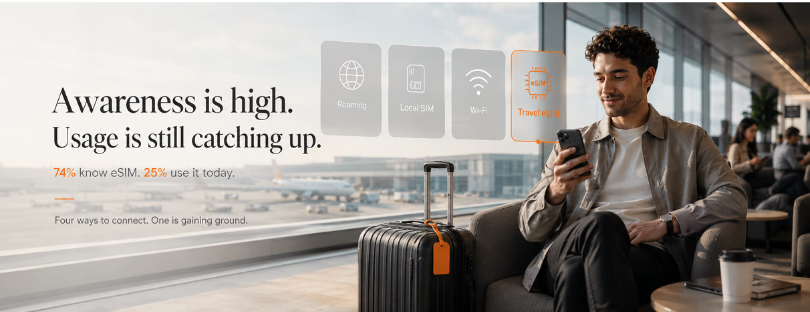
That is why travel eSIM providers have seen explosive growth in recent years.
Research from Juniper Research estimates the global eSIM market could reach over 3.4 billion installed profiles by 2027, driven largely by travel connectivity. Meanwhile, GSMA data suggests that more than half of new smartphones now support eSIM technology.
This technological shift is making it easier for non-telecom companies to enter the connectivity space.
And that is exactly where companies like Gigs come in.

The Infrastructure Behind the Scenes
The PicPay Global eSIM is powered by Gigs, a telecom-as-a-service platform designed to help digital companies embed mobile connectivity directly into their products.
Instead of building a telecom operation from scratch, companies can integrate connectivity through APIs, much like they would integrate payments or identity verification.
The result is a new category sometimes described as “embedded telecom.”
For fintech platforms, this model has clear advantages:
- It increases engagement within the app
- It strengthens premium subscriptions
- It reduces dependence on third-party services
And perhaps most importantly, it allows companies to offer international connectivity without becoming a traditional mobile operator.
This infrastructure approach is becoming increasingly common across digital ecosystems.
The Fintech–Telecom Convergence
PicPay is far from the first platform exploring this intersection.
Several fintech and super-app ecosystems have already moved in a similar direction:
Revolut
The European fintech launched its own global travel eSIM in 2024, offering data packages inside the Revolut app to support its large base of international users.
Airalo and Neobanks
Some neobanks have begun integrating partnerships with travel eSIM providers such as Airalo, offering connectivity perks within premium subscription tiers.
Asian Super Apps
In Asia, companies like Grab and Alipay have experimented with travel connectivity services as part of their broader ecosystem offerings.
The pattern is becoming clear: digital platforms with millions of users represent one of the most powerful distribution channels for connectivity services.
Instead of acquiring customers through expensive advertising campaigns, telecom services can simply appear inside apps people already trust.
Distribution Is the Real Prize
In the travel eSIM market, customer acquisition cost is one of the biggest challenges.
Providers often spend heavily on:
- Google and Apple search advertising
- affiliate marketing networks
- influencer promotions
- app store optimization
Industry insiders frequently estimate that acquiring a single travel eSIM customer can cost €20 to €80, while the average data plan might sell for only €10 to €25.
That economics creates a serious profitability challenge for standalone travel eSIM brands.
Embedded connectivity inside large platforms changes the equation entirely.
When a fintech app with tens of millions of users introduces eSIM functionality, distribution is already solved.
The connectivity product becomes a feature rather than a separate product that must fight for visibility in a crowded marketplace.
A Glimpse of the Next Connectivity Layer
PicPay’s Global eSIM may look like a simple travel perk today. But it also hints at a deeper transformation.
Connectivity is slowly becoming an embedded utility, delivered through the digital platforms people already rely on.
Financial apps, travel platforms, super apps, and even device manufacturers are beginning to integrate mobile connectivity directly into their ecosystems.
For telecom infrastructure providers like Gigs, this trend represents a massive opportunity.
For traditional mobile operators, it represents a new form of competition.
And for travellers, it may finally mean something simpler: connectivity that works the moment you land.
Conclusion: Connectivity Is Becoming a Platform Feature
PicPay’s Global eSIM launch illustrates a growing reality in the digital economy. Connectivity is no longer confined to telecom companies.
Financial platforms, super apps, and digital ecosystems are beginning to treat mobile data as just another service layer alongside payments, identity, and financial tools.
Companies like Revolut, Grab, and now PicPay are showing how connectivity can be embedded into everyday digital experiences rather than sold as a standalone telecom product.
If this trend continues, the biggest winners in the travel connectivity market may not be traditional operators or even travel eSIM startups.
They may be the platforms that already control distribution.
And in a world where apps can reach tens of millions of users instantly, distribution is often the most powerful network of all.