Vodafone DataOnly eSIM Spain: 5G Plans for Travelers
Here’s the thing about travel eSIMs: for years, operators watched from the sidelines while third-party providers quietly took over the tourist connectivity experience.
Now, we’re seeing a shift. And Vodafone Spain’s latest move is a pretty clear signal of where things are heading.
Vodafone Spain launches DataOnly eSIM for travelers
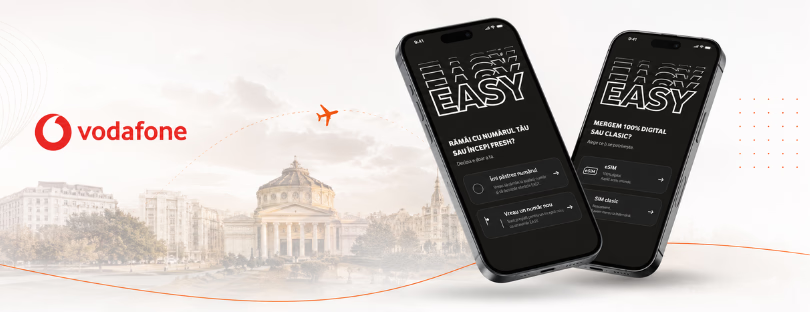
Vodafone Spain has introduced DataOnly, a prepaid eSIM built specifically for international visitors arriving in Spain. It’s a simple proposition on the surface: fast 5G data, no phone number, no contract, and no need to step into a store.
But that simplicity is exactly the point.
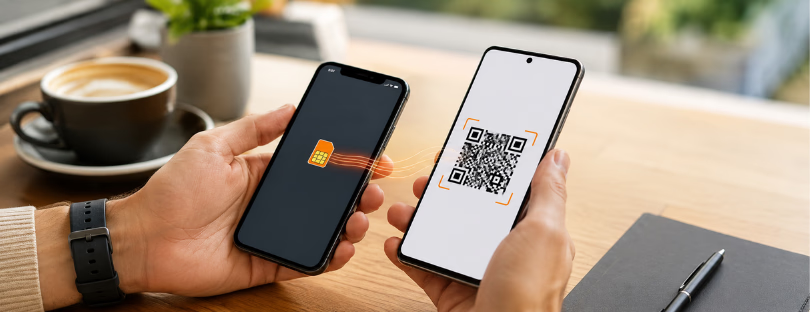
The product is fully digital. You go online, choose a plan, pay, and receive a QR code almost instantly. Scan it, and you’re connected. Vodafone says the entire process takes about a minute, which is very much in line with what travelers have come to expect from digital-first eSIM providers.
And importantly, activation doesn’t have to happen immediately. Users get up to 60 days to activate the eSIM after purchase, which adds a layer of flexibility that frequent travelers will appreciate.
Designed for short stays, but with a clear pricing strategy
The DataOnly plans are structured around typical travel durations:
25 GB
€10
35 GB
€15
75 GB
€23
50 GB
€30
90 GB
€39
There’s no daily cap, which matters more than it sounds. Many “unlimited” or high-data plans in the market still quietly throttle speeds after certain thresholds. Vodafone is clearly trying to position this as a straightforward, high-speed offer without those hidden limitations.
The inclusion of 5G access across Vodafone’s network is another key point. Spain has relatively strong 5G coverage, and Vodafone has been investing heavily in it. For travelers relying on hotspotting, video calls, or cloud-based work, that consistency can make a real difference.
No phone number, no friction — but also no voice layer
One deliberate choice here is the absence of a phone number. DataOnly is exactly that: data.
From a product perspective, this removes complexity. No identity verification tied to voice services, no inbound calls, no SMS. Just connectivity.
But it also reflects a broader shift in how people use mobile services while traveling. Messaging apps like WhatsApp or Telegram have effectively replaced traditional voice for most travelers. Vodafone is leaning into that behavior rather than trying to replicate a full domestic telecom experience.
 Vodafone is stepping into a space dominated by eSIM-native players
 Vodafone is stepping into a space dominated by eSIM-native players
Let’s be clear: Vodafone is not entering an empty market.
Players like Airalo, Holafly, and Ubigi have built their businesses around exactly this use case. Fast onboarding, clear pricing, and global coverage.
What’s interesting is how Vodafone’s approach differs.
Instead of offering multi-country global plans or positioning itself as a marketplace, Vodafone is doing something more focused: a high-quality, single-country experience backed by its own network.
That has pros and cons.
On one hand, direct network access often means better performance and fewer intermediaries. On the other hand, it lacks the flexibility of switching between countries without buying a new plan, which is where aggregators still have the edge.
Europe coverage — but read the fine print
Vodafone mentions that the plan includes coverage across Europe, depending on the terms. This is important but also slightly vague.
EU roaming regulations have standardized a lot of cross-border usage, but prepaid travel products sometimes come with fair usage limits or restrictions. Travelers moving beyond Spain should check the specifics carefully.
Still, the inclusion of broader European coverage suggests Vodafone is trying to bridge the gap between local SIMs and regional travel solutions.

The bigger picture: operators are waking up
This launch is less about one product and more about what it represents.
According to industry data from organizations like GSMA, eSIM adoption is accelerating globally, with travel use cases among the fastest-growing segments. At the same time, traditional roaming revenues have been under pressure, especially within Europe.
Operators are realizing something important: if they don’t build for travelers, someone else will capture that value.
Vodafone Spain’s DataOnly is a direct response to that reality. It’s clean, competitive, and aligned with how people actually use connectivity today.
Conclusion
What Vodafone is doing here is smart, but also slightly overdue.
For years, travel eSIM providers have been defining the user experience: instant activation, transparent pricing, no contracts. Operators are now catching up, packaging their network advantages into similar digital-first products.
The difference will come down to execution.
If Vodafone can maintain pricing discipline, avoid hidden limitations, and keep the onboarding frictionless, it has a real chance to compete not just locally, but as a benchmark for other operators. We’re already seeing similar moves from groups like Orange and Deutsche Telekom, though often with less clarity or more complex structures.
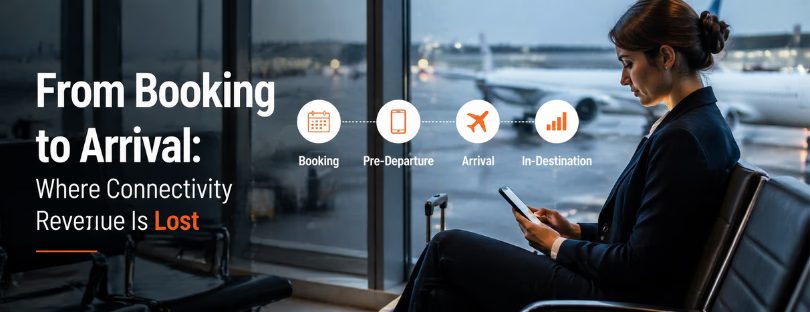
The broader trend is clear. Connectivity is no longer something travelers figure out after they land. It’s part of the travel planning process itself.
And in that shift, the winners won’t just be the ones with the best network. They’ll be the ones who make it easiest to connect.