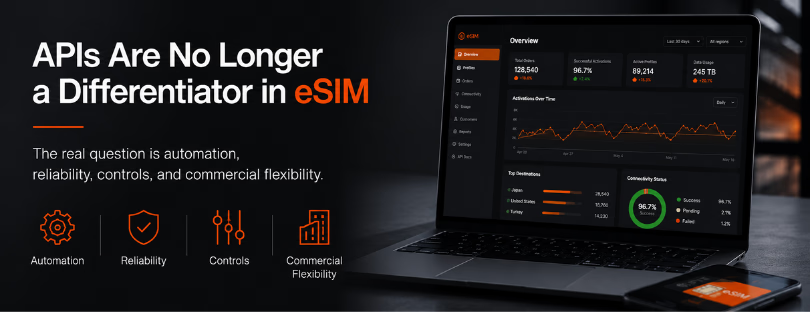
APIs Are No Longer a Differentiator in eSIM
For a while, “we have an API” sounded like a serious eSIM differentiator.
It suggested maturity. It suggested a scale. It suggested that a travel app, fintech, airline, OTA, marketplace, or loyalty platform could plug into global connectivity without becoming a telecom company.
But that phase is ending.
In 2026, API access is no longer the interesting part of the eSIM conversation. Almost everyone serious in the space now claims some kind of API, partner platform, reseller integration, white-label flow or embedded connectivity layer. Airalo promotes API partnerships, eSIM Go offers developer documentation and API-based eSIM enablement, Yesim has a Partner API, 1GLOBAL offers white-label travel eSIM infrastructure, and Gigs positions itself around embedded telecom through one integration.
That does not make APIs irrelevant. It makes them normal.
The real question is no longer: can your platform connect to an eSIM supplier?
The better question is: what happens after it connects?
The API is only the door
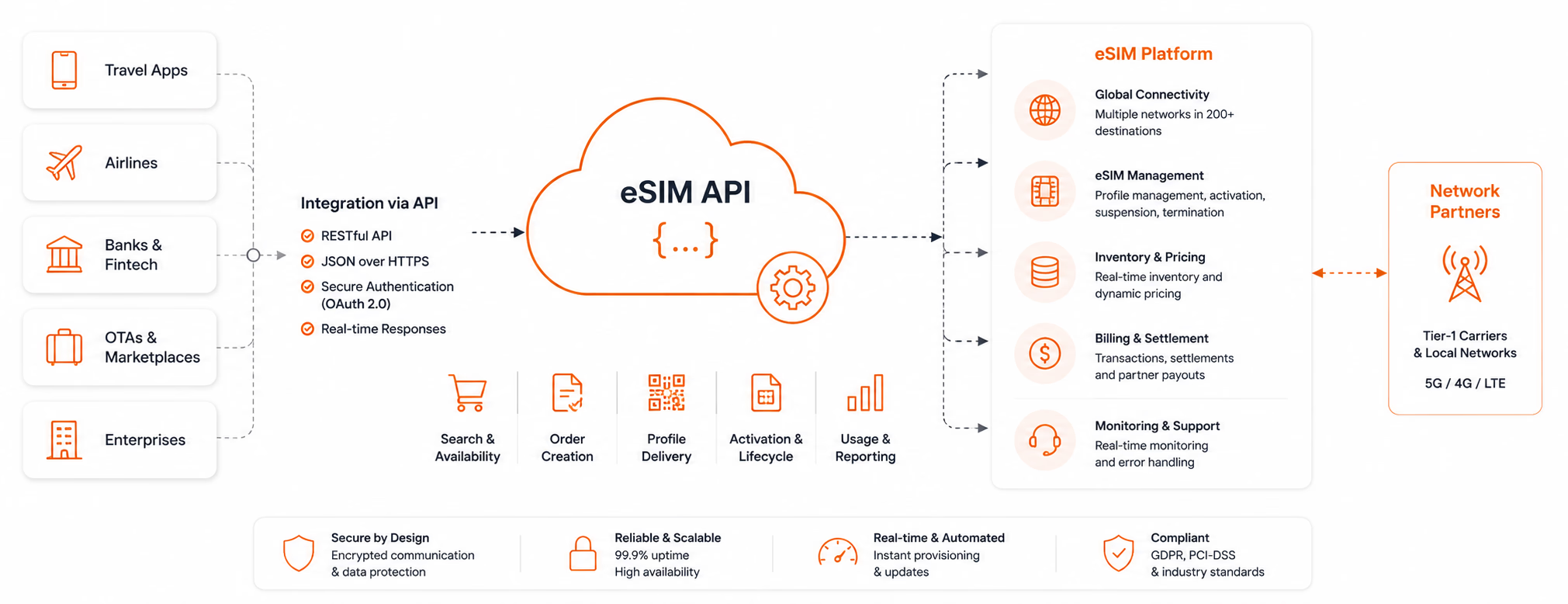
An API can expose inventory. It can create an order. It can return a QR code. It can activate a plan. It can show usage. That is useful, of course.
But in commercial reality, the partner does not care about the API itself. The partner cares whether the customer journey works when someone lands in Tokyo at 11:40 p.m., has no Wi-Fi, opens a banking app, buys a data plan, installs the eSIM, activates it, and expects everything to behave instantly.
That moment is where weak platforms get exposed.
The API may technically work. The experience may still fail.
READ MORE: How the eSIM Stack Works: Providers, APIs, Infrastructure Explained
A traveller may receive unclear activation instructions. A plan may not start at the expected moment. Usage data may lag. Refund logic may be manual. Support may bounce between the app, the eSIM provider and the network partner. A fintech or airline may discover that selling eSIMs is easy, but supporting eSIMs at scale is a different business.
This is why the market is moving beyond access.
APIs are now the plumbing. The value is in orchestration.
Automation is the new test
The stronger eSIM platforms are not just asking partners to integrate. They are trying to remove operational friction around the entire lifecycle.
That includes automated plan creation, dynamic inventory, first-use activation, balance handling, usage alerts, customer eligibility, failed-install recovery, refunds, plan extensions, lifecycle events, and partner-specific commercial rules.
This is where the next competitive layer forms.
READ MORE: How to Launch Your Own eSIM Product?
Gigs, for example, is not simply marketing an API. Its broader pitch is that mobile plans can be embedded into digital products and run through an automated telecom engine. eSIM Go similarly talks about giving partners control over their eSIM estate through real-time integration, not just basic resale access.
That difference matters.
A basic API lets a partner sell connectivity.
A mature orchestration layer lets a partner manage connectivity without building a telecom operations team.
For airlines, banks, travel platforms and super apps, this is the whole point. They do not want to become mini-MNOs. They want connectivity to behave like a product feature.
Reliability beats feature lists
The travel eSIM market still loves big numbers: 200+ destinations, 1,000+ networks, 5G access, instant activation, global coverage.
Fine. Those numbers are useful.
But for B2B partners, reliability is usually more valuable than a bigger feature list.
Can the API handle spikes during campaign launches? Can it support thousands of activations during peak travel periods? Does it return accurate status events? Can the partner see whether a profile was downloaded, installed, activated, or failed? Is usage data close to real time? Are error codes understandable? Is support structured for the partner, not only the end user?
READ MORE: eSIM as a Service: Why APIs Are Powering the Next Wave of Travel Tech Innovation
These questions are less glamorous than “globaI eSIM API,” but they are closer to how commercial decisions are made.
In embedded connectivity, the partner’s brand sits in front of the customer. If something breaks, the traveller does not blame the invisible eSIM wholesaler. They blame the airline app, the bank, the booking platform, or the travel brand that sold it.
That is why control matters.
Controls are becoming commercial infrastructure
The next layer of differentiation is not just technical. It is commercial.
Partners increasingly need pricing controls, margin flexibility, bundled offers, market-specific catalogues, promotional logic, user segmentation, reporting, fraud controls and clear settlement models.
This is especially important as eSIM moves beyond simple travel resale.
A fintech may want to offer eSIM data as a premium account perk. An airline may want to bundle connectivity into business-class tickets. A hotel group may want to offer guests a destination plan at booking confirmation. A travel app may want to trigger an offer only when the customer is close to departure. A corporate mobility platform may need employee-level spend controls.
All of these use cases require more than an API endpoint.
They require policy.
They require rules.
They require the ability to adapt the same connectivity infrastructure to different business models.
This is why companies with stronger platform thinking may gain ground over providers that only offer static reseller access. The winners will not necessarily be those with the biggest catalogue. They will be the ones who let partners shape connectivity around their own customer journey.
The standards layer is also changing expectations
The wider eSIM ecosystem is moving in the same direction.
GSMA’s eSIM specifications continue to shape how provisioning and remote SIM management evolve across consumer, M2M and IoT environments. The newer SGP.32 IoT model is especially interesting because it reflects a broader industry need: remote provisioning has to work at scale, with less manual intervention, across more complex device environments.
Travel eSIM is not the same as industrial IoT, of course.
READ MORE: How Telcos Can Boost Revenue in 2025–2029 with eSIMs, APIs, and Managed Services
But the direction is similar. Manual steps are being squeezed out. Headless flows, automated profile management, remote lifecycle control and better orchestration are becoming expected, not exceptional.
That mindset will come back into consumer and B2B2C eSIM, too.
The QR-code era is not disappearing overnight. But the market is clearly moving toward cleaner, more native and less visible connectivity experiences. In that world, the API is not the story. The invisible operational layer behind it is.
Why this matters for travel brands
For travel brands, this is a warning.
Choosing an eSIM partner only because they offer API access is becoming a weak procurement decision.
The better evaluation should look like this:
Does the partner provide strong documentation and sandbox testing?
Can they support automated lifecycle events?
Do they offer meaningful commercial flexibility?
Can they handle refunds, failed installs and customer support cleanly?
Do they allow brand control over the user experience?
Can they support different models: affiliate, reseller, white-label, embedded, enterprise?
Can they prove reliability under real traffic?
That is the real due diligence now.
Because launching an eSIM offer is no longer hard. Launching one that does not create an operational mess is the hard part.

Final thoughts
The eSIM market is quietly repeating a familiar technology pattern.
First, access becomes exciting. Then access becomes common. Then the real money moves to infrastructure, workflow and control.
Payments went through this. Booking engines went through this. Cloud software went through this. Telecom is now going through it too.
Airalo, Yesim, eSIM Go, 1GLOBAL and Gigs all show different versions of the same shift: eSIM is no longer just a product to resell. It is becoming a layer that other businesses want to embed, automate, and monetise inside their own customer experience.
That means “we have an API” is no longer enough.
The sharper question is: can your platform make connectivity behave like modern software?
Because the next winners in eSIM will not be the companies with the loudest API claims. They will be the ones who make the API almost disappear.