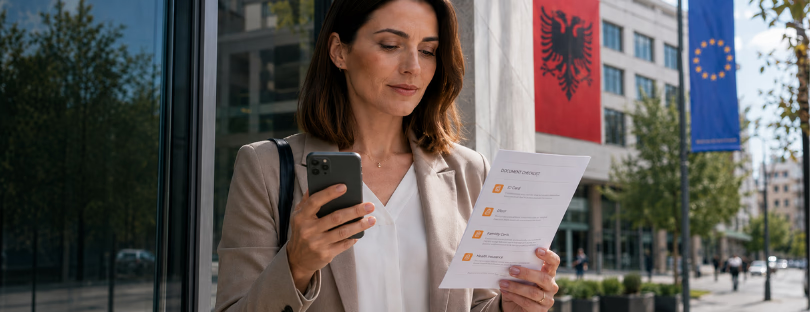
Albania Brings Telecom Consumer Protection Closer to EU Rules
Albania’s telecom regulator, AKEP, is moving to tighten consumer protection rules in the electronic communications market, with a new draft regulation aimed at making mobile, internet and fixed-line contracts easier to understand before users sign them. Albania telecom regulation
At the centre of the proposal is a simple idea: customers should know what they are buying, what it really costs, what happens when the contract changes, and how to control unexpected charges.
That sounds obvious. But in telecom, “obvious” has often been the problem. Too many users only discover the real conditions of a plan after they have already signed up: extra fees, fair-use limits, roaming charges, automatic renewals, early termination rules or unclear speed promises. AKEP’s draft tries to bring more of this information into the open before the contract starts.
The proposed regulation follows Albania’s new Law No. 54/2024 on electronic communications, which entered into force in December 2024 and partially aligns the country’s framework with the European Electronic Communications Code. AKEP says the draft is designed to detail how providers must apply obligations related to end-user rights, transparency, contracts, service availability, emergency access and accessibility.
What changes for users
One of the strongest parts of the proposal is the focus on pre-contract information. Operators would need to provide clearer contract details, including the service name, payment model, included minutes, SMS, data allowance, billing method, contract duration, renewal terms and termination rights.
AKEP has already approved a separate contract summary template, aligned with EU rules, which must be made available to consumers before they enter into a contract. The summary must focus on key information needed to compare offers and make an informed decision, and it should normally fit on one A4 page, or three pages for bundled offers.
READ MORE: EU Roaming Explained: What’s Free, What’s Limited, What Still Costs
This matters because telecom plans are becoming harder to compare. A mobile offer is no longer just “10 GB and unlimited calls”. It may include app bonuses, speed restrictions, promotional pricing, roaming conditions, fair-use limits and different charges after the bundle is used. A short, readable contract summary helps shift the balance slightly back toward the customer.
Roaming bill shock
The most visible consumer measure concerns roaming. According to AKEP’s draft, standard contract terms should include an automatic financial limit for roaming of 5,000 lek before VAT, or 6,000 lek including VAT, while still allowing subscribers to choose another limit.
That is important in Albania because accidental roaming is a very real issue, especially in border areas. The draft also requires mobile providers to give users clear information when their device connects to a roaming network, including whether roaming is included in their tariff plan, what extra charges apply, whether fair-use limits exist, and how users can monitor or restrict spending.
For travellers, this is exactly the type of protection that prevents nasty surprises. For operators, it means less room for vague “small print” pricing. And for Albania’s wider telecom market, it brings the country closer to European-style consumer safeguards.
Better usage alerts
AKEP also wants mobile operators to give subscribers timely access to information about their usage of internet, voice, and SMS services included in their tariff plan. Where services are billed after a certain allowance is consumed, operators would need to notify users when they reach 80 percent and 100 percent of the relevant limit.
This is not just a technical rule. It changes the relationship between the operator and the customer. Instead of users finding out afterwards that they exceeded a bundle, the provider has to warn them while there is still time to act.

Why it matters now
Albania’s telecom market is moving through a more mature phase. The European Commission’s 2025 Albania report noted that AKEP was reaffirmed as the independent national regulator under the 2024 electronic communications law, and also highlighted Albania’s progress toward 5G after authorisations in the 3.5 GHz band were granted to Vodafone and One Albania in November 2024.
READ MORE: UK Roaming Fees Surge in Europe’s Hidden Zones
That context matters. As networks become faster and offers become more complex, consumer rules need to become sharper too. 5G, roaming, bundles, device financing and cross-border usage all create more opportunities for misunderstanding unless transparency keeps pace.
Final take
AKEP’s proposal is not revolutionary, but it is directionally right. Albania is following the same broad trend already visible across Europe: telecom regulation is moving from “operators must publish information somewhere” to “customers must actually understand the offer before they buy it.”
That is a big difference.
Compared with mature EU markets, Albania is still strengthening the practical side of consumer protection, especially around contract summaries, roaming alerts and clear tariff publication. But the direction is familiar: less hidden complexity, more upfront disclosure, and stronger tools to prevent bill shock.
For operators, this may feel like more compliance work. For users, it is overdue. And for the market, it is healthy. The best telecom offer should not be the one with the most confusing small print. It should be the one people can understand before they click, sign or activate.