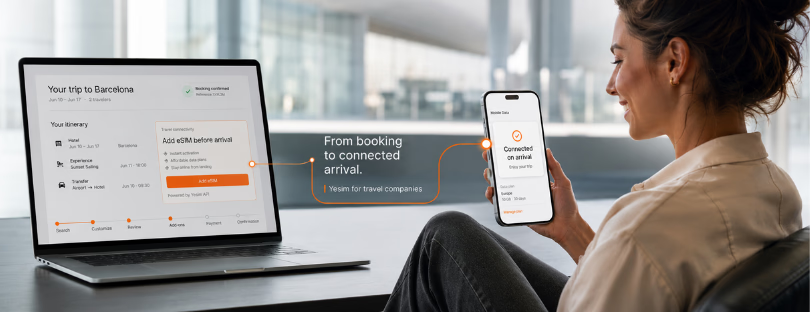
From Booking Confirmation to Connected Arrival: Why eSIM Belongs in the Itinerary
A booking confirmation tells a traveler where they are going. It does not help them get online when they land.
That gap matters. The first few minutes after arrival are when people need maps, ride-hailing, WhatsApp, hotel directions, banking apps, translation, train tickets and reassurance. Yet many booking journeys still end with a PDF attachment, as if the traveler’s digital experience stops at payment.
That is why embedded eSIMs are becoming one of the more interesting B2B opportunities in travel tech. Not because every traveler wants another add-on, but because connectivity belongs exactly where the trip is already being organized: inside the booking flow, itinerary, airline app, hotel pre-arrival email or fintech travel hub.
For Yesim, this is the stronger B2B story. Its Partner API gives travel brands a way to make connectivity part of the customer journey without becoming telecom companies themselves. Yesim highlights 200+ destinations, 1000+ network operators, quick integration, flexible pricing and technical support, which is infrastructure most travel brands do not want to build alone.
The arrival gap
Travel companies know a lot about the customer before departure: destination, dates, route, booking value and passenger type.
So why does the traveler still have to solve mobile data separately?
A family flying to Istanbul or a consultant landing in Singapore does not want to study the eSIM market at the airport. They want the phone to work. This is where a Yesim-powered eSIM can feel less like a product and more like a missing piece of the trip.
The booking confirmation should evolve from a receipt into a readiness layer. Not only “your room is confirmed” or “your flight departs at 08:40,” but also “your mobile data can be ready before arrival.” Small wording shift. Big responsibility shift.
The new ancillary
Travel brands already sell extras: baggage, seats, insurance, transfers, car rentals, and lounge access. Some are useful. Others feel like the passenger is being charged for the inconvenience.
Connectivity sits in a better category because it solves a real, immediate problem. When a traveler lands offline, everything becomes clumsy. They search for public Wi-Fi, screenshot addresses, ask for passwords, turn roaming on for “just a minute,” and then hope the bill does not become a nasty surprise.
This is why the market is moving toward embedded eSIM distribution. Juniper Research estimates travel SIM and eSIM spending will grow from $1.8 billion in 2025 to $8.7 billion by 2030. GSMA Intelligence also expects consumer eSIM penetration to double in 2026 and again in 2027. The direction is clear: eSIM is moving from niche travel hack to normal mobile behavior.
Yesim is part of that shift, but not alone. Airalo is pushing API, SDK and eCommerce integrations. 1GLOBAL offers white-label international eSIM plans. Holafly is strong in unlimited travel data, while Ubigi has built recognition around app-based connectivity.
The interesting question is no longer “who sells eSIMs?” It is “where will travelers first meet the offer?” Increasingly, the answer will be inside platforms they already trust.
 Where Yesim fits
 Where Yesim fits
For OTAs, airlines, hotels, fintechs and travel apps, the ideal eSIM partner is not necessarily the loudest consumer brand. It is the one that can sit behind the experience cleanly.
That is where Yesim’s API story works. A booking platform does not need to explain network provisioning or roaming economics. It needs to show a relevant plan, make purchasing simple, help the traveler install it before departure, and keep support understandable if something goes wrong.
A hotel could include a small destination data plan in its pre-arrival email. An airline could offer a Yesim-powered eSIM after check-in, matched to the destination. A fintech app could place travel data beside FX, insurance and card benefits.
Keep it precise
This does not mean every traveler needs an embedded eSIM. Some already have generous roaming. Long-stay travelers may prefer a local SIM, especially if they need a domestic number. Heavy data users may compare unlimited offers from providers like Holafly or look for regional plans with specific fair-use terms.
The strongest use case is the mainstream international traveler who does not want another decision. They are not looking for telecom complexity. They just want the arrival to feel less chaotic.
That is why travel brands should avoid treating eSIM like another checkbox at checkout. The offer has to be contextual. Destination first. Trip length in seconds. Clear plan details always.
The weak spot
The idea sounds simple, but execution will decide whether travelers trust it.
If the eSIM offer is buried between rental cars and insurance, it will be ignored. If the plan wording is vague, it will feel risky. If installation instructions arrive after the traveler has left home, the timing is wrong. And if support is unclear, the travel brand may inherit frustration from a problem it does not fully control.
Yesim has useful ingredients here: broad coverage, digital setup, partner integration and pricing flexibility. But travel companies still need to design the moment carefully. The best placement may be the post-booking email, the manage-booking page, the airline app check-in flow, or the hotel pre-arrival message.
In other words, eSIM should appear when it feels helpful, not when the brand is simply trying to upsell.
Final thoughts about embedded eSIM for travel brands
The booking journey should not end with a PDF because a PDF does not help anyone navigate an airport, call a driver, open a banking app or find the hotel entrance in the rain.
The better ending is a connected arrival.
For travel brands, embedded eSIM is not just another ancillary revenue stream. Done well, it becomes part of the service promise: we do not just confirm your trip, we help you arrive ready.
For Yesim, that is the opportunity: powering the quiet connectivity layer inside the platforms travelers already use.
As the travel eSIM market gets more crowded, distribution will matter more than slogans.
Sometimes that moment will not start with someone searching “Best eSIM for Spain.” It will start with a booking confirmation that finally does more than confirm.