Monty Mobile: Telecom Infrastructure for the eSIM Era
Monty Mobile is not the kind of telecom company that can be explained in one neat sentence. That is both its strength and, frankly, part of the challenge.
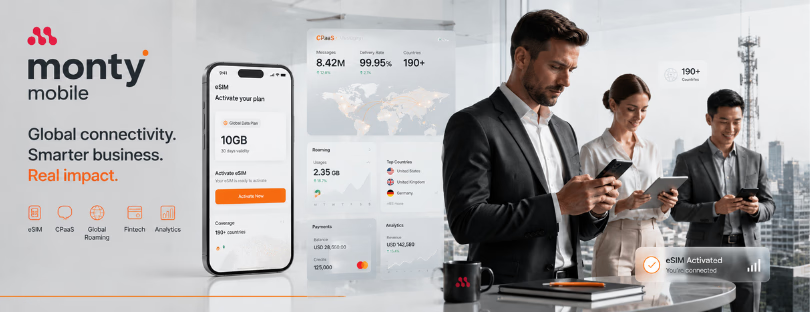
On the surface, it sits in the broad telecom solutions space: CPaaS, eSIM, roaming, messaging, fintech, VAS, operator platforms, IoT and enterprise communications. But the more interesting story is not the product list. The real story is that Monty Mobile belongs to a category of companies trying to make telecom infrastructure more usable for operators, enterprises and digital brands that no longer want connectivity to feel old, slow or fragmented.
That matters because telecom is being pulled in two directions at once. Consumers expect instant digital service. Enterprises want APIs, visibility and automation. Operators still need revenue, control, fraud protection and operational reliability. Somewhere between those worlds, companies like Monty Mobile are trying to build the middle layer.
More than messaging
Monty Mobile has long been associated with messaging and telecom enablement, but its current positioning is broader. The company now presents itself as a global telecom solutions provider covering CPaaS, eSIM, fintech and operator-focused services.
That mix is important. CPaaS is no longer just about sending an SMS code. Retailers, banks, travel companies and platforms increasingly want communication tools that plug directly into customer journeys. A travel app may need WhatsApp alerts, identity verification, roaming bundles and payment notifications. A bank may need secure authentication across markets. An operator may need messaging monetization, anti-fraud layers and digital services that can launch without a two-year transformation project.
READ MORE: Monty eSIM: A Travel eSIM With a B2B Telecom Edge
This is where Monty Mobile’s portfolio starts to make sense. It is not selling one shiny consumer app. It is selling infrastructure that other companies can build on.
The company’s own messaging also leans heavily on practical telecom experience. That is a useful point, because plenty of software vendors talk about operators without really understanding operator reality. Running telecom services means dealing with regulation, routing, roaming agreements, fraud, billing, compliance and customer expectations that do not forgive downtime. Monty Mobile argues that it understands both the operator side and the solution-provider side.
The eSIM angle
For Alertify readers, the eSIM part is especially interesting.
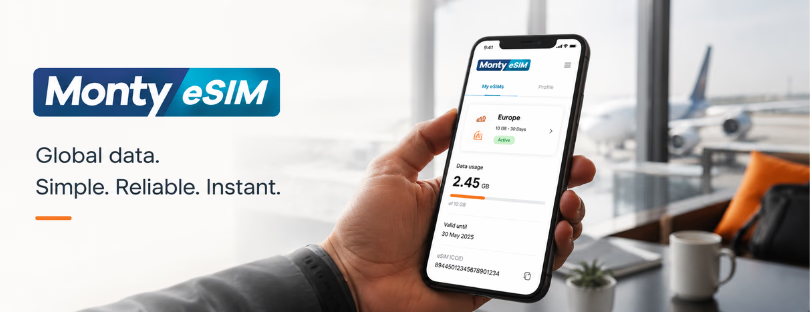
The travel eSIM market has become crowded, noisy and sometimes too similar. Many brands compete on destinations, gigabytes and price. Monty Mobile’s eSIM story looks more infrastructure-led. That gives it a different market role. Instead of only chasing the traveler directly, it can support operators, brands, enterprises or platforms that want to add eSIM connectivity into their own services.
READ MORE: How Monty Mobile Expands Beyond Traditional Telecom
That is where the market is heading. eSIM is not only a travel convenience anymore. It is becoming a distribution layer for mobility, IoT, enterprise devices, connected vehicles and digital-first telecom propositions. GSMA and analyst discussions around eSIM increasingly point to compliance, provisioning, security and scale, not just QR codes and holiday data bundles.
Still, this is not automatically a simple sell. Buyers looking for a polished consumer-first eSIM storefront may find more familiar names elsewhere. Airalo, Holafly, Ubigi, Nomad eSIM and GigSky are easier to understand from a traveler’s perspective because their consumer proposition is obvious. Monty Mobile’s value is more behind the scenes. That can be powerful, but it requires clearer storytelling.
Why timing matters
The timing is good for companies sitting between telecom networks and digital businesses.
Juniper Research expects CPaaS revenue to keep growing, with global CPaaS revenue forecast to rise in 2026. That reflects a bigger change: customer communication is no longer a support function. It is part of conversion, identity, security and retention.
At the same time, operators are under pressure to find new revenue beyond traditional roaming and data plans. They need platforms that help them monetize messaging, protect traffic, launch digital brands, enable eSIM services and serve enterprise customers more efficiently.
Monty Mobile is positioned in exactly that messy but valuable middle ground. It is not trying to be only an eSIM shop. It is not only a messaging aggregator. It is not just a fintech layer either. The company is building around the idea that telecom services need to become modular, programmable and easier to commercialize.
That is a serious opportunity. But it also means Monty Mobile has to explain itself with discipline. A wide portfolio can impress operators, yet confuse buyers who want one clear reason to engage.
Where it fits
Compared with Infobip, Sinch, Tata Communications or BICS, Monty Mobile appears more operator-fluent and telecom-native than many general enterprise communication platforms. Compared with pure travel eSIM providers, it is more infrastructure-oriented. Compared with traditional telco vendors, it looks more flexible and commercially nimble.
That middle position is useful, especially for operators in emerging or competitive markets that need practical monetization tools without adopting a heavy legacy vendor model.
READ MORE: Monty Mobile launches new innovative technologies for enterprises
But there is room to sharpen the message. The website communicates breadth, but the strongest buyer journeys could be clearer: operator transformation, CPaaS monetization, eSIM enablement, enterprise communications and fintech connectivity. Each deserves a sharper landing page, stronger proof points and more visible case studies.
This is not criticism for the sake of criticism. It is the natural challenge of a company that has grown beyond one category.
Final take
Monty Mobile is interesting because it reflects where telecom is actually moving. Not toward one magic product, but toward connected layers: identity, messaging, payments, eSIM, roaming, APIs and operator monetization working together.
The market already has large CPaaS players, specialist eSIM brands and traditional telecom vendors. Monty Mobile’s opening is different. It can win where buyers need telecom depth without the weight of old-school telecom procurement, and where digital brands need connectivity capabilities without becoming telecom experts themselves.
Its biggest opportunity now is not simply adding more solutions. It is making the story easier to buy. In a market full of platforms promising “digital transformation,” the companies that stand out will be the ones that explain exactly what they unlock, for whom and why now. Monty Mobile has the ingredients. The next step is turning that breadth into sharper market authority.