Why Smart Travelers Skip the Local SIM Card Queue
You land, find a mobile shop, pick a prepaid plan, pay a few euros, and walk away connected. On paper, it still looks sensible. In some countries, especially for longer stays, it can be. Local SIMs are not useless. They helped travelers avoid roaming bills long before travel eSIMs became mainstream.
But the hidden cost was never only the price of the SIM.
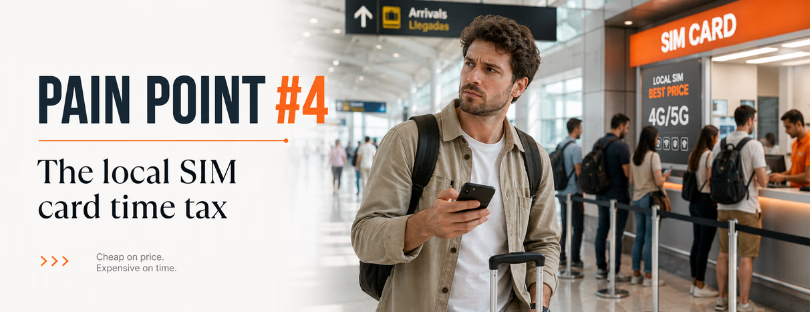
It was the queue. The passport check. The unclear plan names. The shop that closes before your evening arrival. The staff member is explaining data bundles in a language you do not speak. The tiny tray pin. The plastic card you now have to keep safe. The moment you wonder whether removing your home SIM will affect banking messages, WhatsApp, or work calls.
That is the local SIM card time tax.
Cheap is not always cheap
Travelers love the idea of a bargain, especially when roaming charges still feel absurd. But a cheap SIM becomes expensive when the first hour of your trip turns into admin.
Imagine landing after a delayed flight. You still need to get to the hotel, answer someone waiting for you, check the address, and open a ride app. Instead, you are looking for a telecom counter.
READ MORE: What Frequent Travelers Notice Immediately When Switching to Yesim
Then the questions start. Is 10GB enough? Does it include a hotspot? Is it 4G or 5G? Does the price include tax? Will it work outside the city? Can you top up online? Does it activate immediately?
This is not a luxury problem. The modern trip depends on data from the beginning, and buying connectivity after arrival often means solving the problem too late.
The more experienced the traveler, the more annoying this feels. Not because they cannot handle it, but because they have already lost enough arrival time to SIM shops and “just five minutes” that becomes forty.
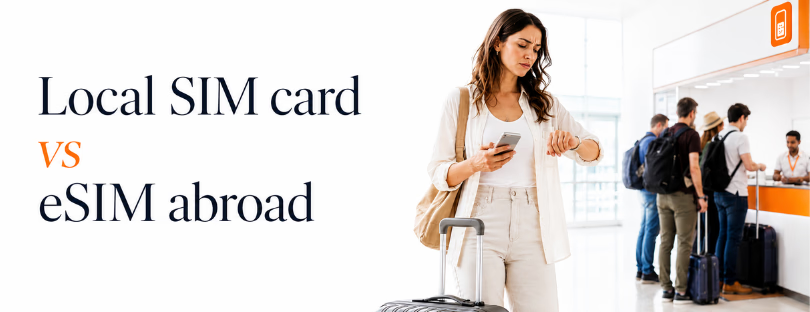
The passport moment
One overlooked part of buying a local SIM is identification.
In many destinations, SIM registration requires passport details or identity verification. There are valid reasons for this, but from a traveler’s point of view, it adds friction at exactly the wrong moment.
You are in a new country, possibly jet-lagged, handing over your passport in a shop or kiosk. For some travelers, that feels normal. For others, it feels unnecessary when all they need is data for maps, messages, payments, and transport.
The physical SIM also interrupts your existing setup. Your main number, banking alerts, two-factor authentication, business contacts, and family chats are already tied to your everyday SIM. Removing it, even temporarily, is not always as simple as travel advice makes it sound.
This is where eSIMs changed the conversation. They made it possible to prepare before the trip and keep the physical SIM in place.
Where Yesim fits
Yesim fits this pain point because it removes the SIM shop errand completely.
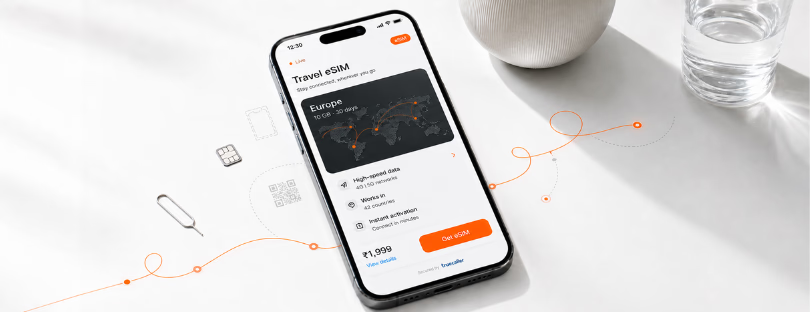
Travelers can choose a plan before departure, install the eSIM digitally, and use mobile data abroad without swapping the physical SIM card. Your main SIM can stay where it is, while Yesim handles travel data in the background.
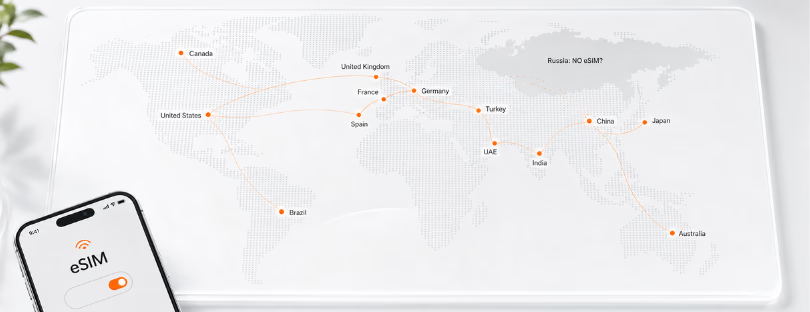
Yesim’s global options also fit the way many people now travel. Its Global Package covers 80+ countries, Global Plus covers 140+ countries, and Pay & Fly is available across 170+ countries. For frequent travelers, multi-country trips, and people who do not want to rebuild connectivity every time they cross a border, that is the real value.
This does not make local SIMs irrelevant. For a long stay, local calls, domestic bundles, or older phones without eSIM support, a physical SIM can still be the right choice. But for short trips, business travel, city breaks, and multi-stop routes, the old local SIM routine feels like unnecessary admin.
A quieter convenience
The best travel technology is rarely the loudest. It is the thing that quietly removes a problem before it becomes visible.
That is why Yesim should not be framed only as “mobile data abroad.” The stronger story is arrival control. You do not have to find a shop. You do not have to compare plans under airport lighting. You do not have to remove your home SIM. You do not have to spend the first part of the trip doing telecom paperwork.
READ MORE: Yesim Unveils 2026 Fan eSIM Plan and 2,500 Free Data Giveaway
Other travel eSIM brands have pushed the same behavioral shift. The market has moved beyond the old roaming-versus-local-SIM choice.
The difference now is trust, clarity, and fit. Travelers ask better questions: Which countries are included? Is the plan fixed or unlimited? Can I use a hotspot? What happens when I run out of data?
Final thought about local SIM card vs eSIM abroad
The local SIM card used to feel like a clever traveler’s hack. Sometimes it still is. But the definition of clever has changed.
Today, the smartest move is often not finding the cheapest kiosk after landing. It is avoiding the kiosk altogether.
A local SIM might save money on the label, but it can cost time, attention, privacy comfort, and the smooth first hour of a trip.
Yesim’s real advantage is not that it makes connectivity exciting. It makes it boring in the best possible way: installed before departure, ready when needed, physical SIM untouched.
For travelers, that is one less thing standing between landing and starting the trip.