
Why 1GLOBAL Is More Than a Travel eSIM Brand
Most people still talk about eSIM as if the whole story is the QR code.
Scan, install, connect. Done.
But that is only the visible part. The more interesting action is happening underneath: who owns the mobile core, who controls provisioning, who manages compliance, who can support operators, fintechs, enterprises and travel brands at the same time. That is where 1GLOBAL becomes a much more interesting company than a standard travel eSIM provider.
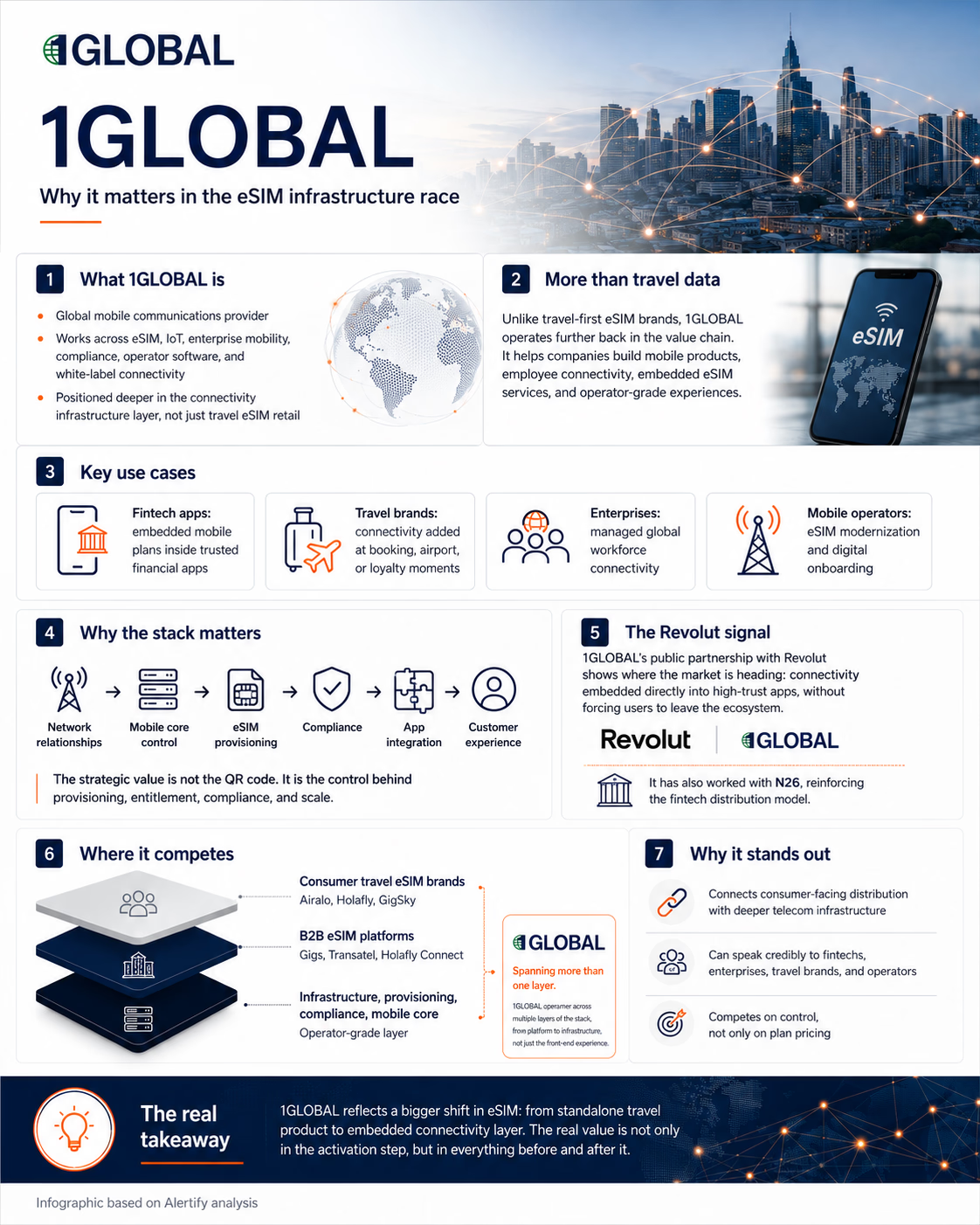
1GLOBAL positions itself as a global mobile communications provider with eSIM connectivity, IoT, compliance, enterprise mobility, mobile-operator software, and white-label connectivity services under one roof. Its own site describes solutions for mobile operators, tech and travel businesses, enterprises, IoT, and partner-led eSIM distribution. That already tells you something important: this is not a company built only around selling a few gigabytes to tourists before a summer trip. It is trying to sit inside the infrastructure layer of digital connectivity.
And in 2026, that layer matters more than ever.
More than travel data
The easiest way to understand 1GLOBAL is to separate it from the usual consumer eSIM conversation.
A travel eSIM brand usually starts with the customer journey: destination, plan size, price, activation, support. 1GLOBAL starts further back in the chain. It offers connectivity infrastructure that other companies can use to build mobile products, employee connectivity, embedded eSIM services, and operator-grade eSIM experiences.
For tech and travel companies, 1GLOBAL promotes its Connect API, which lets businesses integrate eSIM connectivity directly into their own apps. The examples are exactly where the market is heading: airlines offering connectivity to passengers, airports placing eSIM options in high-traffic areas, and travel platforms adding mobile data at the moment it is actually useful.
READ MORE: 1GLOBAL Partners with RADCOM to Deliver AI-Powered Network Assurance Across 43 Million Connections
That is a different model from waiting for a traveller to Google “best eSIM for Spain” the night before flying. It moves connectivity into the booking flow, the banking app, the airport experience, the loyalty platform, or the device ecosystem.
In other words, 1GLOBAL is not only selling connectivity. It is selling placement.
The Revolut signal
The Revolut partnership is probably the cleanest public example of 1GLOBAL’s strategy.
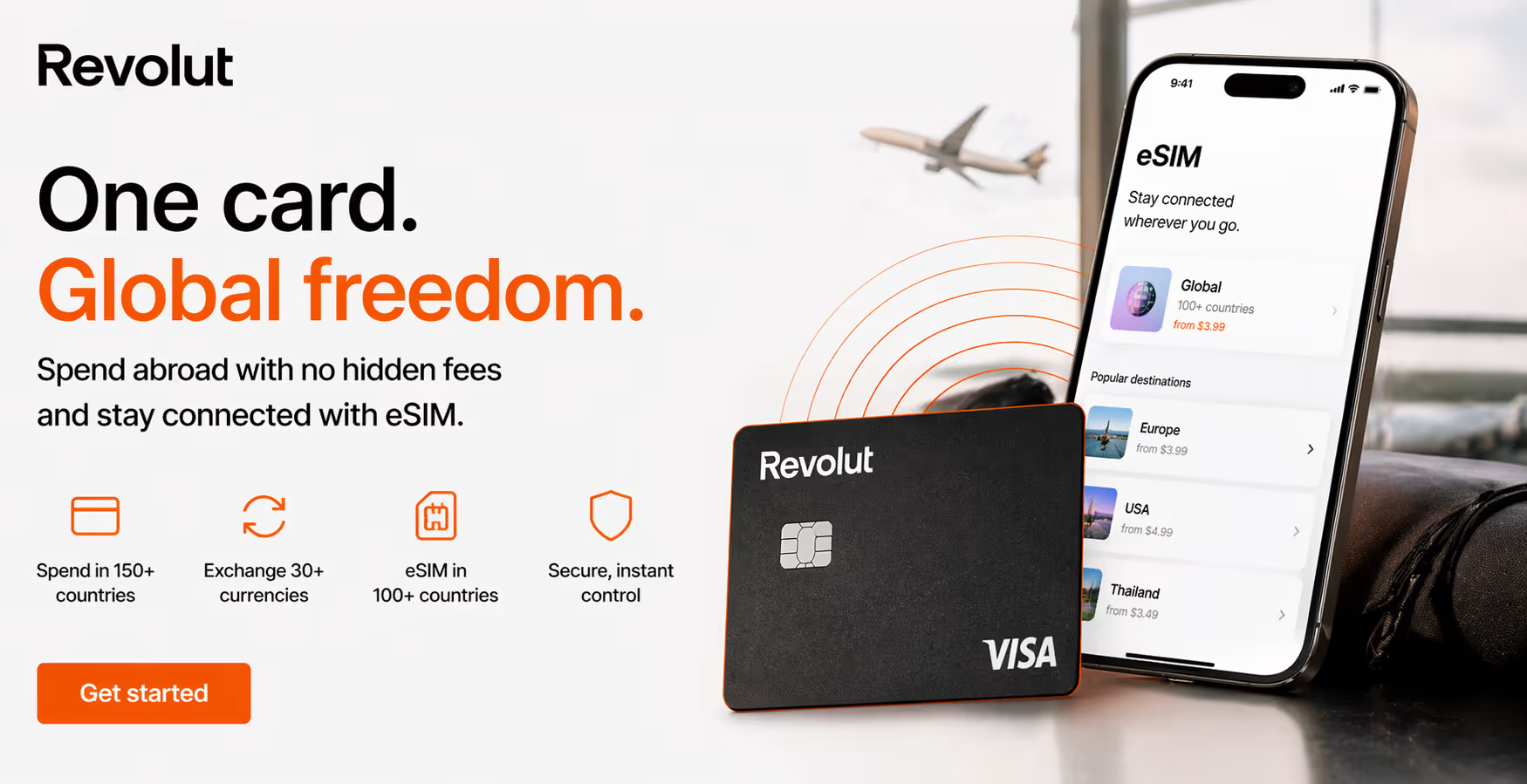
Revolut integrated 1GLOBAL’s eSIM technology into its app, allowing customers to access global data directly from a fintech environment. That matters because the customer does not need to leave the app, compare providers, download another service, or manage connectivity somewhere else. The mobile plan becomes part of the financial app experience.
This is where the eSIM market becomes much bigger than “cheap data abroad.”
Banks and fintechs already own trusted customer relationships. They know when users travel, spend abroad, exchange currency, buy insurance, or upgrade premium plans. Adding connectivity to that environment makes sense. It is practical, but it is also strategic. A bank that owns the travel moment can keep the customer inside its ecosystem for more of the journey.
1GLOBAL has also worked with N26, with the bank offering eSIM mobile plans directly inside the N26 app. Again, the pattern is clear: eSIM is becoming a feature inside platforms that already have daily or high-trust customer relationships.
That is bad news for standalone eSIM apps that rely only on search visibility and paid acquisition. The customer may never reach them if connectivity is already offered inside the app they use to manage money, travel, or loyalty.
The full-stack argument
One of 1GLOBAL’s strongest positions is its full-stack narrative.
The company argues that a full-stack provider controls more of the process, from network sourcing to eSIM profile delivery and the remote SIM provisioning platform itself. That matters becaus
e many white-label or reseller models depend on third-party infrastructure behind the scenes. They may own the front-end brand, but not the deeper telecom control.
This is not just a technical brag. It affects reliability, commercial flexibility, troubleshooting, product design, and how much control a partner has when something goes wrong.
READ MORE: 1GLOBAL launches Message+ App for Teams
For a traveller buying 3 GB for a weekend, the difference may not always be obvious. For a fintech serving millions of customers, an airline embedding eSIM into its passenger journey, or an enterprise managing global employee connectivity, the infrastructure question becomes much more serious.
Who controls the profile?
Who manages the entitlement experience?
Who handles compliance?
Who can support scale across many markets?
Those are not marketing details. They are the product.
Operators still matter
Another interesting part of 1GLOBAL is that it not only sells to operators. It also sells to them.
The company offers eSIM software for mobile operators, including remote SIM provisioning and entitlement platform capabilities. Its site frames this around helping operators modernize for eSIM-only devices, reduce costs, improve digital onboarding, and unlock new revenue streams.
That gives 1GLOBAL a different position from travel-first eSIM brands. It can speak to consumer distribution, enterprise connectivity, fintech embedding, and operator modernization in the same conversation.
This is important because the eSIM industry is splitting into layers. At the top, you have consumer brands competing on price, coverage, user experience, and affiliate distribution. In the middle, you have B2B platforms helping brands add eSIMs. Deeper down, you have provisioning, entitlement, compliance, mobile core control, and network orchestration.
1GLOBAL wants to be present across more than one layer.
That is the real story.
 Where it competes
1GLOBAL sits in a competitive space that is becoming crowded, but not all competitors are built the same way.
Gigs is probably the cleanest comparison in embedded connectivity. It speaks like developer infrastructure and focuses heavily on helping tech companies launch branded mobile services quickly. Transatel, part of NTT, has strong MVNO and connectivity infrastructure DNA, especially around IoT, automotive, and embedded connectivity. Airalo for Business, Holafly Connect, GigSky and similar players are moving from consumer travel eSIM into business use cases, but many still carry a travel-first product logic.
READ MORE: No More Roaming Worries: 1GLOBAL Simplifies Global Travel for 30 Million Europeans
1GLOBAL’s advantage is that it can credibly talk about full-stack telecom, mobile operators, fintechs, enterprises, and travel distribution without sounding like it has wandered outside its category. That breadth is valuable. The risk, of course, is clarity. When a company does many things, buyers need a very sharp answer to one question: “What exactly are you best at for my use case?”
For fintechs, the answer is embedded mobile plans. For enterprises, it is controlled global workforce connectivity. For operators, it is eSIM modernization. For travel brands, it is integrated eSIM distribution.
The company has the ingredients. The challenge is making each buyer feel like the platform was built for them, not merely available to them.
Your customers will buy connectivity. The question is: from you, or from someone else?
We help airlines, banks, and travel platforms turn that demand into a built-in product — not a missed opportunity.
Conclusion
1GLOBAL matters because it shows where the eSIM market is really going. The future is not just more eSIM providers selling similar country plans with slightly different prices. That layer will remain, but it is already becoming crowded and easy to copy.
The more valuable layer is control: control over provisioning, compliance, network relationships, app integration, entitlement, product design, and customer ownership.
That is why 1GLOBAL should not be judged only against consumer eSIM brands. It belongs in a broader group of infrastructure players shaping embedded telecom, alongside companies like Gigs, Transatel, and operator-grade eSIM platform providers. The difference is that 1GLOBAL has managed to connect the consumer-facing eSIM story with a deeper telecom stack.
For Alertify readers, the signal is clear: eSIM is no longer just a travel product. It is becoming a distribution model, a fintech feature, an enterprise mobility tool, and a software layer for operators. 1GLOBAL is one of the companies proving that the real value is not in the QR code.
It is in everything that happens before and after it.