The IT Channel’s Next eSIM Opportunity Is Enterprise Mobility
The travel eSIM market is crowded. The enterprise eSIM market is still being defined.
That difference matters.
Over the past few years, most eSIM coverage has focused on consumers: tourists landing in Dubai, digital nomads working from Bali, families trying to avoid roaming bills in the United States. It is a useful story, and a very visible one. But for the IT channel, MSPs, telecom resellers and managed service providers, the more serious commercial opportunity is not another travel data plan.
It is enterprise mobile data management.
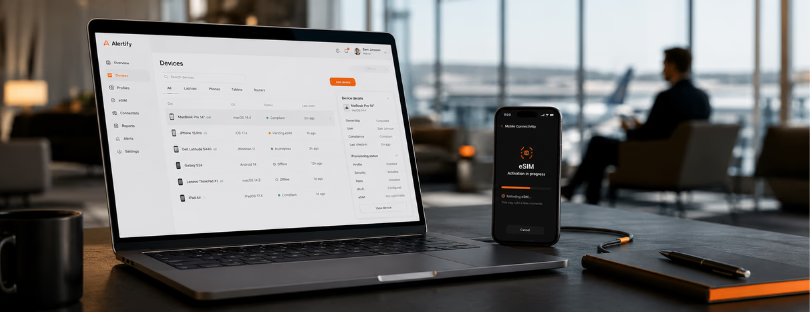
This is where eSIM starts to look less like a consumer convenience product and more like a managed services category. Businesses do not only need cheaper data abroad. They need visibility, control, remote deployment, policy management, cost governance and support across users, countries and devices.
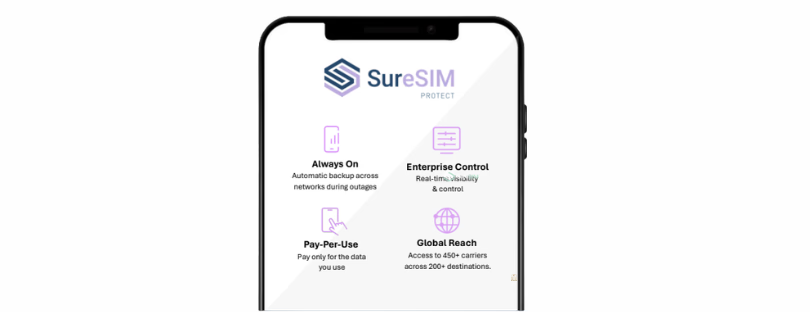
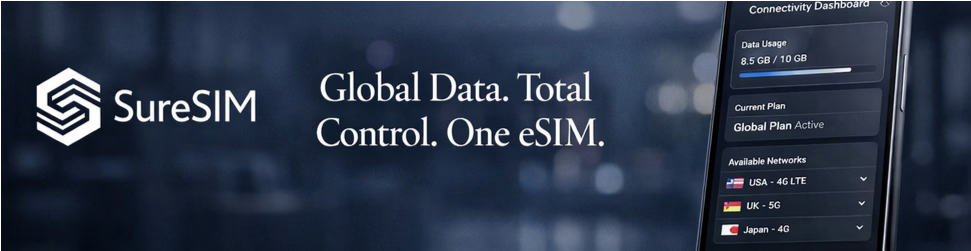
SureSIM, developed by Utelize Mobile, is a good example of where this market is heading. The company positions SureSIM as an enterprise eSIM management platform for IT, HR and finance teams, with over-the-air deployment, real-time usage visibility, spend controls, multi-network access and support for business travellers, lone workers and IoT devices. Its platform covers 200+ destinations for enterprise roaming and provides access to 450+ global networks for IoT and multi-network use cases.
The channel has been selling mobility the old way
For years, enterprise mobile connectivity has been awkward to manage.
Companies still rely on national mobile contracts, bolt-on roaming packages, expense claims, local SIM workarounds, personal hotspots and a lot of manual support. Anyone who has worked around corporate mobility knows the result: unpredictable costs, limited visibility and very little control once an employee leaves the country.
That model is frustrating for IT teams. It is also a missed opportunity for the channel.
READ MORE: The Shift from Traveller Tracking to Location Awareness
MSPs and telecom resellers already manage endpoints, security, Microsoft environments, cloud services, unified communications and device fleets. Yet international mobile data often sits outside that structured service layer. It is still treated as a carrier contract issue rather than an IT management issue.
eSIM changes that because connectivity can be provisioned, monitored and controlled remotely. The real value is not the digital SIM itself. It is the service layer around it.
Why enterprise eSIM is different from travel eSIM
Consumer travel eSIMs are built around simplicity. Choose a destination, buy a plan, scan a QR code or install through an app. The user is usually the buyer, the installer and the support case.
Enterprise eSIM is different.
In a business context, the buyer may be a procurement. The user may be an executive, engineer, field worker or consultant. The manager may be IT. The risk owner may be HR or security. Finance wants predictable billing. The employee just wants data to work when the plane lands.
That creates a very different product requirement.
SureSIM’s messaging reflects this shift. Its platform is not only about data access. It includes over-the-air deployment, policy-based controls, spend thresholds, real-time usage visibility, consolidated global billing and optional location awareness. The company also connects its use case to duty of care and ISO 31030 support, which makes it relevant to travel risk and lone worker safety, not just roaming cost reduction.
That is a much stronger channel proposition than “sell cheaper travel data.”
For an MSP, enterprise eSIM for MSPs can become a managed mobility add-on. For a telecom reseller, it can expand the conversation beyond voice, SIM contracts and UC. For a managed service provider supporting distributed workforces, it can become part of a broader endpoint, security and productivity stack.
Matt Atkinson’s channel view
Matt Atkinson, Managing Director at Utelize Mobile, has been highlighting a point the wider eSIM market often overlooks: the IT channel needs practical tools that help partners manage mobile services for business customers.
That matters because many companies still handle mobile connectivity in a fragmented way. One contract here, one roaming add-on there, a few physical SIMs posted to employees, and plenty of manual support when someone travels or changes device.
eSIM allows a cleaner operating model.
Profiles can be deployed remotely. Connectivity can be prepared before travel. Users can be supported without waiting for a plastic SIM card. Policies can be applied centrally. Spend can be monitored before it becomes a painful invoice.
This is not the flashiest part of the eSIM story, but it may be one of the most commercially useful. For MSPs and telecom resellers, the value is not only in connectivity. It is in helping businesses manage it properly.
READ MORE: ISO 31030 in Practice: Why Connectivity Matters
The best channel opportunities are often not the loudest consumer trends. They are the operational headaches that enterprises quietly keep paying to solve. Mobile roaming, international support, unmanaged data usage and lack of visibility all sit in that category.
And unlike consumer travel eSIM, where comparison tables and discount codes dominate the market, enterprise eSIM still needs education. Buyers need to understand the difference between a travel eSIM app and a managed enterprise platform. Channel partners need to know how to package it. IT teams need to see it as part of mobility governance, not just a cheaper roaming option.
Awards are becoming a credibility signal
SureSIM’s recent industry recognition also tells us something about market maturity.
On May 5, 2026, Utelize Mobile announced that SureSIM had been named a finalist for Best Connectivity Solution at the Comms Business Awards 2026. The awards ceremony is scheduled for July 16, 2026 at the Royal Lancaster in London.
This follows SureSIM’s 2025 Mobile News Awards win, where SureSIM Global was awarded Best Enterprise IoT eSIM Product. Utelize described the solution as a fully managed, multi-network eSIM service combining remote deployment, intelligent network switching, real-time billing, policy-based cost controls and support for international users.
SureSIM has also highlighted a 2026 Mobile News Awards win for Best eSIM Deployment & Innovation, with the company presenting it as back-to-back recognition following the 2025 enterprise IoT eSIM award.
Awards are not a strategy by themselves. But in enterprise sales, they help reduce perceived risk. That is especially important in a category that many buyers are still trying to understand. A CIO may not care about consumer eSIM rankings, but they will care whether a platform has been recognised for deployment, innovation, enterprise IoT or connectivity value.
For the channel, this kind of recognition gives partners a stronger story to take into customer conversations.
Where MSPs can make money
The channel opportunity is not simply a resale margin on data.
That is too narrow.
The better opportunity sits around service design: onboarding, policy setup, support, user segmentation, travel risk integration, billing review, lifecycle management and reporting. In other words, the MSP does not just sell an eSIM. It helps the business control mobile connectivity across people, places and devices.
A practical package might include:
Executive travel connectivity
Senior teams travelling internationally need reliable mobile data from the moment they land. The value here is not only cost reduction. It is avoiding the embarrassing support ticket where a board member arrives in Singapore with no working data.
Field and lone worker backup
For construction, utilities, healthcare, NGOs and remote operations, mobile connectivity is also a safety and continuity issue. A backup eSIM that can access multiple networks can become part of resilience planning.
IoT and device fleets
Connected vehicles, EPOS systems, remote sensors and mobile routers all need scalable management. SureSIM’s IoT proposition includes centralised device control, automated provisioning, multi-network global coverage and usage analytics.
Finance and cost governance
This is where enterprise buyers listen. Real-time spend alerts, pay-as-you-go controls, consolidated billing and per-user reporting turn roaming from a surprise invoice into something finance can actually manage.
None of this is as flashy as a consumer app launch. But it is more durable.
The competitive landscape is not only travel eSIM brands
Enterprise eSIM does not compete only with well-known consumer eSIM providers. Those brands have done a strong job educating consumers, but enterprise mobility is a different category.
The real comparison set includes enterprise mobility management providers, global IoT connectivity platforms, MVNO/MVNE infrastructure players, operator business units, and managed mobility specialists. Companies such as 1GLOBAL, Transatel, Eseye, Soracom, Gigs, eSIM Go, and traditional operator enterprise divisions all touch parts of this space, but not always from the same angle.
READ MORE: Missed Check-ins, Missed Signals: How Connectivity Failures Delay Incident Response
That is why positioning matters.
A travel eSIM brand usually wins on price, app experience, coverage, and consumer trust. An enterprise eSIM platform must win on control, reliability, reporting, security, support, and integration into existing business processes.
This is where SureSIM’s channel story feels relevant. It is not trying to make eSIM sound like a holiday product. It is framing eSIM as a managed enterprise connectivity layer.
Why is this market still early?
The enterprise eSIM opportunity is not fully formed yet. That is exactly why it is interesting.
Many IT buyers still do not know what to ask for. Many resellers still lead with mobile contracts rather than mobile data control. Many MSPs have not yet packaged eSIM into their managed services portfolio. And many eSIM companies still communicate like consumer travel brands, even when their technology could support much deeper enterprise use cases.
That gap creates space for smart channel players.
The winners will not be the partners who simply add “eSIM” to a services page. They will be the ones who understand the pain behind it: roaming uncertainty, poor visibility, SIM logistics, unmanaged spend, weak duty-of-care controls and poor support for international work.
That is a very different conversation from “avoid roaming charges on your next trip.”
The real channel opportunity
The IT channel does not need another crowded consumer travel product. It needs managed service categories with recurring value, clear business pain and room for advice.
Enterprise eSIM fits that profile.
SureSIM’s awards momentum, including its Comms Business Awards 2026 finalist position and Mobile News Awards recognition, shows that enterprise eSIM is moving from niche telecom feature to recognised connectivity solution. But the bigger point is not only about one provider. It is about where the eSIM market is going next.
Consumer travel eSIMs made the technology visible. Enterprise mobility will make it operationally important.
For MSPs and telecom resellers, the question is no longer whether eSIM exists. It is whether they want to own the mobility management conversation before someone else does.