A Day in the Life of Your Customer — And Every Missed € Opportunity
Every travel business says it wants more ancillary revenue. Airlines talk about it. Hotels talk about it. OTAs, banks, fintech apps, loyalty platforms and mobility brands all talk about it. But the strange thing is that one of the most obvious travel add-ons still gets treated like an afterthought: connectivity.
That is the uncomfortable point behind the question: how many euros are left on the table every time a customer travels and your brand does not offer them an eSIM?
Not in a vague “digital transformation” way. In a very practical, daily way.
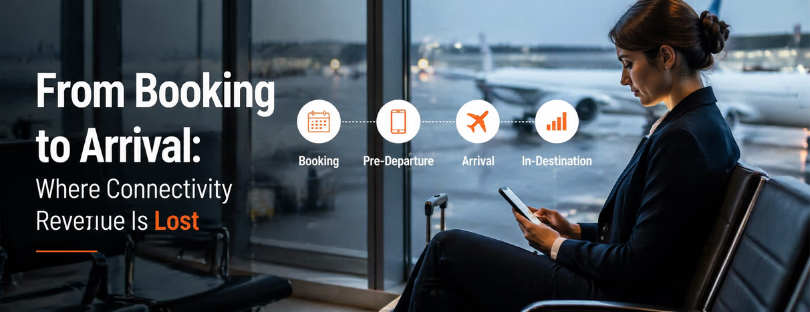
A customer wakes up before a flight. Checks the weather. Opens the airline app. Downloads the boarding pass. Searches “data in Turkey” or “eSIM for Japan” or, worse for your business, “avoid roaming charges.” Then they land, switch off airplane mode, get nervous about roaming, connect to airport Wi-Fi, open Google, TikTok, Reddit, or a competing app, and buy connectivity from someone else.
The trip has barely started, and the revenue has already moved away from the brand that owned the customer relationship.
The customer was already yours
This is the part many operators and travel brands still underestimate. They are not starting from zero. They already have the audience, the trust signal and the right moment of need.
An airline knows when someone is flying abroad. A hotel knows when a guest is arriving. A travel app knows the destination. A bank knows when a card is used overseas. A telecom operator knows when a customer is likely to roam. A loyalty programme knows the customer travels often enough to care.
That is not just data. That is timing.
And timing is everything in travel connectivity.
The customer does not want an eSIM three weeks after the trip. They want it when booking the ticket, when checking in, when landing, or when the first roaming warning appears. Those are commercial moments. Small ones, yes, but very valuable when repeated across thousands or millions of travellers.
This is why tools such as Telna’s Travel eSIM Revenue Calculator are interesting. Not because calculators magically create a business model, but because they force companies to ask a sharper question: what happens if we stop treating connectivity as a support issue and start treating it as a revenue layer? Telna positions its calculator around estimating possible eSIM revenue based on a few business inputs, while its own material frames travel eSIM as a way for brands to add value without heavy friction.
A normal travel day, full of missed revenue
Let’s follow one traveller.
At 7:20, she opens her banking app before leaving home. The bank could offer a travel eSIM connected to her destination. It does not.
At 9:10, she checks in for her flight. The airline sells seat selection, baggage, lounge access and insurance. Connectivity? Still missing.
At 12:40, she gets a destination email from the hotel. Airport transfer, spa package, restaurant offer. No mobile data option.
At 15:25, she lands. Her phone shows a roaming message. Now urgency appears. This is the strongest purchase moment of the whole journey.
At 15:31, she searches online and buys an eSIM from a specialist travel eSIM provider.
By 15:35, the opportunity is gone.
No dramatic failure. No angry customer. Just one quiet lost sale. Multiply that across a frequent traveller base, and it becomes a pattern.
This is where the “missed euro opportunity” becomes more than a marketing slogan. It is not only about the margin on a data package. It is about retaining the customer inside your own ecosystem during the trip.
Why eSIM changed the economics
Before eSIM, selling travel connectivity was messy. Physical SIM cards required logistics, retail points, packaging, activation support and local distribution. That worked for airports and telecom shops, but not for every travel brand.
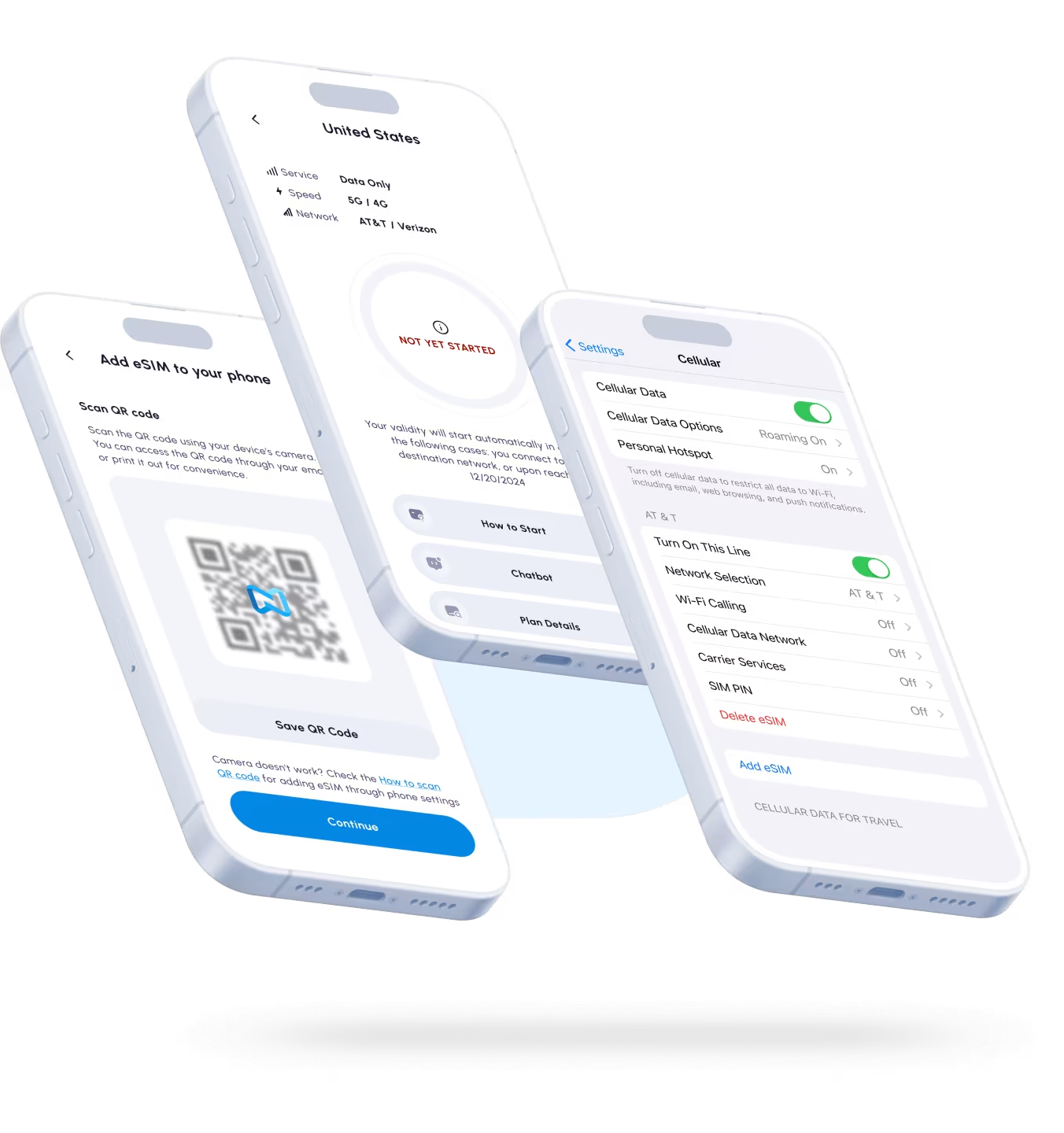
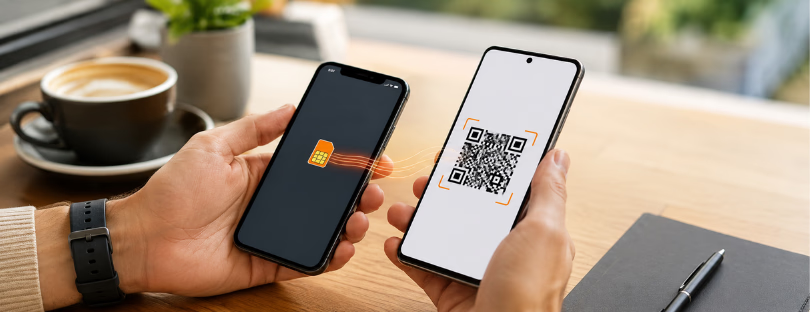
eSIM removed much of that friction. A company can now integrate connectivity into an app, booking flow, loyalty portal or customer email journey. The customer does not need to wait for a plastic SIM. They can install a plan digitally and activate it when needed.
It is no longer only the mobile operator at home or the kiosk at arrivals. Airlines, fintechs, OTAs, hotel groups and travel platforms can all become connectivity distributors if the integration, support and commercial model make sense.
The market numbers explain why this is getting attention. Juniper Research said travel eSIM package revenue would reach $1.8 billion by the end of 2025, up 85% from 2024. GSMA Intelligence also tracks eSIM as a growing consumer and enterprise topic, especially across international roaming and device adoption.
That does not mean every company should rush into eSIM blindly. It means the category is moving from “interesting add-on” to “strategic travel revenue stream.”
Your customers will buy connectivity. The question is: from you, or from someone else?
We help airlines, banks, and travel platforms turn that demand into a built-in product — not a missed opportunity.
It is easy to say the competition is Airalo, Holafly, Nomad eSIM, Ubigi, Yesim or other specialist travel eSIM players. And yes, these brands trained travellers to think differently about roaming.
But for businesses, the bigger competition is inertia.
Many companies already sell insurance, airport transfers, lounge access, car rental and FX cards. Connectivity often fits the same logic, but with one important difference: the need is universal. Almost every traveller wants mobile data. Not every traveller wants a spa voucher.
The market is also becoming more sophisticated. Some providers focus on consumer-friendly apps. Some focus on unlimited-style offers. Some focus on API and white-label distribution. Some, like Telna, position around enabling operators and businesses to launch travel eSIM propositions rather than building everything from scratch.
That matters because the right model depends on the brand. An airline may need a smooth booking-flow add-on. A bank may want a travel benefit inside a premium account. A hotel group may prefer a pre-arrival guest experience. A telecom operator may want to defend roaming revenue before someone else captures the traveller.
The opportunity is not one-size-fits-all. That is exactly why the numbers matter.
The real conclusion
The travel eSIM opportunity is not really about selling data. It is ab
out owning one more high-intent moment in the customer journey.
For years, roaming was treated as something that happened outside the travel brand’s control. The operator charged. The traveller complained. Everyone else stayed out of it. eSIM has changed that. Connectivity can now sit inside the same commercial layer as insurance, upgrades, loyalty perks and destination services.
The winners will not be the brands that simply paste an eSIM offer into a footer and hope for conversions. They will be the ones who understand the customer’s day: when anxiety appears, when the need becomes urgent, when trust is highest and when the purchase feels natural.
That is why this topic matters for Alertify readers. Travel connectivity is no longer just a telecom product. It is becoming part of the travel revenue stack. And every brand that already owns the traveller but ignores that moment is not just missing an eSIM sale. It is teaching the customer to buy the next useful travel service somewhere else.
Driven by wanderlust and a passion for tech, Sandra is the creative force behind Alertify. Love for exploration and discovery is what sparked the idea for Alertify, a product that likely combines Sandra’s technological expertise with the desire to simplify or enhance travel experiences in some way.