iOS to Android eSIM Transfers Finally Get Easier
For years, switching phones was supposed to be simple. In reality, moving an eSIM from one device to another often felt like telecom theatre: call the carrier, verify your identity, wait for an email, scan a QR code, hope nothing breaks, then maybe visit a store anyway.
That is changing. With iOS 26 and Android 16, direct eSIM transfers between Apple and Google devices are becoming a normal part of switching phones. Not perfect. Not universal. But finally normal enough that frequent switchers, reviewers and everyday users can move between iPhone and Android without treating mobile service like a separate project.
For Alertify readers, this matters because eSIM is no longer just a travel convenience. It is becoming the default connectivity layer for modern smartphones. And when switching gets easier, the whole mobile market becomes more fluid.
Apple and Google close the gap
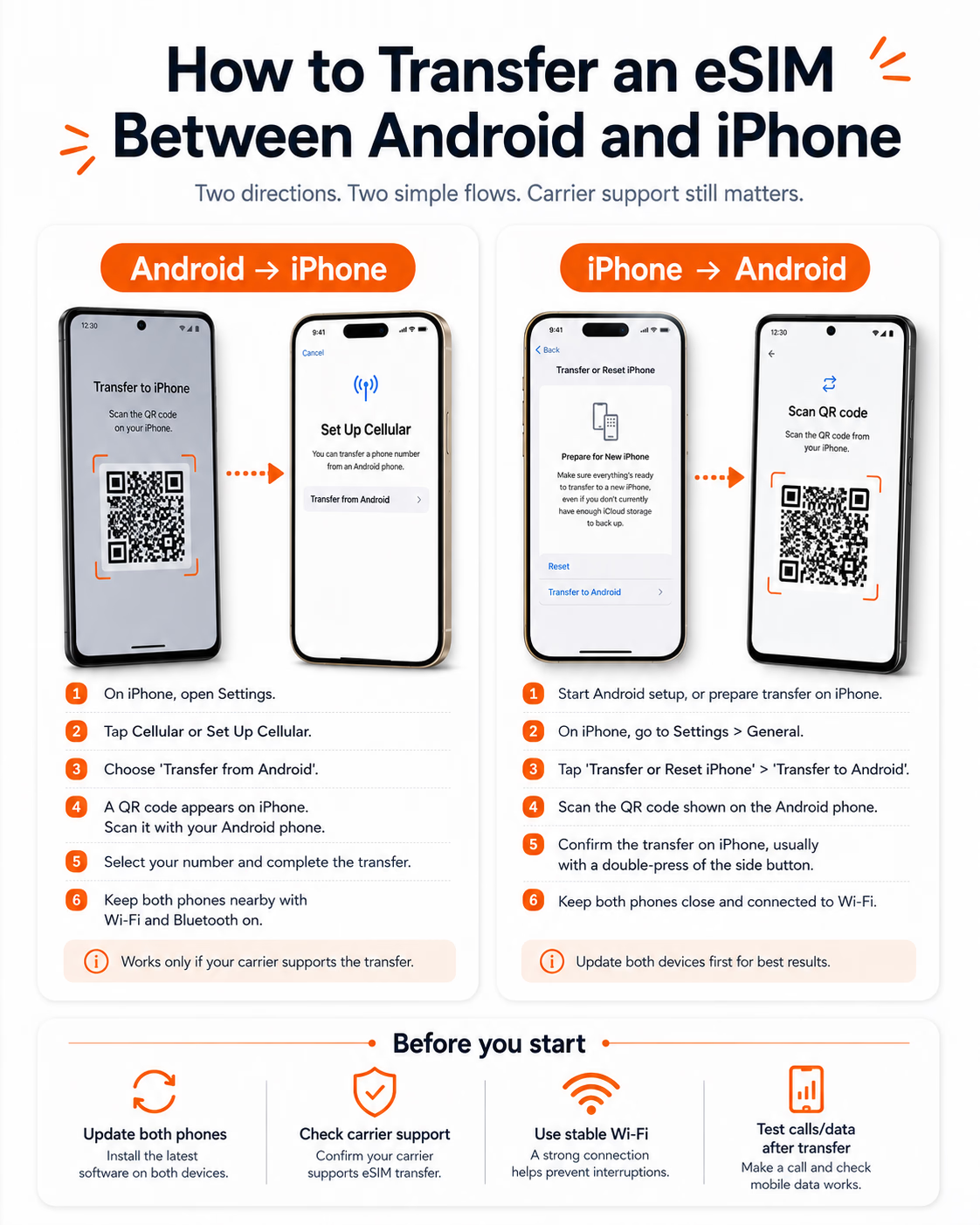
Apple Support now lays out the Android-to-iPhone process clearly. On an iPhone running iOS 26 or later, users go to Settings, choose Cellular or Set Up Cellular, then select Transfer from Android. The iPhone creates a QR code, the Android phone scans it, the user selects the number, and the transfer begins.
The basics still matter. Both phones need to be close together. Wi-Fi must be active. Bluetooth has to stay on. And, importantly, the carrier must support the transfer. In the US, Apple lists major names including AT&T, T-Mobile and Verizon among compatible carriers.
READ MORE: Telefónica Launches Self-Service eSIM Transfers on Android
The opposite direction has also improved. With iOS 26.3, Apple introduced a cleaner path for moving an eSIM and selected data from iPhone or iPad to Android. Users can scan a QR code shown on the Android device during setup, or start the process from iPhone Settings under General, then Transfer or Reset iPhone, then Transfer to Android.
That sounds technical, but the real story is simple: Apple and Google are finally treating eSIM transfer as part of the phone-switching experience, not as a carrier support problem dumped on the customer.
Why did this feel broken before?
The frustration was real. Android Authority contributor Mishaal Rahman captured it well in late 2025, after repeated issues with eSIM transfers. Android-to-Android moves worked inconsistently. Cross-platform transfers could still lead to carrier store visits.
His question landed because it reflected what many users were thinking: “Switching a physical SIM takes seconds, why do I need to call Verizon for an eSIM?”
READ MORE: 1GLOBAL & KPN Launch One-Click iPhone eSIM Transfer: No QR Code, No Hassle
That was the uncomfortable truth of early eSIM adoption. The technology promised convenience, but the user experience often made physical SIM cards look easier. You could pop out a plastic SIM in five seconds. But moving an eSIM sometimes meant account portals, activation locks, store queues and one unlucky afternoon without service.
That contradiction slowed trust. Especially for travelers, business users and people who test multiple phones, eSIM was useful but still slightly fragile.
The new experience
Android Central’s Brady Snyder recently described a very different reality after testing cross-platform eSIM transfers repeatedly. “With that being said, I’m thrilled to report that Apple and Google have finally figured out cross-platform eSIM transfers,” he wrote.
That does not mean every transfer works magically. QR scanning can fail. Pairing codes and session IDs may still be needed. Carrier support remains the deciding factor. But the direction is obvious: eSIM transfer is moving from carrier-controlled exception to device-level expectation.
CNET made a similar point while looking at Google’s Pixel 10, which launched as eSIM-only in the United States. That matters because once a mainstream Android flagship removes the physical SIM slot in a major market, the industry has less room to treat eSIM as optional.
Apple already pushed this shift with eSIM-only iPhones in the US. Google joining that direction with Pixel strengthens the signal. The physical SIM is not disappearing everywhere tomorrow, but its role is clearly shrinking in premium smartphones.
Still not seamless everywhere
There are caveats, and they are not small ones.
Not every carrier supports direct transfer in every market. MVNO support can be uneven. Some international users still report being charged fees or being pushed toward in-person activation. And if a transfer fails halfway, the old eSIM may be deactivated before the new one is fully working.
Technically, the same eSIM profile is not simply “moved.” In many cases, the carrier issues a new profile and disables the old one. That is better for security, but it also explains why brief outages happen. A test call or test data session after transfer is still smart.
READ MORE: Vodafone and Google partner to launch eSIM transfer experience for Google Pixel 9a smartphone
This is also not ideal for everyone. Corporate devices managed through MDM systems may need IT approval. Travelers juggling multiple regional eSIMs should still check which profile is active before departure. And anyone depending on a phone for urgent work should avoid doing the transfer five minutes before boarding a flight.
For backup, a physical SIM still has value where available. For travel, a dedicated travel eSIM from providers such as Airalo, Holafly, Yesim, Ubigi, Nomad eSIM, Saily or GigSky can still be easier than relying on expensive roaming. Different problem, different solution.
The bigger shift
The real impact is not only technical. It is commercial.
When moving your number between iPhone and Android becomes easier, device loyalty weakens. A long-time iPhone user can test a Pixel without fearing carrier drama. An Android user can move to iPhone without turning activation into a weekend task. Carriers lose one of the quiet forms of customer friction that kept people from switching.
That is good for consumers, but it also raises expectations. If Apple and Google can make cross-platform eSIM transfer feel almost normal, then carriers, MVNOs and travel eSIM providers will be judged more harshly when activation feels old-fashioned.
Juniper Research expects global eSIM connections to reach 1.5 billion in 2026, up from 1.2 billion in 2025. GSMA’s SGP.32 work is also pushing eSIM deeper into IoT and enterprise provisioning. In other words, this is bigger than smartphone convenience.
The best players in the market will not be the ones that simply “support eSIM.” That bar is too low now. The winners will be the ones who make activation, transfer, recovery and customer support feel boringly reliable. Because that is what users actually want from connectivity: not excitement, not drama, just service that follows them when their device changes.