Why eSIM Matters in Unitech’s New EA530 Handheld
The enterprise handheld device market is not exactly glamorous. It rarely gets the same attention as smartphones, travel apps, or AI tools. But walk into a warehouse, airport logistics hub, retail stockroom, delivery operation, or manufacturing floor and the reality is obvious: these devices are where digital transformation either works or quietly breaks down.
That is why Unitech’s new EA530 enterprise mobile computer is more interesting than a standard hardware refresh. On paper, it is another rugged Android device for retail, logistics, warehousing and field operations. In practice, it reflects a bigger shift in enterprise mobility: companies no longer want devices that simply scan barcodes. They want connected, manageable, long-life endpoints that can support real-time operations without becoming a burden for IT.
And this is where eSIM starts to matter.
From barcode scanners to connected endpoints
For years, AIDC devices were judged mainly on scanning performance, durability and battery life. Those things still matter, of course. A device that cannot survive drops, dust, water, long shifts and impatient frontline use will not last long in a warehouse or on a delivery route.
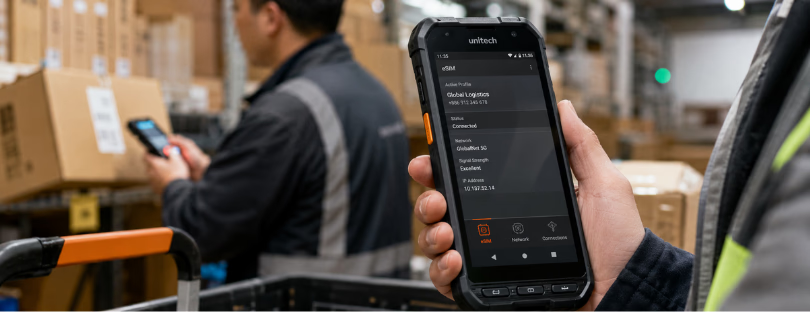
The EA530 keeps that rugged DNA. Unitech lists Android 15, a 6-inch display, 2D barcode scanning, NFC, Wi-Fi 6E, 4G LTE, IP65/IP68 protection, a 1.5-metre drop rating and a warm-swappable 4250mAh battery among its core features. Optional UHF RFID support extends reading distance up to 1.8 metres, while the RP300 reader can extend RFID reading up to 25 metres, according to the company’s launch materials and product information.
But the more strategic detail is connectivity. The EA530 supports eSIM alongside traditional mobile connectivity, according to Unitech’s launch announcement and reseller specifications.
That may sound like a small line in a product sheet. It is not.
For enterprises managing hundreds or thousands of devices across stores, depots, warehouses, countries or mobile teams, physical SIM logistics can be surprisingly messy. SIM cards get lost. Operators vary by country. Replacements take time. Devices move between teams. Roaming plans change. IT teams are left managing plastic cards for a software-driven operation.
eSIM changes that equation. It allows connectivity to become more programmable, more flexible and easier to manage across distributed fleets. For a consumer traveller, eSIM is about avoiding roaming shock. For an enterprise, it is about reducing deployment friction.

TCO is becoming the real buying argument
Unitech is clearly positioning the EA530 around total cost of ownership, not just device specifications. That makes sense. In large-scale enterprise deployments, the purchase price is only part of the story.
The real cost sits in replacement cycles, downtime, support tickets, repairs, battery failures, device provisioning, security updates, accessories, spare units and the operational disruption when a device is unavailable. A cheaper device that fails more often is not cheap. A powerful device that IT cannot manage properly is not efficient. A rugged device without flexible connectivity can still create operational bottlenecks.
This is why lifecycle strategy matters. Unitech refers to its 4+4 product lifecycle approach, designed to support longer planning horizons and lower replacement pressure. That kind of stability is important for sectors such as logistics and retail, where frontline devices are often deeply embedded into workflows.
The industry is moving away from “how fast is the scanner?” toward “how long can this fleet stay productive, secure and manageable?”
That is a more mature conversation.
Android management now matters as much as hardware
The EA530 runs Android 15 and is Android Enterprise Recommended, with Unitech stating support through Android 17 in its launch material. Google’s Android Enterprise Recommended program is designed to help businesses identify devices and services that meet enterprise requirements for security, management and deployment consistency.
This matters because rugged devices are no longer isolated tools. They are corporate endpoints. They access inventory systems, delivery platforms, customer data, workforce apps, cloud dashboards and internal networks. That makes security updates, enterprise mobility management compatibility and remote provisioning part of the buying decision.
In the past, rugged hardware could survive physically but become outdated digitally. That is a problem enterprises are no longer willing to ignore.
The EA530’s AER certification gives IT teams a clearer path for device management, security patching and compatibility with enterprise mobility systems. In simple terms, it makes the device easier to govern at scale.

Why eSIM deserves more attention here
The eSIM angle is especially relevant for Alertify readers because it shows how eSIM is expanding beyond travel convenience. This is not about tourists landing in Dubai or business travellers avoiding a roaming bill. This is about eSIM becoming part of enterprise device infrastructure.
In logistics, mobile teams may cross borders or operate across wide national networks. In retail, devices may move between stores, pop-up locations, warehouses and fulfilment sites. In field service, workers may need reliable mobile connectivity where Wi-Fi is unavailable or unreliable. In all of these cases, eSIM can simplify how connectivity is activated, changed, controlled and supported.
That does not mean every rugged device buyer will choose eSIM-first deployments tomorrow. Many enterprises still have existing operator contracts, SIM inventory processes and mobile device management habits. But the direction is clear: as devices become more cloud-connected and fleets become more distributed, connectivity flexibility becomes part of operational resilience.
The question is no longer only “does the device have mobile data?”
It is “How easily can we manage that mobile data across the whole fleet?”
The competitive backdrop
Unitech is not alone in moving this direction. Rugged and enterprise device makers such as Zebra, Honeywell, Samsung, Lenovo and Panasonic have all been pushing durability, Android lifecycle support, security, device management and field productivity as core selling points. Samsung’s Galaxy Tab Active line, Lenovo’s rugged enterprise tablets and Zebra’s enterprise mobile computers all point to the same market reality: frontline hardware is becoming smarter, more connected and more IT-controlled.
Where Unitech’s EA530 fits is in the practical middle of the market. It is not trying to be a flashy consumer-style device. It is designed for operations where uptime, scanning, RFID, mobile connectivity and manageable lifecycle costs matter more than design drama. Unitech EA530 eSIM
That is exactly where many retail, logistics and warehouse buyers are now focused.
Conclusion about Unitech EA530 eSIM
The EA530 is not important because it adds one more rugged Android handheld to the market. It is important because it reflects where enterprise mobility is going.
The next phase of AIDC will not be won by devices that only scan faster or survive drops better. Those are baseline expectations now. The real contest is around lifecycle economics, remote management, security, flexible connectivity and operational continuity.
That is why eSIM deserves more attention in this category. In consumer travel, eSIM is often sold as a cheaper data plan. In enterprise hardware, it becomes something more structural: a way to remove SIM logistics from device deployments and make mobile connectivity easier to control at scale.
Unitech’s EA530 sits inside that shift. It is a rugged device, yes. But more importantly, it is a signal that the AIDC market is starting to think less like hardware and more like connected infrastructure. For enterprises trying to modernize retail floors, warehouses and logistics networks, that difference matters.