Infinix NOTE 60 Ultra Brings Satellite + eSIM Power
At this year’s Mobile World Congress in Barcelona, Infinix made something very clear: it’s no longer playing in the mid-range sandbox. With the NOTE 60 Ultra, the brand is stepping directly into flagship territory—and doing it with a mix of design theatrics, serious hardware, and something far more strategic for travelers and connectivity: built-in eSIM and satellite communication.
This isn’t just another spec-heavy launch. It’s a signal.
Design That Tries to Stand Out (and Mostly Does)
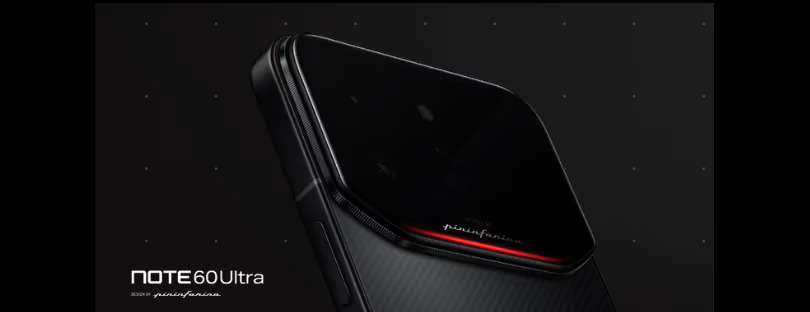
Co-developed with Italian design house Pininfarina, the NOTE 60 Ultra leans heavily into automotive inspiration. That usually translates into marketing fluff, but here it’s actually visible in the hardware.
The biggest design decision is what’s not there: no camera bump. Instead, Infinix introduces a fully integrated aluminum unibody with a seamless rear surface. The camera module is embedded under a continuous layer of Gorilla Glass Victus, creating a smooth, uninterrupted finish.
It’s a clever move. As flagship phones keep stacking bigger sensors, they’re also becoming more awkward to handle. Infinix is clearly trying to reverse that trend.
There are also some more experimental touches. A rear “Floating Taillight” lights up on startup, and there’s a hidden matrix-style display that shows notifications and animations. It’s not essential, but it does reinforce the idea that this phone is designed to be noticed.
A Camera Setup That Finally Matches the Look
Underneath that clean exterior sits a serious camera system. The NOTE 60 Ultra packs a 200MP main sensor, supported by a 50MP periscope telephoto lens and an ultra-wide camera.
On paper, that puts it in the same conversation as Samsung and Xiaomi’s flagship devices.
Where Infinix is trying to differentiate is in processing. Its new XDR Image Engine focuses on improving dynamic range, particularly in tricky lighting conditions like night scenes or sunsets. That’s been a weak point for many non-tier-one brands, so this is a smart area to invest.
Zoom performance is also surprisingly flexible, ranging from optical zoom to 100x digital. Whether that last number is actually usable is another question, but the versatility is there.
The Bigger Story: eSIM and Satellite Connectivity
This is where things get more interesting—especially for Alertify readers.
eSIM is no longer a premium-only feature. It’s quickly becoming the default for global travelers, digital nomads, and increasingly for enterprise mobility setups. By integrating it natively, Infinix is aligning itself with how connectivity is actually evolving.
But satellite is the real differentiator.
Unlike basic emergency SOS features seen in earlier implementations, Infinix is pushing two-way satellite calling and messaging across multiple countries. That positions the device closer to what Apple and Huawei have been experimenting with, but with broader ambition around coverage and usability.
For travelers, this is about more than safety. It’s about continuity. Losing signal no longer means going offline completely.
For the industry, it’s another step toward hybrid connectivity models where terrestrial networks and satellite overlap seamlessly.
Performance and Battery That Aim for Longevity
The NOTE 60 Ultra is powered by a 4nm MediaTek Dimensity 8400 Ultimate chipset, paired with a large 7000mAh battery. That’s already impressive, but Infinix adds an unusual twist: self-healing battery technology.
The claim is that the battery can restore small amounts of health over time, extending its lifespan. If it works as promised, it addresses one of the biggest long-term pain points in smartphones.
Charging is also fast. Wired charging hits 100W, with wireless at 50W, bringing the device from near empty to full in under an hour.
The display and audio setup complete the flagship package. A 1.5K 144Hz screen with high brightness and JBL-tuned stereo speakers make it clear this phone is built for media consumption as much as productivity.
AI and Software: Catching Up, Not Leading
On the software side, Infinix introduces its new GlowSpace interface on Android 16, with a layer of AI-driven features. These include file organization, adaptive suggestions, and even health tracking.
It’s functional, but this is still an area where bigger players like Samsung and Google are ahead. Infinix isn’t redefining AI here—it’s making sure it’s not left behind.
Not Just One Device: The GT Series Signals Broader Strategy
It’s also worth noting that this launch doesn’t stand alone. Infinix recently introduced the GT 50 Pro, a device aimed more at performance-focused users, particularly gamers.
Together, these launches show a clear strategy. The brand is segmenting its lineup while pushing upward into higher-value categories. NOTE 60 Ultra targets premium users, while GT 50 Pro captures a younger, performance-driven audience.
That’s exactly how brands like Xiaomi scaled.
What This Means for the Market
The interesting part isn’t just the device itself—it’s what it represents.
Infinix is blending three trends that are shaping the next phase of mobile:
Design differentiation beyond camera specs
Hybrid connectivity with eSIM and satellite
Long-term device performance, not just launch-day benchmarks
We’re already seeing similar moves from Apple, Huawei, and Samsung, especially around satellite communication. According to industry reports from firms like Counterpoint Research and GSMA Intelligence, satellite-enabled smartphones are expected to grow significantly over the next few years, especially as coverage expands.
The gap between “premium” and “mid-tier” brands is narrowing fast.
Conclusion: A Flagship That’s Actually About Connectivity
What makes the NOTE 60 Ultra interesting isn’t just the 200MP camera or the design. It’s the connectivity stack.
eSIM plus satellite is where the market is heading. Devices are no longer just endpoints—they’re becoming connectivity hubs that adapt to different networks and environments.
Infinix isn’t leading that shift yet, but it’s clearly positioning itself inside it.
And that matters.
Because the next wave of competition in smartphones won’t just be about who has the best camera or fastest chip. It will be about who controls the user’s connectivity experience—everywhere.
Driven by wanderlust and a passion for tech, Sandra is the creative force behind Alertify. Love for exploration and discovery is what sparked the idea for Alertify, a product that likely combines Sandra’s technological expertise with the desire to simplify or enhance travel experiences in some way.