The Shift from Traveller Tracking to Location Awareness
Something interesting is happening in the world of travel risk management. travel risk management technology
For years, companies have tried to keep track of traveling employees using a patchwork of tools. Travel booking data. Mobile apps. GPS check-ins. Airline feeds. Security alerts.
Yet despite all that technology, a simple problem keeps appearing.
Companies still don’t actually know where their people are when it matters.
That is exactly the problem a new webinar featuring SureSIM and travel risk expert Bruce McIndoe is trying to address. The session explores how network event data and mobile connectivity can transform Travel Risk Management (TRM) and move the industry beyond outdated tracking methods.
The shift they describe is subtle but important.
It moves the conversation from “tracking travelers” to “location awareness.”
And if you work in corporate mobility, security, or travel management, that difference matters more than it sounds.
The Problem with Traditional Travel Data
Most travel risk systems today rely heavily on travel booking information.
That means flight reservations, hotel confirmations, and itinerary feeds from global distribution systems (GDS). These feeds have been the backbone of travel management for decades.
But they have limits.
They only tell you where a traveler planned to be, not where they actually are.
Flights get missed. Plans change. Travelers extend trips, cancel hotels, or reroute through different cities.
The result is a visibility gap.
This is exactly what the webinar highlights. Legacy data feeds and traditional travel apps leave critical blind spots when companies try to manage risk.
In real situations like political unrest, natural disasters, or security incidents, outdated travel data can become a serious operational problem.
And that is where connectivity enters the picture.
Why Mobile Network Data Changes the Equation
Mobile networks produce a massive amount of operational data.
Every time a device connects to a network, switches cells, or exchanges data, it creates an event. These events happen constantly in the background of our digital lives.
For telecom companies, this is routine infrastructure data.
But for travel risk professionals, it is something far more valuable.
It provides near-real-time signals about whether a device is active and connected in a particular region.
In other words, it provides situational awareness.
SureSIM’s platform is designed around exactly this idea. The company provides enterprise eSIM connectivity with centralized management and visibility for IT teams and organizations managing global devices.
Because these devices connect across hundreds of networks worldwide, they generate operational data that can support visibility and control for global teams.
That information becomes a powerful layer for risk management when used responsibly.
Instead of relying only on travel bookings or manual check-ins, companies can combine connectivity signals with their existing TRM systems.
 Location Awareness vs GPS Tracking

One of the most interesting ideas the webinar introduces is the distinction between location awareness and GPS tracking.
The difference is not just technical.
It is also about privacy and adoption.
Traditional GPS tracking often raises concerns among employees. Nobody wants their employer watching every movement on a map.
Location awareness works differently.
Instead of constant surveillance, it focuses on network presence signals that confirm whether a device is active in a particular region.
This approach reduces privacy concerns while still giving organizations the information they need to respond during incidents.
It is a balance between operational visibility and personal boundaries.
And that balance is becoming increasingly important as companies expand duty-of-care programs under frameworks like ISO 31030.
Breaking the Silos Inside Organizations
Another theme of the webinar is something many companies struggle with.
Silos.
Travel risk data often lives in different departments.
Security teams monitor threats.
Travel managers track itineraries.
HR manages employee records.
IT handles devices and connectivity.
Each department has part of the picture, but rarely the whole one.
Network event data can act as a bridge between those worlds.
Connectivity information sits naturally at the intersection of IT infrastructure, employee mobility, and operational risk.
This is exactly where enterprise connectivity platforms like SureSIM are stepping in.
Not as another travel tool, but as infrastructure that sits underneath global mobility.
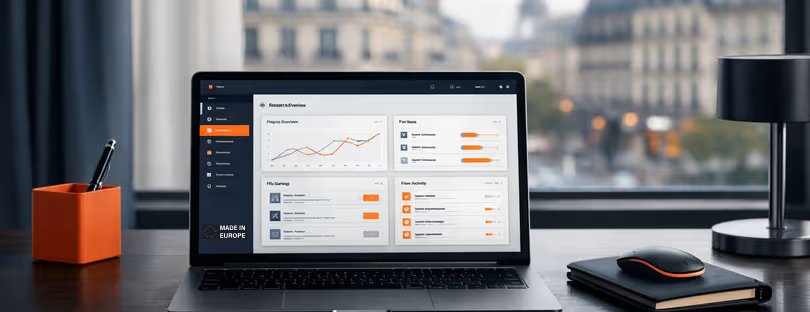
The company’s enterprise eSIM platform allows organizations to monitor usage, control policies, and manage connectivity across global devices from a single interface.
This kind of centralized visibility is exactly what travel risk teams need when responding to incidents.
It turns connectivity into operational infrastructure instead of just a travel convenience.
The Rise of Enterprise eSIM in Risk Management
Over the past few years, eSIM has exploded in the travel market.
Most people associate it with holiday travelers downloading cheap data plans before a trip.
But that consumer story is only one part of the market.
The enterprise side is growing quickly.
Companies increasingly want:
Enterprise connectivity capabilities
- Multi-network access across countries
- Real-time usage visibility
- Centralized management for IT teams
- Security and policy controls
- Predictable cost management
SureSIM positions itself specifically in that enterprise category.
The platform provides connectivity access to hundreds of mobile networks worldwide, with near real-time visibility and management tools designed for corporate IT teams.
That positioning is different from typical travel eSIM providers, which focus mainly on individual travelers purchasing short-term plans.
For risk management teams, that difference matters.
Consumer eSIMs are built for convenience.
Enterprise connectivity is built for operational control.
Why This Conversation Matters Now
There is also a bigger trend behind this webinar.
Travel risk management itself is evolving.
A decade ago, TRM was mostly about travel advisories and insurance coverage.
Today it is becoming a much more integrated discipline involving security, compliance, duty of care, and operational resilience.
At the same time, mobile connectivity has quietly become a dependency for almost everything travelers do.
Authentication codes.
Corporate apps.
Messaging platforms.
Emergency communication.
If connectivity fails, many risk response systems fail with it.
Research in telecom security has already highlighted that many consumer travel eSIM services lack the visibility, policy control, and infrastructure transparency enterprises require.
That gap is pushing organizations toward enterprise-grade connectivity platforms that integrate more closely with IT and security frameworks.
Which is exactly where companies like SureSIM are positioning themselves.
Why This Webinar Is Worth Joining
For anyone involved in travel risk, mobility, or enterprise connectivity, the upcoming webinar offers a practical look at how these ideas translate into real systems.
Participants will explore:
Key discussion themes
- Why traditional travel data sources create visibility gaps
- How location awareness differs from GPS tracking
- How network event data can connect TRM, HR, IT, and security teams
- What an AI-era travel risk program could look like
Attendees will also receive a follow-up white paper summarizing the concepts and practical next steps organizations can take.
For companies trying to modernize their travel risk programs, that insight alone may be worth the session.
But more importantly, the webinar highlights a deeper shift happening across the travel technology ecosystem.
Connectivity is no longer just about getting online.
It is becoming a strategic data layer for managing global operations.

The Bigger Picture for the Travel Connectivity Market
Zoom out, and the implications go well beyond a single webinar.
The travel connectivity market is entering a new phase.
Consumer travel eSIM providers like Airalo, Holafly, and Nomad have focused heavily on price comparison and convenience. They solved the roaming problem for travelers.
But enterprise organizations are facing a different challenge.
They need visibility, control, and resilience.
That is why a new category of providers is emerging around enterprise connectivity infrastructure.
Companies such as SureSIM, Telecom26, and other enterprise mobility platforms are building solutions that integrate connectivity directly into IT and security ecosystems.
In this model, connectivity becomes part of operational infrastructure rather than a traveler purchase.
It sits alongside identity management, device management, and security monitoring.
And that shift may ultimately redefine how companies think about travel risk.
Conclusion: The Next Layer of Travel Risk Infrastructure
The conversation happening in this webinar points to something larger than a new feature or tool.
It signals a structural shift in how organizations manage global mobility.
Travel risk management is becoming more integrated with enterprise technology. Connectivity is becoming more programmable. And the data generated by mobile networks is opening new possibilities for operational awareness.
In that environment, the old model of tracking travelers through itinerary feeds looks increasingly outdated.
Location awareness built on network intelligence is the next step.
Not surveillance.
Not guesswork.
But practical signals that help organizations respond faster when something goes wrong.
Compared with consumer eSIM platforms that focus on traveler convenience, enterprise connectivity platforms like SureSIM are positioning themselves closer to the operational core of corporate mobility.
That makes them particularly relevant for risk management teams navigating the increasingly complex world of global travel.
If this direction continues, the future of travel risk management may depend less on travel data and more on something much closer to the telecom infrastructure itself.
And that makes this upcoming webinar worth paying attention to.
If you work in travel risk, enterprise IT, or corporate mobility, this is not just another webinar.
It is a preview of where the industry is heading.
Register for the session and see how travel risk is evolving from traveller tracking to real location awareness.