Why enterprise connectivity is moving away from traditional telcos
For years, enterprise mobile connectivity followed a familiar route: sign a corporate contract with a major telco, distribute SIM cards, negotiate roaming rates, then hope the monthly bill did not require a forensic investigation. enterprise roaming management
That model still works for many companies. Large operators such as Vodafone Business and Orange Business remain important for enterprises that want scale, account management, voice services, bundled devices, and traditional managed telecom relationships. Vodafone Business, for example, continues to position eSIM around flexibility, device changes and business number management, while its wider IoT connectivity platform focuses on visibility and control for connected assets.
But something is changing.
Enterprise connectivity is slowly moving away from “telco procurement first” and toward a more flexible, software-led model. Not because traditional telcos are disappearing. They are not. But enterprise mobility no longer fits neatly into the old telecom contract.
Companies now want global connectivity that behaves more like SaaS: easy to deploy, centrally managed, visible in real time, scalable by user or device, and flexible enough to support changing travel patterns, distributed teams, contractors, field workers and connected devices.
That is a different buying mindset.
The telco model was built for stability
Traditional enterprise telecom procurement was designed for predictable needs. Corporate phones. Long contracts. Domestic plans. Roaming bundles. Fixed account structures. Centralised billing. Relationship managers. Service agreements.
For stable workforces, this can still be useful.
The problem is that today’s workforce is less stable in how it moves. Employees travel irregularly. Teams appear and disappear around projects. Devices are issued remotely. Contractors need temporary access. Some users need data for three days. Others need it across multiple countries for months. Finance wants clean reporting. IT wants control. Employees want the setup to be instant.
READ MORE: Why Enterprise eSIM Management Is Moving Beyond SIMs
The old model often assumes mobility is a contract. The new model treats it more like an operational layer.
IDC’s enterprise mobility research looks at mobile device deployments as part of the wider corporate workspace strategy, which is exactly where this shift becomes visible: connectivity is no longer just a telecom line item, but part of how people and devices work.
That is why enterprise buyers are asking new questions.
Can we deploy without shipping SIM cards?
Can we activate users remotely?
Can we see usage before the invoice arrives?
Can we change access quickly?
Can we support users without sending them through consumer-style troubleshooting?
Can we manage global data without negotiating a new local arrangement every time the business expands?
These are software questions as much as telecom questions.
eSIM changed the buying logic
eSIM did not just remove the plastic SIM. It changed who can manage connectivity and how quickly it can be deployed.
GSMA Intelligence describes eSIM as moving beyond onboarding and opening new opportunities across consumer, enterprise and IoT markets. It also notes that eSIM is gradually replacing removable SIMs across both consumer and enterprise IoT devices.
That matters because once SIM identity becomes programmable, the old procurement rhythm starts to feel slow. Companies no longer have to think only in terms of physical SIM logistics, local carrier relationships and long activation cycles. They can think in terms of profiles, policies, dashboards, usage controls and remote provisioning.
READ MORE: Enterprise eSIM 101: What IT Teams Really Need
This is where infrastructure-led players like 1GLOBAL become relevant. 1GLOBAL positions itself across business roaming, IoT connectivity, compliance, remote SIM provisioning, entitlement servers and embedded telco/API models. Its enterprise offer also promotes a connectivity management portal for overseeing eSIMs, users, administrators and alerts worldwide.
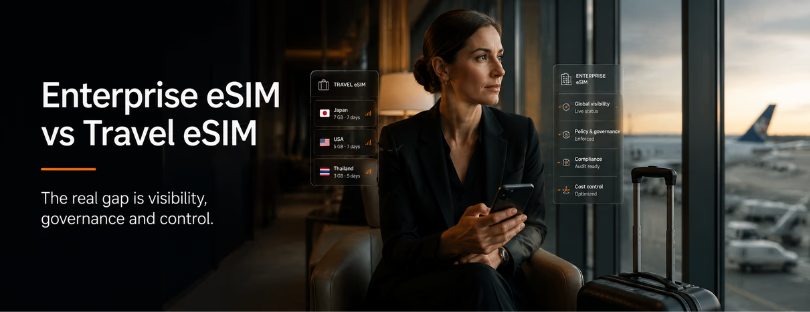
That is not the same proposition as a travel eSIM app. It is closer to connectivity infrastructure as a managed software surface.
Travel-first platforms are pushing upward
At the other end of the market, travel eSIM providers are moving into business use cases.
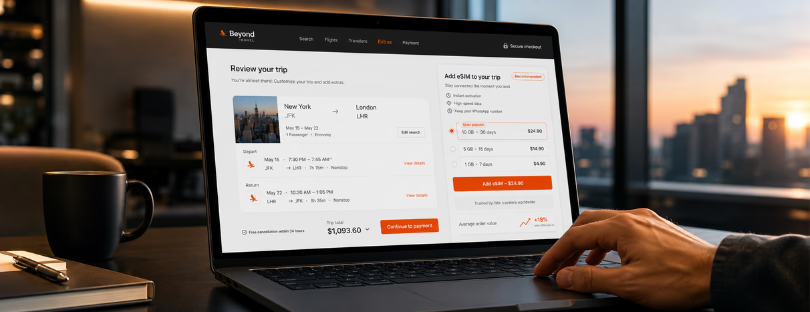
Airalo for Business promotes local, regional and global eSIMs for 200+ destinations, automated renewals and a dashboard showing eSIM expenses, data usage and popular destinations. Holafly Business Center describes itself as a centralised eSIM management platform for IT teams, with instant provisioning from a dashboard and no long-term contracts. GigSky, meanwhile, is strong in travel and specialist mobility scenarios, with its site highlighting 400 network partners across 200 countries and regions, plus cruise ships and airlines.
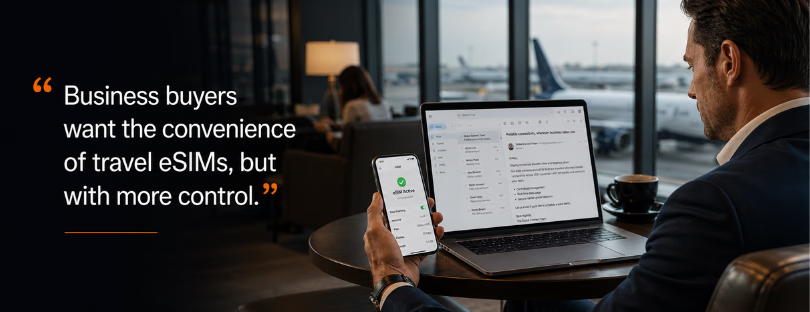
This is not a small shift. It shows that business buyers want the convenience of travel eSIMs, but with more control.
Still, travel-first business products often carry some consumer DNA. They are very good at quick access, destination coverage, simple purchasing and traveller experience. But enterprise buyers may still need deeper governance, procurement alignment, managed service support, security policies, user-level controls and integration with wider IT workflows.
A team dashboard is useful. It is not always the same as enterprise mobility architecture.
SaaS-style connectivity is the middle layer
The most interesting part of the market is not “telcos versus eSIM apps.” That framing is too simple.
The real shift is toward a middle layer: enterprise connectivity platforms that take telecom complexity and present it as something IT, finance and operations can actually manage.
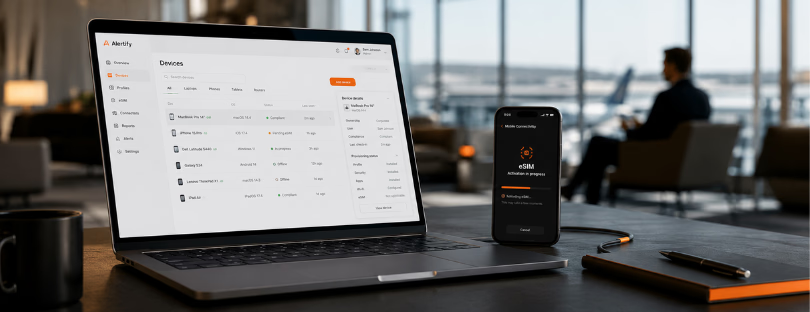
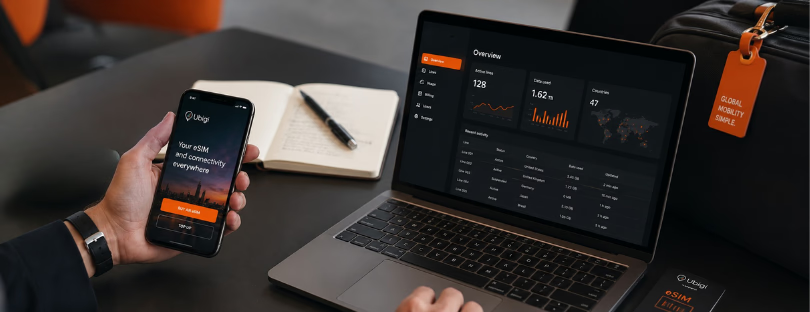
This is where the SaaS comparison makes sense. Enterprise buyers are used to tools where they can add users, assign permissions, monitor usage, control spend, view analytics and change settings without opening a ticket for every small adjustment.
Connectivity is now being pulled into that expectation.
A SaaS-style connectivity approach does not mean telecom disappears. Someone still needs carrier relationships, roaming agreements, compliance, network access and provisioning infrastructure. It means the enterprise experience changes. The buyer does not want to manage the telecom plumbing directly. They want a control layer that makes the plumbing usable.
SureSIM fits into this part of the conversation as one example of an enterprise eSIM platform focused on global workforce and device connectivity. Its positioning is not built around selling one-off travel plans, but around central management, visibility, cost control and deployment across international teams. SureSIM Global describes access to 450+ local carrier networks across 200+ destinations on one plan and agreement.
The important point is not that every company should choose this model. It is this model that answers a buyer’s need that traditional telco procurement often struggles with: faster operational control. enterprise roaming management
What buyers are really moving away from
Enterprises are not moving away from telcos because telcos are irrelevant.
They are moving away from rigid procurement patterns.
They are moving away from waiting weeks for changes that should take minutes.
They are moving away from scattered roaming bolt-ons.
They are moving away from physical SIM logistics.
They are moving away from bills that explain the cost only after it has already happened.
They are moving away from connectivity models where IT cannot see enough and finance cannot control enough.
That distinction matters. Vodafone Business may be the right answer for a company that wants a full enterprise telecom relationship. 1GLOBAL may suit businesses looking for deeper infrastructure, provisioning or embedded connectivity capabilities. Airalo for Business or Holafly Connect may be practical for companies that mainly need easier team travel data. GigSky may make sense for particular travel, aviation or maritime use cases.
SureSIM’s role is narrower and more operational: enterprise eSIM control for companies that want global mobile data managed more like a platform than a roaming add-on.
The next procurement question
The old enterprise telecom question was: “Which operator gives us the best corporate plan?”
The better question now is: “Which model gives us the right level of control?”
That answer will not be the same for every business. Some will stay with traditional telcos. Some will use travel-first business eSIM products. Some will need infrastructure-led providers. Some will want a focused enterprise eSIM management layer.
But the direction of travel is clear. Enterprise connectivity is becoming less about buying access and more about managing mobility as a live operational system.
READ MORE: Why Travel eSIMs Break at Enterprise Scale?
That is why the SaaS-style model is gaining ground. It matches how modern companies already buy and manage software: flexible, visible, user-based, policy-aware and easier to adjust.
Traditional telcos still own a huge part of the infrastructure story. They are not being replaced overnight. But the enterprise experience around connectivity is being rewritten.
And the providers that understand that shift, whether they come from telecom, travel eSIM, infrastructure or managed enterprise platforms, will be the ones that stay relevant.