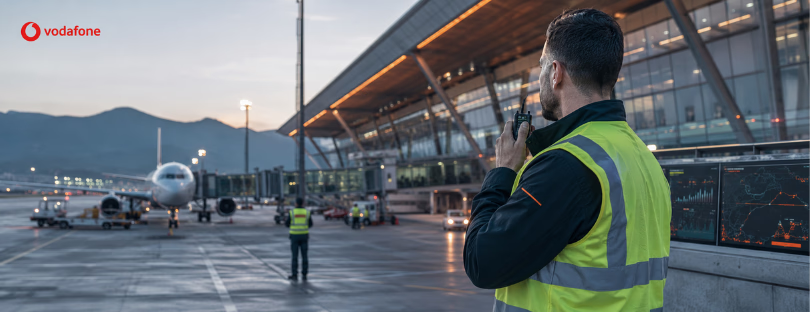
Tirana Airport Gets 5G Security Upgrade With Vodafone
Vodafone Albania and Tirana International Airport have launched “Security That Travels With You”, a new airport safety initiative that says a lot about where Albania is heading. This is not just another airport technology upgrade. It is a sign that Albania’s fast-rising tourism market now needs the kind of digital infrastructure normally associated with larger European aviation hubs. Vodafone Albania airport security
The project, launched on Monday, May 25, brings Airbus’ airport safety solution to Tirana International Airport, supported by Vodafone Albania’s 5G network. According to TIA, the airport becomes the first in the Western Balkans to deploy this Airbus airport security solution as part of Vodafone Group’s global airport security partnership. The goal is practical: faster coordination, real-time communication, better emergency response and stronger security management across airport operations.
That matters because Albania is no longer a quiet tourism side note. INSTAT data cited by Albanian Daily News shows Albania welcomed 12.47 million foreign tourists in 2025, up from 11.7 million in 2024. In the first four months of 2026, foreign tourist arrivals were already up 5.1% year on year, according to SeeNews, based on INSTAT data.
More tourists mean more flights, more pressure on airport teams and more need for systems that do not rely on slow, fragmented communication.
Why this is more than 5G branding
At first glance, the Vodafone Albania role may sound simple: provide connectivity. But the company is positioning itself as something more strategic here. Vodafone is acting as a builder and integrator of critical infrastructure, not just a mobile operator selling network access.
That is the important shift. Airports are not ordinary commercial environments. Ground handling, security, emergency services, airline operations and passenger flow all depend on people being able to reach the right person instantly. If something goes wrong, seconds matter.
The Airbus Agnet platform is designed for exactly that kind of environment. Airbus describes Agnet as more than a push-to-talk solution, offering secure collaboration tools that can support voice, data, live video and location services. In other words, this is not just “walkie-talkie, but on a phone.” It is part of the broader move from legacy radio-style communication toward broadband, app-based mission-critical coordination.
At TIA, the system is expected to support secure instant communication between operational teams, improve coordination during emergencies, and integrate with the airport’s existing infrastructure.
Piervittorio Farabbi, Chief Operating Officer of Tirana International Airport, highlighted the strategic importance of the project:
“Today, Tirana International Airport is taking a major step forward by implementing Airbus’ mission-critical communication platform, supported by Vodafone Albania’s advanced 5G connectivity. Together, we are building a resilient digital infrastructure that ensures safer operations, real-time coordination, and supports the sustainable economic development of Albania.”
Albania needs airport infrastructure that matches its tourism momentum
Albania’s tourism rise has been impressive, but it also brings growing pains. The country is attracting beach travellers, city-break visitors, diaspora traffic, digital nomads and budget-conscious Europeans looking beyond Italy, Greece or Croatia. That mix creates a very different airport rhythm than Albania had a decade ago.
TIA has become the country’s main aviation gateway and a central piece of the tourism economy. The airport’s own market statistics page shows regular air traffic and route reporting, including 2025 and 2026 data releases, which underlines how closely Albania’s aviation market is now being tracked.
This is where Vodafone Albania’s role becomes interesting. The company is not only supporting consumer connectivity in Albania. Through this project, it is moving into the operating layer of national infrastructure. Vodafone Albania says its investments in 4G and fibre infrastructure are already aimed at delivering more advanced connectivity to millions of people in the country. The airport project adds a more sophisticated dimension: connectivity as the foundation for safety, operational resilience and economic growth.
Balázs Révész, CEO of Vodafone Albania, framed it clearly:
“This project clearly demonstrates that Vodafone’s role today goes far beyond traditional telecommunications. Through partnerships with global leaders such as Airbus and strategic institutions like Tirana International Airport, we are bringing international expertise, proven technologies and advanced standards to Albania, supporting the effective operation of critical infrastructure. Our ambition is to be the trusted technology partner that helps build the digital foundations underpinning the modern economy.”
That is a strong message, and honestly, it is the right one. In a tourism economy, connectivity is no longer just about passengers posting beach photos from Ksamil. It is also about whether airport teams can coordinate smoothly when passenger volumes spike, flights are disrupted, or an emergency needs instant response.

The wider airport tech trend
What is happening in Tirana fits a broader global pattern. Airports are becoming smarter, but not only through passenger-facing features such as biometric boarding, self-service kiosks or mobile check-in. Some of the most important innovations are happening behind the scenes.
Critical communications, private networks, 5G, airport operations platforms and real-time situational awareness are becoming core airport technologies. Vodafone and Airbus announced a wider European partnership in 2025 to support secure critical communications for businesses and governments, including sectors such as transportation, utilities, healthcare and event security.
Lionello Ginelli, Key Account Manager for Southern Europe at Airbus Public Safety and Security, explained the practical implementation:
“By combining Airbus’ Agnet mission-critical platform with Vodafone’s premium connectivity, we are delivering a complete, high-level solution tailored to the needs of users.”
The comparison with larger European markets is useful. Big hubs already invest heavily in digital operations and resilience. For smaller but fast-growing airports, the challenge is different: they must modernize quickly, often while traffic is rising faster than expected. Tirana is in that exact moment now.
Final boarding call
The real story here is not that Vodafone Albania brought 5G to another use case. The real story is that Albania’s tourism boom is forcing the country’s infrastructure to grow up fast.
For travellers, airport technology is usually invisible until something fails. For airport staff, it is the difference between improvising and coordinating. For Albania, it is part of a bigger test: can the country turn tourism growth into a more resilient, higher-quality travel economy?
Compared with mature markets, Albania is still building some of that infrastructure in real time. But that may also be its advantage. Instead of patching old systems forever, Tirana International Airport can move directly toward broadband-enabled, mission-critical operations.
Vodafone Albania’s role is therefore bigger than network coverage. It is becoming part of Albania’s digital backbone. And if Albania wants to keep rising as a serious travel destination, that backbone matters just as much as new routes, hotels or beaches.