Saily Adds US Phone Numbers for US$0.99/mo
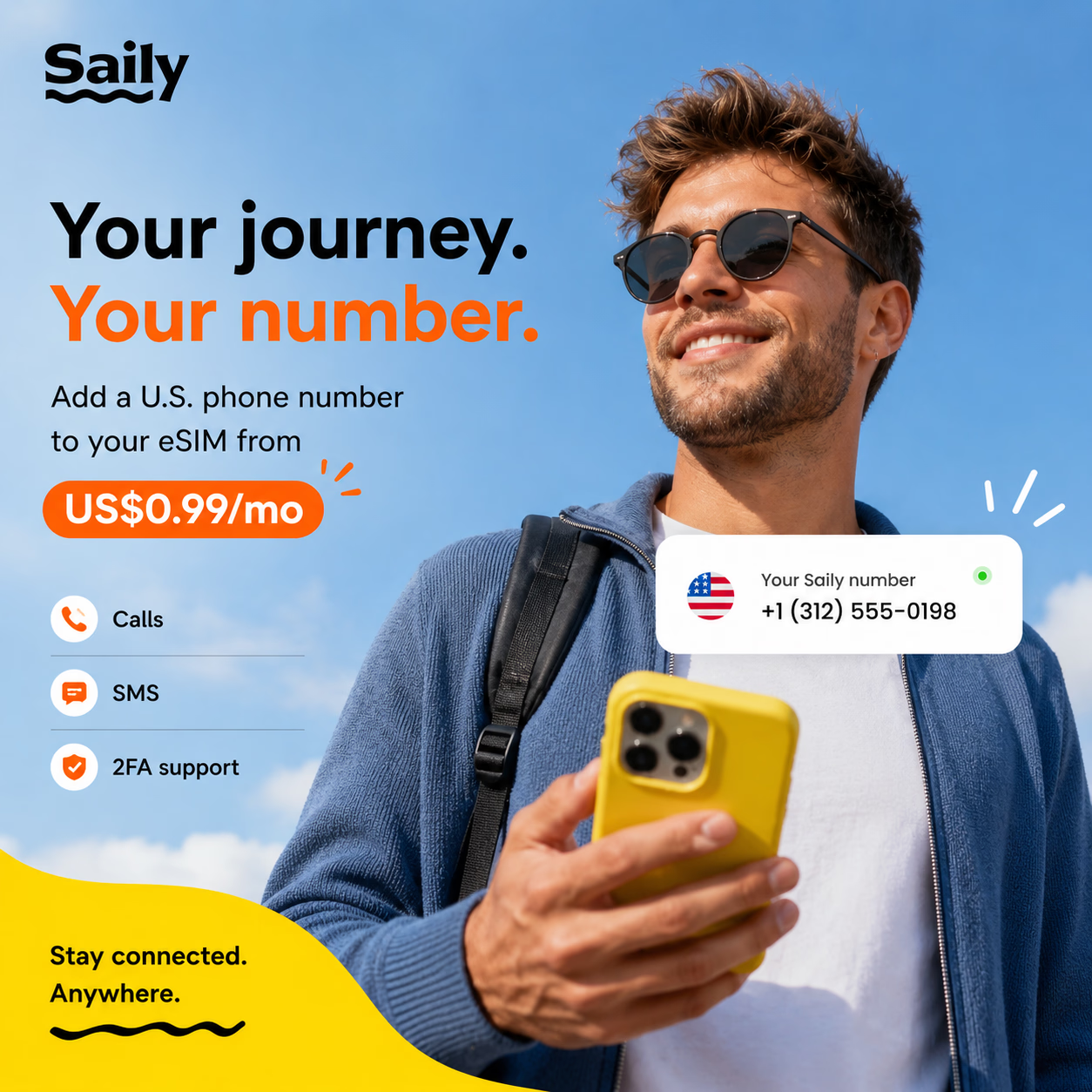
Saily, the travel eSIM app created by the team behind NordVPN, is moving beyond data-only connectivity with Saily phone numbers, a new feature that gives users a dedicated U.S. (+1) number inside the app.
The pitch is simple: “Leave your primary number free for what matters.”
At launch, the number costs $0.99 per month and supports incoming and outgoing calls, SMS, and 2FA verification. In a travel eSIM market still dominated by data packages, this is a meaningful shift. Saily is moving closer to what frequent travellers need: data, calls, messages, and verification in one cleaner setup.
“Every iPhone now has dual-eSIM capability, meaning you can have more than one number active at the same time,” says Vykintas Maknickas, CEO of Saily.
“Saily is built to be your second active number. We give you a fully functional line on your current device to handle all your digital registrations, alerts, logistical calls, and other situations where you do not want to use your primary phone number, leaving it private and free from clutter.”
That last sentence is probably the real story. This is not only about travel. It is about mobile identity, privacy, and using one personal number for everything.
Why travellers may care
Anyone who travels often knows the problem. You land, connect to data, open WhatsApp, call a driver, confirm a hotel booking, receive a delivery update, or register for a local service. The data connection may work, but the moment a platform asks for a phone number, things get complicated.
Saily’s new feature tries to simplify that middle layer. Users get a dedicated U.S. number that stays the same as long as the subscription remains active. They can then add or top up plans for minutes and SMS depending on where they are going. The number does not change every time the travel plan changes, which matters if it is used for registrations, booking confirmations, logistics, or two-factor authentication.

How it works

A Saily phone number is delivered through the app and sits alongside the user’s Saily data eSIM. The app shows remaining data, minutes, and SMS.
Incoming SMS messages are unlimited and do not require an active plan. Outgoing calls work to local numbers within the coverage area of the active plan. Incoming calls can be received from anywhere in the world.
Saily’s support pages describe the number as a real U.S.-based phone number available for voice calls and SMS across more than 130 supported countries. The company also says it can work for OTP and 2FA with selected services, including WhatsApp, Signal, Viber, Airbnb, PayPal, Wise, Venmo, Bunq, Cash App, Klarna, and Robinhood.
READ MORE: Why Your Phone Number Still Matters in the eSIM Era
That sounds strong, but not every platform is guaranteed to accept a U.S. MSISDN for verification. SMS-based verification has always been uneven. Some banks accept secondary numbers. Others reject them. So this is useful, but travellers should not use it as the only recovery method for critical accounts.
There are limits, too. Saily phone numbers do not support MMS, premium-rate numbers, short codes, or call forwarding. For most travellers, that will be fine. For business users who need voicemail flows, number porting, enterprise lines, or advanced call routing, it may feel too light.
What this says about the market
The bigger signal is that travel eSIMs are maturing. The first consumer eSIM promise was simple: avoid roaming charges, buy data before travel, and land connected. That still matters, but it is no longer enough to stand out.
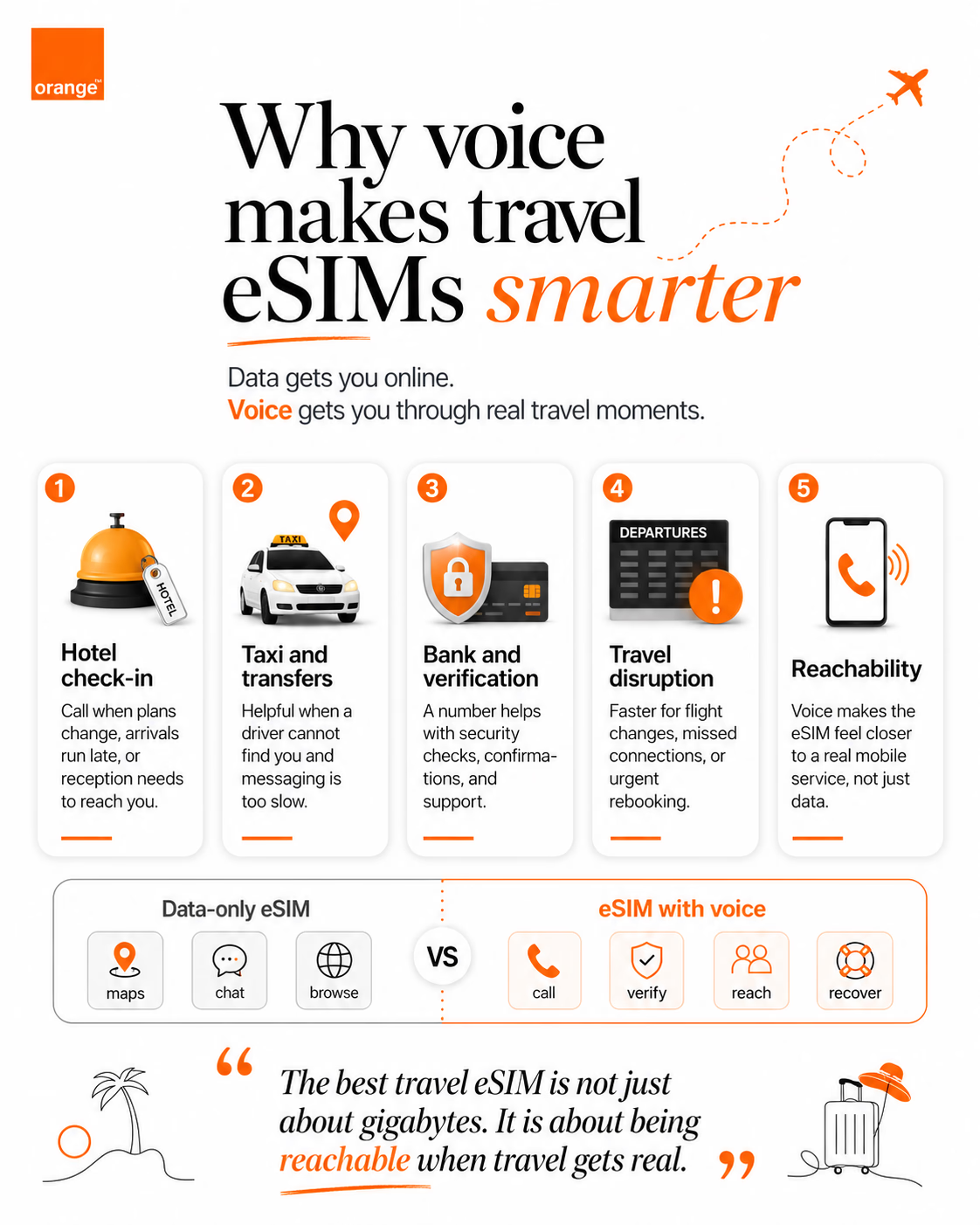
The next layer is identity. Travellers do not only need data. They need to receive a code, answer a delivery driver, call a hotel, register for a local service, separate personal and travel communication, or keep a second number for online accounts. This is where phone numbers, voice, SMS, and verification become much more important than the eSIM market used to admit.
Saily is not alone in moving this way. Roamless now positions itself not only around mobile data, but around global connectivity with data, calls, SMS, and numbers, while its in-app calling service lets users make international calls with rates starting from $0.01 per minute. Numero eSIM has long built its proposition around virtual numbers, data plans, and calling in one app, including U.S. virtual number offers. Yesim also offers virtual phone numbers for markets including the United States, Netherlands, Canada, and other selected destinations, with SMS and verification use cases clearly part of the pitch. eSIMo and Orange Travel eSIM also offer voice services and numbers with their eSIM.
Nomad eSIM is an interesting contrast. Its core travel eSIM product remains mostly data-only, and its own help center says most Nomad eSIM plans do not include a phone number, traditional voice calls, or SMS. That does not make Nomad eSIM weak, because it is still strong in simple travel data. But it shows the market is splitting. Some providers are staying focused on clean, affordable data. Others are trying to become a fuller mobile communication layer.
Telfoni is less known than the biggest consumer eSIM brands, but it is worth attention in this context. Telfoni also belongs in that wider shift. It presents itself around travel SIM cards, eSIM cards, and data bundles for staying connected internationally, which reflects how the category is no longer just about one product type, but about combining practical connectivity options for different traveller needs.
For Saily, the launch of a US$0.99/month phone number is therefore not a small add-on. It is a sign of where travel connectivity is heading. The winning eSIM apps will not only help people get online. They will help them stay reachable, verify accounts, protect their primary number, and manage travel communication without turning their personal phone number into a public utility.
Saily’s move is different because it fits its wider brand logic. Coming from the Nord Security ecosystem, Saily has already tried to position itself around safer, more private connectivity, not just cheap gigabytes. A second number fits neatly into that story. It gives users a way to protect their main number from travel bookings, temporary registrations, delivery apps, marketplaces, local services, and random sign-ups that often become a spam problem later.
 Where it still needs proof
The biggest test will be reliability. Travellers will forgive a second number that is not perfect for casual calls. They will not forgive missed verification codes when they are locked out of an account abroad.
Saily should be very clear inside the app about what works, where it works, and which services are verified. That information needs to be visible at the buying moment, not only in support pages after purchase.
READ MORE: Airhub eSIM: Local Numbers, Voice and Global Plans
There is also the question of local relevance. A U.S. number is useful for many global services, but not ideal for everyone. European travellers may prefer a UK, German, French, or local EU number depending on their needs. If Saily expands the number of options later, the product becomes much stronger.
A practical step toward the next eSIM category
Saily’s phone number launch shows where the category is heading. The next competitive layer will not be only coverage maps and price per gigabyte. It will be identity, verification, privacy, continuity, and control.
For occasional holidaymakers who only need maps, WhatsApp, and Instagram, a data eSIM from providers like Airalo, Nomad eSIM, Ubigi, or Holafly may still be enough. For travellers who regularly create accounts, receive codes, deal with delivery drivers, separate work and personal life, or simply want to stop giving their main number to every service on the road, Saily’s second-number approach is genuinely interesting.
It is not perfect, and it should not be oversold as a universal replacement for a home mobile number. But as a low-cost second line layered onto a travel eSIM, it feels like a smart and timely move. The eSIM market is finally starting to understand that connectivity is not just about getting online. It is about staying reachable, protected, and in control wherever your phone happens to be.