eSIM-Only Phones Put Operators Under Pressure
For years, SIM stock was a physical business. Operators ordered cards, shipped them to stores, filled airport kiosks, bundled cards with devices, and hoped the forecast was close enough.
Physical SIMs still matter in prepaid-heavy markets, IoT deployments, and for customers who simply want something they can hold. But the center of gravity is moving. As more phones arrive without a SIM tray, the question changes from “How many cards are in the warehouse?” to “Do we have enough usable digital profiles, ready to activate?”
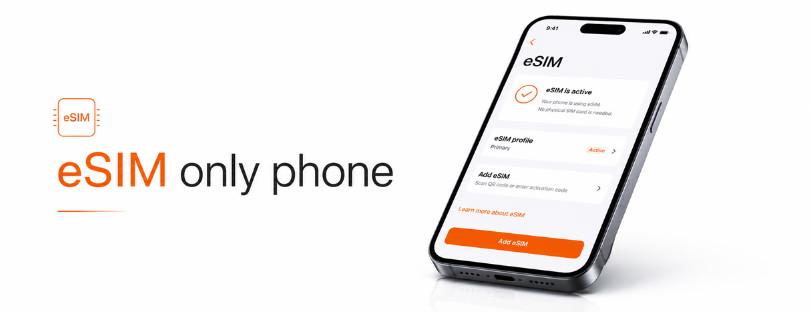
Apple made the direction clear when U.S. iPhone 14 models removed the physical SIM tray. Google followed with U.S. Pixel 10 models that do not use physical SIMs. GSMA Intelligence expects eSIM smartphone penetration to move from early adoption into mass-market territory. Operators can no longer treat eSIM as a side product beside physical SIMs.
Stock does not disappear
eSIM removes plastic, packaging, postage and retail friction, but it creates a different kind of inventory.
Operators still need profiles. They still need activation capacity, entitlement flows, customer verification, fraud controls, and support processes. The stock is digital, but it can still run out, be misallocated, expire, sit unused, or fail at the worst possible moment.
READ MORE: eSIM Smartphones Hit 60% in Premium Market
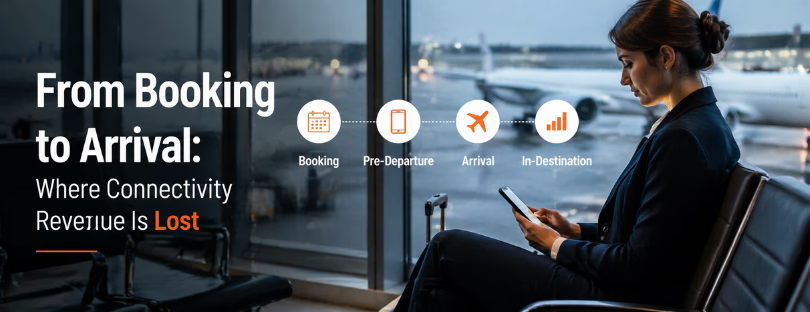
This is where older telecom habits start to creak. A physical SIM shortage was visible. Someone could walk into a stockroom and count boxes. Digital profile shortages are quieter. They show up as failed activations, delayed onboarding, reseller complaints, airport customers stuck without data, or support teams drowning in “my eSIM will not install” tickets.
The best operators will not simply digitize the old process. They will forecast demand by device launch, country, campaign, channel and customer type. A new iPhone release, a holiday travel spike, or a bank launching an embedded mobile offer should all influence profile planning.
 Apple changed the pressure
 Apple changed the pressure
Apple did not invent eSIM, but it changed the pressure around it. When Apple removes a physical slot in a major market, operators do not get to decide whether customers care. Customers arrive with the expectation already built into the device.
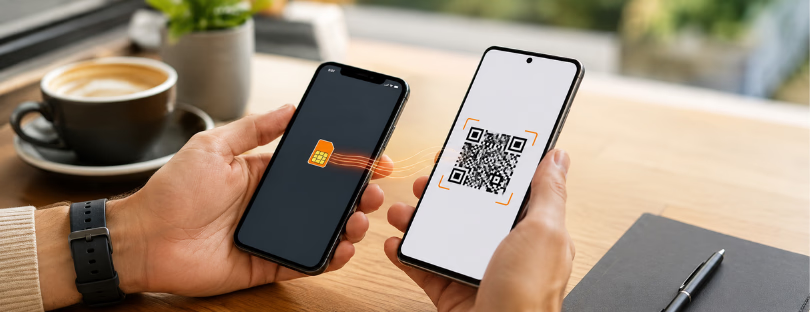
Operators have historically controlled the SIM moment. The plastic card created friction, but it also created control. You needed the operator’s store, envelope, kiosk, or retail partner. With eSIM-only phones, the activation moment moves closer to the device interface, the app, the QR code, the checkout page and the customer’s patience.
Android adoption makes the shift more important. If eSIM-only stays limited to one premium ecosystem, operators can treat it as a special case. Once Google, Samsung and others expand eSIM-first behavior, it becomes a mainstream operating requirement.
MVNOs will feel it first
Large operators can throw money and teams at eSIM transformation. They have vendor relationships, device testing programs, retail training and deeper technical benches. MVNOs and smaller telecom brands usually have less room for error.
For them, eSIM-only devices create a tough gap. Customers expect instant activation, while the MVNO may depend on host operator systems, third-party platforms, manual support, or limited profile visibility. That is where the experience can break.
READ MORE: AI-eSIM: China Mobile Pushes eSIM Beyond Phones
This does not mean every smaller operator needs to build a massive eSIM platform from scratch. In many cases, the smarter move is managed eSIM infrastructure, better stock dashboards, tighter API integrations, and clearer activation messaging.
Some users will still prefer physical SIMs. Some regions have uneven eSIM support. Some travelers still like buying a local SIM on arrival. Operators should not pretend those users have vanished. But they should stop designing the future around them alone.
Forecasting is the new shelf
The old SIM shelf was simple. If stores had cards, sales could happen. The new shelf is invisible. It sits inside subscription manager platforms, activation servers, reseller portals, operator apps, and partner APIs.
Operators need to know not only how many profiles exist, but where they are reserved, which ones are active, which are pending, which channels are consuming them fastest, and which partners are sitting on unused allocations. Digital stock without visibility is just another blind spot.
Vendors such as Thales, G+D, IDEMIA and other eSIM infrastructure players become more important here. The interesting competition is no longer just who can provision an eSIM. It is who can help operators run eSIM like a living supply chain: predictive, secure, auditable and flexible enough for consumer, enterprise, IoT and wholesale use cases.
Conclusion
The move to eSIM-only phones is not really about the death of the plastic SIM. That is the easy headline. The deeper shift is that connectivity is becoming software inventory.
Operators that understand this will treat eSIM stock like modern retailers treat demand planning. They will monitor it, forecast it, automate it, and connect it to customer experience. Operators that do not will discover that “digital SIM” can still feel painfully analog when activation fails.
Apple and Google are pushing the device side. GSMA data points toward broader adoption. Travel eSIM providers have trained customers to expect fast, app-led connectivity. Enterprise platforms are normalizing centralized visibility and allocation. The pressure is coming from every side.
The winners will not be the operators with the most SIM cards left in storage. They will be the ones who know, in real time, whether a customer can activate now, on this device, in this market, through this channel, without needing a support ticket.