eSIM Smartphones Hit 60% in Premium Market
The eSIM story has always had one awkward problem: the technology was ready before the market was.
For years, eSIM sounded like the future, but only for people with the “right” phone, the right carrier, the right region, and enough patience to check compatibility before buying a travel plan. That is now changing fast.
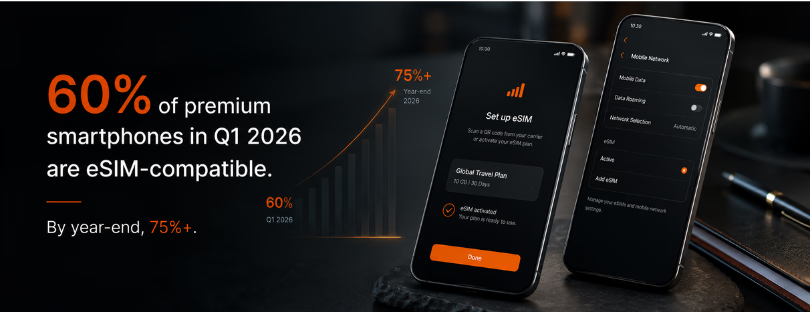
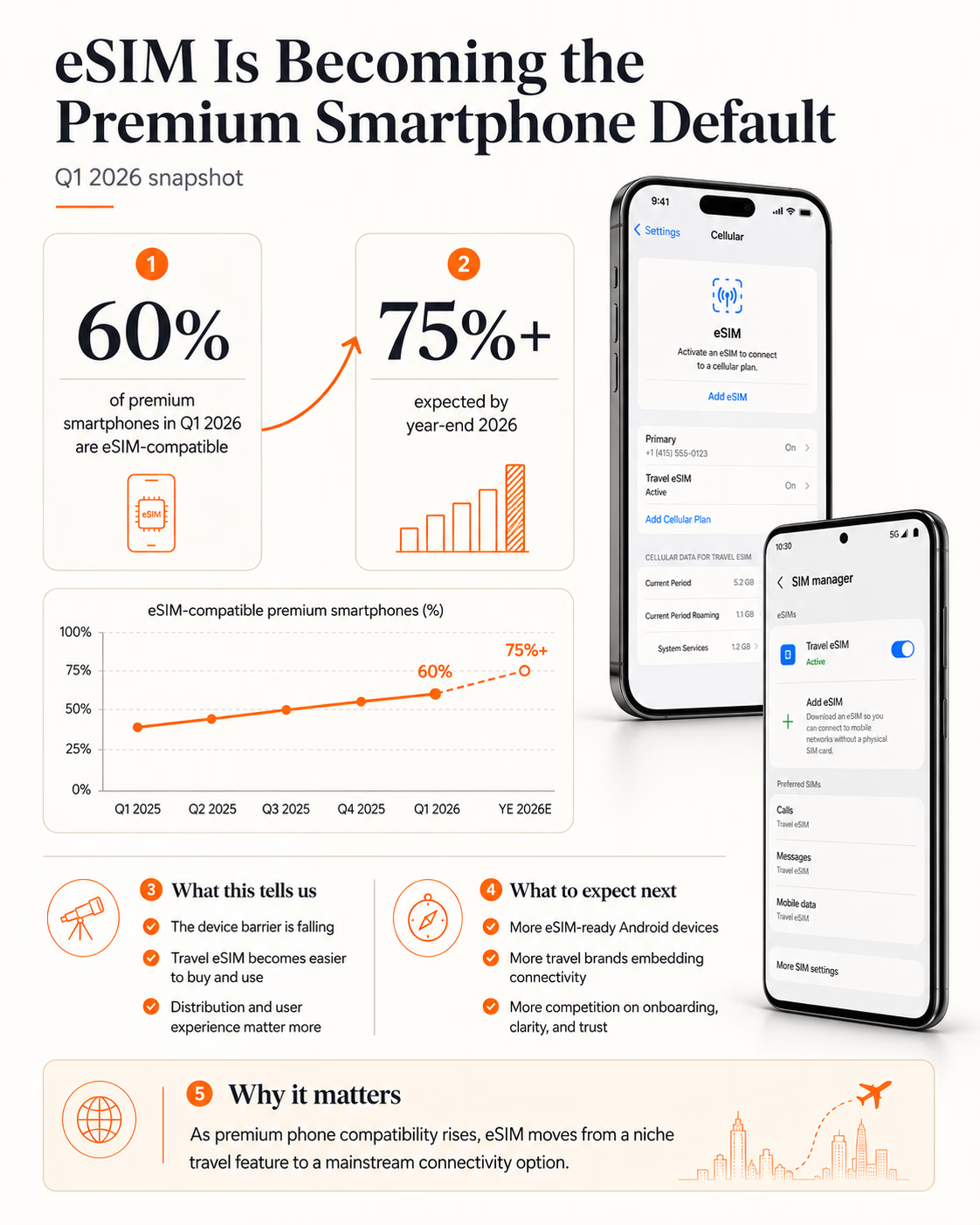
The latest industry signal is simple but important: around 60% of premium smartphones sold in Q1 2026 were eSIM-compatible, with projections suggesting the figure could move above 75% by the end of the year. That does not mean three out of four people will suddenly start using eSIM tomorrow. It means the hardware gate is opening. And in this market, hardware always moves first.
GSMA Intelligence is pointing in the same direction from the adoption side. It estimates globaI eSIM smartphone penetration at 5% at the end of 2025, rising to 10% by the end of 2026, with further growth expected after that. In other words, the installed base is still early, but the new-device pipeline is becoming much more eSIM-ready.
What the 60% number really tells us
The first thing it tells us is that eSIM is no longer a premium experiment. It is becoming a default feature in the phones people actually aspire to buy.
Apple has already trained millions of users to think about mobile plans differently, especially in markets where iPhone models are eSIM-only. Its own support pages now treat eSIM setup as a normal part of using an iPhone, with options such as Carrier Activation, Quick Transfer, QR code activation, app-based setup, and carrier links. That matters because consumer behavior rarely changes through white papers. It changes when the phone in your hand makes the old habit feel slightly outdated.
Samsung, Google, Motorola, Xiaomi, Honor, and others are also widening eSIM support across more devices. Vodafone’s UK compatibility list, for example, now includes major iPhone, Samsung Galaxy, Google Pixel, Honor, and Motorola models. That kind of carrier-facing compatibility page is not glamorous, but it shows the market moving from “does my phone support it?” to “which plan should I activate?”
That shift is huge for travel eSIM providers. The biggest friction point has never been only price or coverage. It has been uncertain. Is my phone compatible? Is it unlocked? Will it work when I land? Do I need to delete my existing SIM? Every new eSIM-ready premium device removes one layer of doubt.

Why year-end 75% matters more
If the market reaches 75%+ eSIM compatibility in premium smartphone sales by the end of 2026, the travel connectivity conversation changes.
Today, many eSIM providers still sell to “aware” users: frequent travelers, digital nomads, business travelers, tech-savvy iPhone owners, and people who already understand roaming pain. By the end of 2026, the addressable audience starts looking much broader. Not everyone will use eSIM, but many more people will be technically able to use it without changing device.
That creates a different competitive market.
The winners will not only be the providers with the longest country list or the cheapest 1 GB plan. Those things still matter, of course. But when eSIM becomes mainstream hardware, the real battleground shifts to onboarding, trust, refunds, app experience, transparency, and how well providers explain “unlimited,” throttling, validity, hotspot rules, and regional coverage.
This is where the market may get uncomfortable. Too many travel eSIM offers are still sold like simple data packs, while the user experience depends on network behavior, device model, carrier lock status, destination rules, and fair usage policies. As more mainstream users arrive, they will not tolerate confusing activation instructions or hidden limits. They will blame the brand, not the technology.
 What we can expect next
Expect three moves.
First, eSIM will spread downmarket. Counterpoint has already described eSIM adoption as widening beyond premium devices, which is the real trigger for mass adoption. Premium phones set the expectation, but mid-range Android makes the market scale.
Second, travel eSIM will become more embedded. Airlines, banks, booking platforms, loyalty apps, hotels, and fintech wallets will want connectivity at the moment of travel intent. That could be check-in, card activation, hotel booking, airport arrival, or even a destination guide inside a banking app. eSIM stops being a separate product and becomes a travel utility.
READ MORE: How to Choose an eSIM Provider for Your Platform
Third, operators will have to respond more seriously. GSMA Intelligence has described 2026 as an acceleration point for consumer eSIM, with eSIM-only devices, China’s eSIM developments, travel eSIM propositions, emerging devices, and bundled connectivity all pushing the market forward.
Operators have a choice: make eSIM activation smoother and more flexible, or watch third-party travel eSIM brands own the customer moment abroad.
The market will split
This is where the comparison with other players becomes interesting.
Consumer travel brands such as Airalo, Holafly, Nomad eSIM, Ubigi, GigSky, Yesim and similar providers are strong because they understand the traveler journey. They sell before departure, speak the language of convenience, and remove the airport SIM counter from the story.
Traditional mobile operators still have the billing relationship, local network control, and trust advantage. But many have been slower to make travel eSIM feel modern, simple, and global. Their roaming bundles often remain tied to legacy pricing psychology.
READ MORE: eSIM White Label: Launch Your Own Telecom Product
Then there are enablement and infrastructure players such as 1GLOBAL, Truphone-style platforms, Gigs, eSIM Go, and other orchestration providers. Their opportunity is different. They help brands sell connectivity without becoming telecom companies. As device compatibility grows, these backend players become more important because every bank, airline, OTA, and travel app suddenly has a more realistic reason to add eSIM.
The 60% figure is not just good news for eSIM sellers. It is a signal to the entire travel and telecom ecosystem: the device barrier is falling, so distribution becomes the new war.
Final thoughts
The most important thing about this milestone is not that premium smartphones are becoming eSIM-compatible. We already knew that direction was coming. The important thing is that eSIM is now entering the phase where the user no longer needs to be an enthusiast.
That changes the rules.
In the early market, providers could win by being available. In the next market, they will need to be understandable. Clear pricing, honest unlimited claims, strong app UX, fast support, and reliable destination coverage will matter more than loud “200+ countries” messaging.
By the end of 2026, eSIM will not be a niche travel hack anymore. It will be a normal connectivity option sitting inside the phones people already carry. The companies that treat this as a product design shift, not just a sales opportunity, will build real trust. The ones still hiding behind vague coverage maps and confusing plan language will discover that mainstream users are much less forgiving than early adopters.