World Cup Ticket Demand Jumps Before Kick-Off
With less than 10 days until kick-off, ticket activity for the 2026 FIFA World Cup has jumped sharply. According to Ticombo, a ticket marketplace, Ticket transactions on its platform surged 677% between early and mid-April compared with the previous two-week period. Searches rose 139%, while the average group-stage listing on Ticombo sits at $877.
That does not tell the full story. The 2026 tournament is the biggest World Cup ever, with 104 matches across 16 host cities in the United States, Canada, and Mexico. That scale creates pressure, but also pockets of opportunity.
“There’s a widespread assumption that World Cup tickets are sold out or unaffordable,” said Peter Savovsky, Chief Operating Officer at Ticombo. “Neither is true across the board. With 104 matches in 16 cities, availability varies enormously depending on which match you’re looking at.”
The tournament opens on June 11 in Mexico City and runs until the final at MetLife Stadium on July 19. The market is hot, but not flat. Some matches are behaving like luxury inventory. Others are still within reach if you are flexible.
The late rush begins
The late surge is not surprising. Early on, fans wait because prices feel too high or travel plans are uncertain. Then squads are confirmed, flights tighten, and missing out starts to feel worse than overpaying.
Ticombo says its highest ticket sales by nation are currently coming from Scotland, Brazil, and Uzbekistan fans. Brazil travels well, Scotland brings a committed support base, and Uzbekistan is making its first World Cup appearance, turning some group-stage tickets into history.
READ MORE: World Cup eSIM Offers Rise Ahead of FIFA 2026
The best-selling group-stage matches on Ticombo include Uzbekistan vs Colombia, Brazil vs Morocco, Haiti vs Scotland, Scotland vs Brazil, and Scotland vs Morocco. Scotland appearing in three of the top five says a lot: demand is not only about title favourites. It is about emotional scarcity.
Two ticket markets
There is no single “World Cup ticket price” anymore.
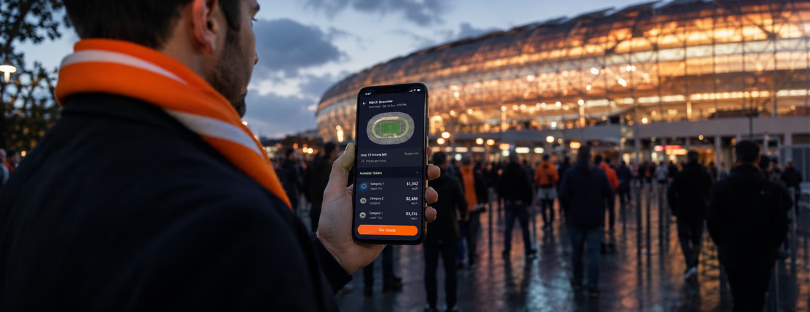
At the top end, the numbers are brutal. Category 1 tickets for the final at MetLife Stadium now cost $10,990, up 72% from the original $6,370 listing in October, according to Ticombo’s data. New front-category pricing tiers have also pushed some group-stage seats past $4,000. Across official resale channels, the average group-stage listing is currently around $1,233.
READ MORE: World Cup 2026 eSIM Guide: What Fans Must Check
That is the premium market: finals, host nations, global favourites, iconic stadiums, and matches with major diaspora demand.
Then there is the second market: mid-tier group-stage fixtures where availability can improve late as sellers release tickets they no longer plan to use. This is where flexible fans still have room to work.
“With less than 10 days to go, fans often start comparing more options as additional inventory becomes available,” Savovsky said. “More sellers list tickets they’ve decided not to use, which improves availability for mid-tier matches. For fans who are flexible, this is often the best window to buy.”

Where fans should be careful
The final official sales phase is open, but the buying experience has not been frictionless. Fans have reported long wait times, limited visibility into available matches, and confusion around sales phases intended for recently qualified nations.
FIFA’s official resale and exchange system gives fans a sanctioned route, while secondary marketplaces such as Ticombo, StubHub, SeatPick, Viagogo and others compete on availability, search experience, and buyer protections. That does not mean every option is equal. It means fans need to compare carefully, not emotionally.
“One of the biggest risks for fans right now is not comparing across platforms,” Savovsky said. “Prices can vary significantly for the same match depending on where you look. Taking the time to check multiple channels before buying can make a real difference.”
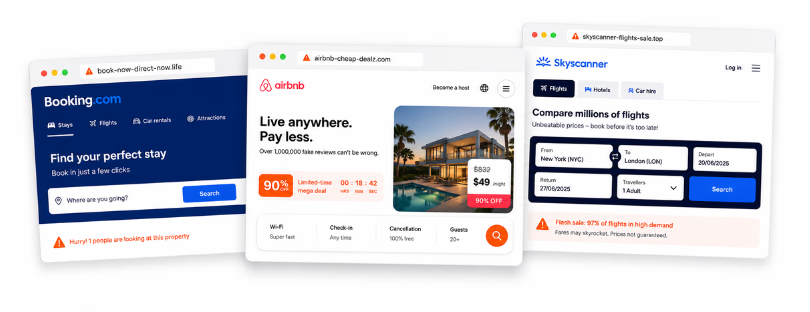
The checklist is boring but necessary: verified sellers, a clear money-back guarantee, visible fees before checkout, realistic delivery timelines, and no pressure tactics. If a listing looks dramatically cheaper than the wider market, it deserves extra caution, not excitement.
Who should wait
For marquee matches, waiting may not help much. Brazil vs Morocco, England vs Croatia, USA vs Australia, and similar high-demand fixtures are likely to remain expensive because the audience is global and emotionally committed.
For mid-tier group games, more inventory can appear as kick-off gets closer, and pricing may stabilise when sellers become more realistic. That does not guarantee bargains, but it does mean the final window is not automatically the worst window. For families or first-time international travellers who need flights, hotels, and tickets locked in early, uncertainty itself has a cost.
Final thoughts about World Cup ticket prices
The 2026 World Cup ticket market is not sold out, but it is not simple either. FIFA’s official channels remain the safest starting point, especially for fans who want the most controlled buying path. Secondary marketplaces can add availability and sometimes better visibility, but only if fans treat them as comparison tools, not shortcuts.
The bigger travel tech signal is clear: major events are becoming dynamic, fragmented, and platform-driven. Fans now navigate real-time pricing, resale rules, mobile ticket delivery, payment friction, travel logistics, and fraud risk before they even reach the stadium.
The smarter move is not to panic-buy the first seat that appears. Compare the official resale platform with reputable marketplaces, check the final checkout price, and choose the match based on both budget and flexibility. For many fans, the best value will be the group-stage match that still delivers the World Cup feeling without turning the entire trip into a financial mistake.