Travel Planning Stress: Why Simpler Trips Win
Travel demand is still strong, but patience for complicated trips is wearing thin. A new Travel Logistics Study from The Tour Guy points to a shift many travelers already feel: the destination may be exciting, but the moving parts around it can quietly drain the joy out of the trip. travel logistics stress
The headline number is sharp. “93% of travelers say logistics reduce their ability to relax while traveling.” According to the study, 55% of travelers identify transportation as the most stressful part of a trip, while another 37% point specifically to moving between destinations.
That matters because travel friction is changing. A decade ago, the big question was often where to go. Now, the question is increasingly how to make the whole thing work without turning the traveler into a part-time operations manager.
The invisible work of travel
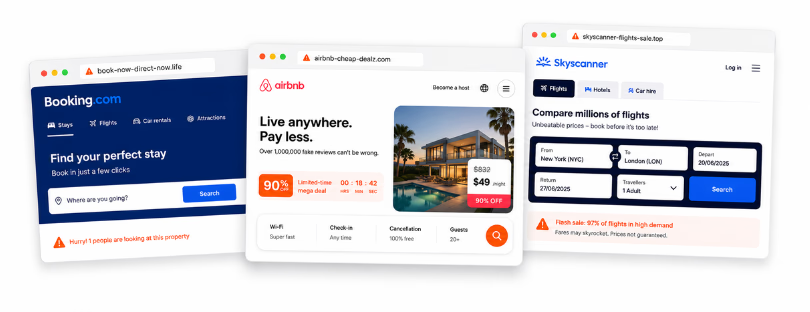
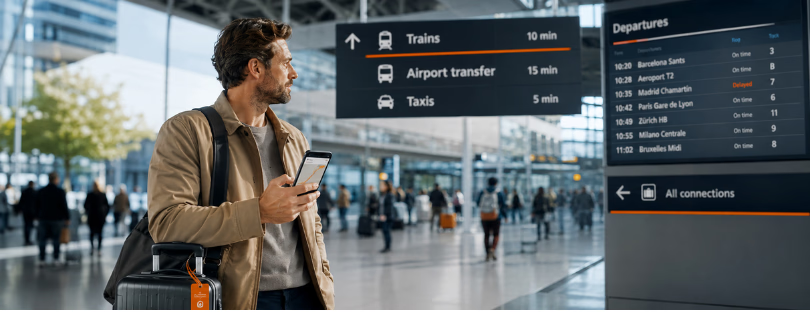
Modern travel looks easier on the surface. Flights, hotels, tickets, maps, ride-hailing, airport transfers and train routes are all available on a phone. But that convenience has created a different burden. Instead of one travel agent or one packaged itinerary, travelers are juggling apps, confirmations, QR codes, meeting points, cancellation rules and local transport systems they have never used before.
“The reality is that most travelers aren’t overwhelmed by deciding where to go — they’re overwhelmed by everything required to make the trip work,” said Sean Finelli, Co-Founder and CEO of The Tour Guy. “Transportation and transitions have quietly become one of the biggest sources of travel stress. People want to maximize every moment and spend less time worrying about logistics.”
Most travelers do not remember the tenth comparison tab they opened. They remember missing a train, standing in the wrong pickup spot, overpaying for a taxi or realizing that a “quick day trip” actually requires three bookings, two transfers and a very brave relationship with local signage.
Why simplicity is becoming a booking trigger
The Tour Guy says 74% of travelers are more likely to book when travel logistics are simplified. That puts ease in the same strategic category as price, reviews and location. It is no longer a nice extra. It is part of the product.
The wider market is moving in the same direction. Travelport’s State of Modern Retailing research found that travelers feel overwhelmed by too much choice, while Expedia Group’s trend work has pointed to more bookable, lower-friction travel moments. Booking.com has also been adding AI-powered planning features, a sign that even the biggest platforms see decision fatigue as a commercial problem, not just a user experience annoyance.
But AI alone does not solve everything. It can suggest a route, build an itinerary or recommend a neighborhood. It cannot always make the ferry wait, turn a fragmented day trip into one coherent experience or explain why a detour is worth taking. The real value is not just information. It is coordination.

Tours are becoming logistics products
That explains why guided day trips are getting more interesting. The Tour Guy has expanded its European day-trip portfolio from Paris and Rome, including Paris to Normandy, Paris to Versailles, Rome to Tuscany and Rome to Pompeii. These are not only sightseeing products. They are logistics products wrapped in storytelling.
“Our travelers want more than just a checklist of attractions,” Finelli added. “They want context, stories, and unforgettable moments — made easy. And that’s exactly what we strive to do.”
This positions The Tour Guy in a busy but growing space. Viator gives travelers a huge choice and flexibility. GetYourGuide has built a strong consumer brand around bookable experiences and is investing in AI-assisted confidence tools. Klook is particularly strong for mobile-first travel, attractions, transport and day tours, especially across Asia. The Tour Guy’s angle feels more curated: fewer moving pieces, more guided structure, and less responsibility placed on the traveler once the booking is made.
That will not suit everyone. Independent travelers who enjoy building every route themselves may prefer flexible tickets, local trains and self-guided discovery. Budget-first travelers may still choose the cheaper, less convenient option. Curated tours also need to be careful not to become too rigid, too rushed or too polished for travelers who want room to wander.
The next loyalty battleground
For travel brands, the message is simple: inspiration gets attention, but reduced friction gets conversion. The best travel companies are no longer only selling access to places. They are selling confidence that the day will actually work.
This is also why connectivity, transport, mobile tickets, local support and clear meeting instructions now matter so much. A beautiful itinerary can collapse quickly if the traveler cannot find the pickup point, load the map, message the guide or understand what happens when plans change.
Ease is the real upgrade travel logistics stress
The Tour Guy’s study lands at the right moment because it captures a truth the industry sometimes underestimates. Travelers do not necessarily want less adventure. They want fewer avoidable headaches around the adventure.
The winning travel brands will not be the ones that add the most options. They will be the ones that remove the right decisions at the right time. In a market full of choice, the premium experience may simply be this: someone has already thought through the messy part.