Fake Booking Sites Fuel Summer Travel Cybercrime
Cybercriminals have found the travel industry’s busiest moment, and it is not hard to see why. Summer is when people book fast, compare prices quickly, chase last-minute deals and enter card details on unfamiliar pages while half-focused on flights, hotels and airport transfers. fake travel booking websites
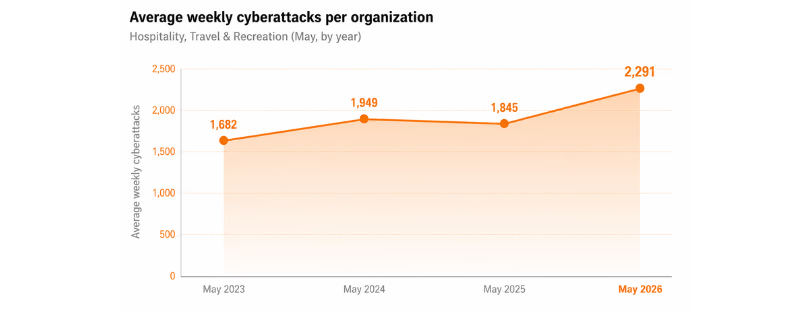
A new investigation by Check Point Research says the hospitality, travel and recreation sector is now facing an average of 2,291 cyberattacks per week per organization. In May 2026, attacks against the sector were up 24% compared with the same month last year. Compared with May 2023, the increase is even sharper: 122%.
That matters because this is not just another warning about “being careful online.” Travel has become one of the easiest moments to exploit trust. A traveler may not know whether a hotel confirmation link, a discount flight page or a property payment request is real until it is too late.
Fake brands, real damage
The most worrying part of Check Point’s findings is the scale of domain activity around travel. In May alone, researchers identified 47,318 new travel-related domains, a 33% increase from April and 19% higher than May 2025. Around one in every 112 was already classified as malicious or suspicious.
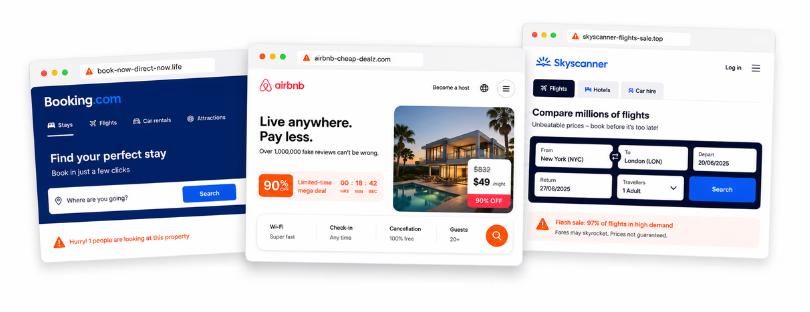
Many of these sites do not need to look perfect. They just need to look convincing enough for a tired traveler trying to confirm a booking before prices rise. Some domains imitate major names such as Booking.com, Airbnb and Skyscanner. Others use hotel-related wording, financial brand references or localised pages designed for specific markets.
 Check Point says bookingnicom copied the Booking.com login flow to collect credentials and payment details. Other fake Booking-style domains targeted Chinese-speaking users with localised design, RMB pricing and seasonal sale messaging. A domain posing as Airbnb Canada used attractive property images and city references, while fake Skyscanner-style pages pushed non-existent discounts and deposit requests.
This is where travel phishing has become more professional. It is no longer just badly written emails from unknown senders. It is infrastructure, timing and emotional pressure.
Why travelers fall for it
Rui Duro, Country Manager for Portugal at Check Point Software, explains the timing clearly:
“Dynamic criminals know that summer is a period when millions of people make reservations, buy trips, and make online payments. They take advantage of the urgency, distraction, and search for promotions to create highly convincing campaigns that exploit consumers’ trust in major travel platforms.”
That trust is the keyword. Travel platforms have trained users to move quickly. We are used to limited room availability, dynamic pricing, flash deals, mobile confirmations, and payment links. The user experience is convenient, but it also creates a perfect opening for fake urgency.
This does not mean travelers should avoid online booking or become paranoid about every offer. It means the old advice, “check the spelling,” is no longer enough. Some fake domains are close enough to pass a quick glance. Some pages look polished. Some scams arrive through ads, social media or email threads that feel legitimate.
A wider phishing economy
The travel sector is not being attacked in isolation. The Anti-Phishing Working Group reported that phishing attacks rose in Q1 2026, while impersonation remained a major threat across social platforms. Telecom brands have also become heavily targeted, which matters because roaming, mobile accounts and verification codes are now part of the same travel journey.
ENISA’s 2025 threat landscape points to a broader European cyber environment where attackers reuse tools, exploit trusted services and collaborate across attack models. In plain English: criminals are industrialising trust abuse.
For hotels, airlines, OTAs and travel marketplaces, the lesson is uncomfortable. Brand trust is no longer protected only by good customer service or a recognizable logo. It now depends on domain monitoring, fast takedowns, clearer in-app communication, better payment flows and stronger customer education before peak season starts.
 Safer booking habits
 Safer booking habits
A few simple habits still make a real difference. Type major travel URLs directly into the browser or use the official app. Be cautious with paid ads for unusually cheap offers. Avoid entering card details after clicking from an email or social message. Use credit cards where possible, since disputes are usually easier than with debit cards. Enable two-factor authentication on travel accounts, especially on platforms that store payment details or loyalty information.
For people booking only through corporate travel systems, this may feel less urgent. For independent travelers, families and digital nomads chasing flexible deals, it is worth slowing down before paying.
Travel brands also need to improve. Too many still rely on users to spot fraud on their own. That is not realistic in 2026.
Final take
The summer travel scam boom shows how valuable travel intent has become. When someone is ready to book, they are also ready to pay, share documents and trust a familiar brand. That combination is irresistible to cybercriminals.
Compared with financial services or telecom, travel has a harder problem because the customer journey is fragmented across search engines, OTAs, airlines, hotels, payment providers, messaging apps and roaming tools. Every extra step creates another opening.
The winners will not be the brands that only warn users after something goes wrong. They will be the ones who make safe booking feel as seamless as booking itself. In summer 2026, cybersecurity is not a back-office issue for travel. It is part of the customer experience.