The Travel eSIM Comparison Race Gets a New Player: eSIMIntel
Travel eSIM has crossed an important line. It is no longer just a clever workaround used by digital nomads, telecom people and frequent flyers who enjoy testing settings menus before breakfast. It is becoming a normal part of travel planning.
The numbers explain the mood shift. GSMA Intelligence says global eSIM smartphone penetration reached 5% at the end of 2025, is expected to reach 10% by the end of 2026, and should overtake removable SIM smartphone connections by 2030. Consumer awareness has also moved sharply, from around 25% to about 60%, with more than half of consumers now expressing interest.
That sounds like a clean adoption story. It is not.
As eSIM becomes mainstream, the market is getting harder for travelers to read. New providers keep appearing. Established travel eSIM brands are expanding. Operators are rethinking roaming. Fintechs are testing embedded connectivity. Airlines, travel platforms and digital marketplaces are starting to see mobile data as a useful add-on, not an awkward telecom extra.
In other words, eSIM is no longer only a product. It is becoming a distribution layer.
Everyone Wants the Traveler
This is why the market feels suddenly crowded. eSIM providers are already fighting for consumer attention. At the same time, banks and fintechs are looking at eSIM as a travel engagement feature. Revolut’s eSIM offering is a good example of how finance apps are drifting into telecom utility.
Operators are watching closely, too. For years, roaming was something customers discovered through a bill. Travel eSIM changed the habit: people now compare, buy, and install connectivity before they leave home. That pushes operators to rethink whether roaming should stay passive or become a more visible, app-led travel product.
Airlines and travel companies have different motivations. They already own the booking moment. If a traveler has just bought a flight, hotel or tour, selling connectivity before arrival is natural. The booking confirmation should not end with a PDF. Increasingly, it can end with the traveler ready to land online.
The problem is that more sellers do not automatically create better decisions. They create more comparison fatigue.
 The Rise of Comparison Sites
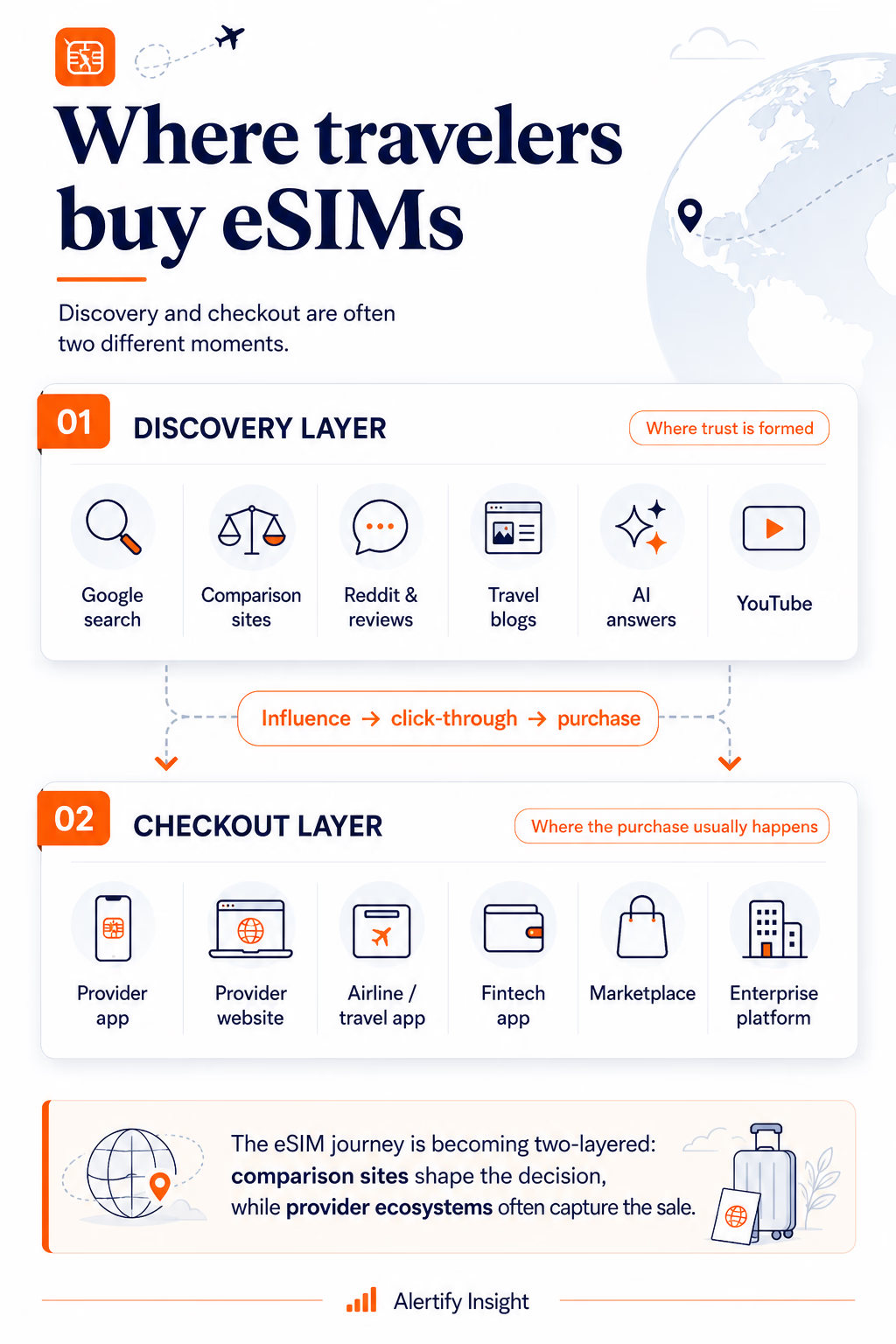
That is where eSIM comparison sites become important. They are trying to turn a noisy market into something readable.
Some focus on scale. eSIMDB positions itself as one of the largest independent travel eSIM comparison sites, with more than 400,000 prepaid plans from over 170 providers. That makes it useful for price hunters and data-heavy researchers who want the widest possible view.
READ MORE: Unlimited eSIM Comparison: Which One Is Best?
Others focus on a cleaner funnel. esims.io presents itself as an independent comparator with more than 94,000 plans, 45 providers, app-based comparison and a no-paid-placement claim. eSIM Seeker, Find Your eSIM, Simbud, eSIMsCompare and newer resources such as eSIM Intel all play in the same trust space, but with different levels of scale, proof, testing and editorial depth.
This is exactly why the comparison table inside this article matters. Public review volume is thin for several players, so it is not enough to say “this site has reviews” or “this site looks safe.” A better analysis separates review evidence from platform claims, database scale, update signals and market positioning.
That distinction is important. A site can have a huge database but weak user-review proof. Another can have a beautiful interface but limited third-party validation. A smaller editorial challenger may be clearer and more trustworthy in tone, but still need more providers, testing data and public authority signals.
Where Alertify Fits
Alertify’s role in this market is different from a pure price-comparison engine. Most comparison sites answer the first question: which plan is cheapest, biggest or easiest to buy?
Alertify’s stronger position is to answer the second question: why do similar-looking eSIMs behave differently?
That means looking beyond headline gigabytes. Network partner, routing, throttling, fair-use wording, hotspot rules, activation windows, refund logic and support reality often matter more than the cheapest 5GB plan. Two eSIMs can look identical in a table and feel completely different in an airport, hotel lobby or train station.
READ MORE: Comparison between traditional SIM and eSIM
That is why tools like the Alertify Cheat Sheet and Best eSIM Finder matter. They sit between raw comparison and editorial judgment. They help travelers and industry readers understand the market without pretending that every trip has one universal “best” answer.
This also gives Alertify a useful position with providers, operators and travel brands. As the market expands, companies do not only need visibility. They need positioning. They need to explain who their eSIM is for, where it performs well, what trade-offs exist and why travelers should believe the promise.
Conclusion
The launch of another comparison site, including eSIM Intel, is not the main story. The main story is that eSIM has become big enough to need a serious trust layer.
When fintechs, airlines, travel companies, operators and specialist providers all move toward the same traveler, comparison stops being a convenience and becomes infrastructure. The winners will not simply be the sites with the largest tables. They will be the ones who help travelers understand what those tables actually mean.
That is where the market is heading: from “Can I buy an eSIM?” to “Can I trust this eSIM, this provider and this recommendation?”
And that is a much more interesting market.