Kudo eSIM Debuts with 3GB Travel Data from €2.75
Kudo eSIM has launched its travel eSIM app, adding another low-cost option to a market that is getting busier, sharper, and much more interesting for everyday travelers.
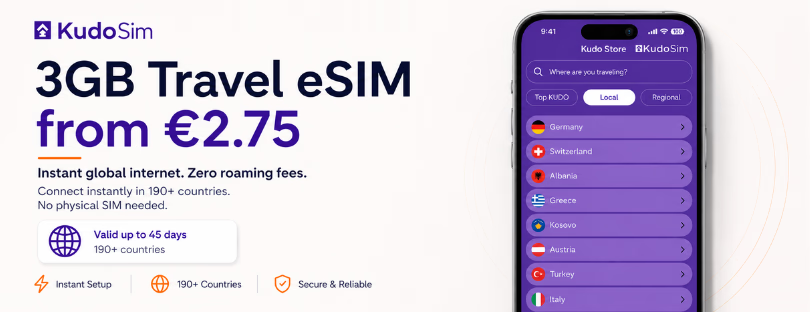
The company says its app offers mobile data plans in more than 190 countries, with 3GB travel eSIM plans starting from $2.75 and a validity of up to 45 days. The pitch is clear: buy data before or during a trip, install the eSIM digitally, keep your physical SIM or home number active, and avoid the familiar airport routine of kiosks, passport checks, SIM trays, and confusing roaming fees.
On its public site, Kudo positions itself around instant global internet, 190+ country coverage, no physical SIM, and 4G/5G access, which puts it directly in the mainstream travel eSIM category rather than a niche telecom product. That matters because travel eSIMs are no longer just for tech-comfortable frequent flyers. They are becoming a normal pre-trip purchase, almost like travel insurance or airport transfer planning.
“Travel internet should be simple, transparent, and affordable,” said the Kudo eSIM team. “We created Kudo eSIM for people who want to land connected, avoid roaming surprises, and manage their travel data directly from their phone.”
Why This Launch Matters
Kudo is entering the market at a good moment, but not an easy one.
Demand is clearly moving in its favor. Juniper Research estimated that travel eSIM package revenue would reach $1.8 billion by the end of 2025, up 85% from 2024, helped by stronger price competition and easier connectivity-as-a-service infrastructure. GSMA’s 2025 eSIM compliance work also points to wider acceleration across eSIM-enabled devices, platforms, and secure provisioning standards.
In plain English: the pipes are maturing, the phones are ready, and travelers are getting used to the idea that mobile data abroad should not require a shop visit.
But the competition is intense. Airalo has strong consumer recognition. Nomad is popular with frequent travelers who like regional simplicity. Saily, backed by Nord Security, is pushing hard on app experience and privacy-adjacent travel tools. Holafly has built a strong position around unlimited-style plans. Ubigi and Yesim are also credible names for travelers who want broad coverage and a more established brand track record.
So Kudo’s starting price is useful, but price alone will not be enough. In travel eSIM, the real test usually comes after purchase: Does the QR install cleanly? Does the phone connect when the plane lands? Is the network usable in real travel conditions? Can support solve a problem quickly when someone is standing outside an airport trying to load a ride-hailing app?
The Traveler Use Case
Kudo’s strongest early appeal is probably the practical traveler who does not want to overthink connectivity.
A student going to Greece for three weeks, a family traveling across the Balkans, a business traveler flying to the United States, or a digital nomad moving between Turkey and Europe all have the same basic problem: they need maps, messaging, banking verification, hotel apps, transport tickets, and maybe a hotspot for a laptop. They do not necessarily need a complex telecom relationship.
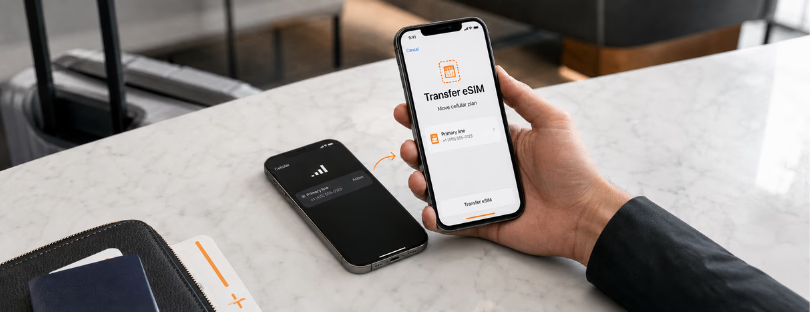
This is where Kudo’s app-led model makes sense. Users browse by destination or region, choose a data package, install the eSIM on a compatible smartphone, and activate mobile data when needed. The ability to keep the home SIM active is especially important for banking codes, WhatsApp continuity, iMessage, and work calls.
That said, Kudo will not be the perfect answer for every traveler. Heavy video users, remote workers who need predictable high-volume data, or people who rely on voice minutes and SMS may still need to compare carefully. Some may prefer Holafly-style unlimited options, a local SIM for longer stays, or a more enterprise-grade provider if they are managing connectivity for employees rather than one personal trip.
What To Watch Next
The interesting question is not whether Kudo can sell cheap travel data. Many providers can do that now. The harder question is whether it can build trust.
Travel eSIM buyers increasingly look beyond “190 countries” and “low prices.” They want clearer network information, transparent fair-use policies, simple refund rules, visible customer support, and fewer surprises around activation timing. If Kudo can make those details easy to understand inside the app, it will have a stronger chance of standing out in a crowded field.
There is also room to improve the category itself. Too many eSIM brands still sound interchangeable: same promise, same three-step setup, same global coverage claim. Kudo’s opportunity is to be more specific. Show realistic destination examples. Explain who each plan is for. Make compatibility obvious. Help users avoid the classic mistake of activating too early. That kind of clarity often matters more than a slightly cheaper starting price.
Conclusion
Kudo eSIM is not reinventing travel connectivity, but it is arriving in a market where simple, affordable, app-based mobile data is becoming expected rather than novel. Its launch fits the bigger shift away from roaming shock and airport SIM errands toward pre-planned digital connectivity.
The challenge is differentiation. Airalo has scale, Saily has brand momentum, Holafly owns much of the unlimited conversation, and players like Yesim, Nomad eSIM, and Ubigi already have recognition among frequent travelers. Kudo’s opening advantage is affordability and broad coverage. To turn that into real market presence, it will need to prove reliability, support quality, and transparency trip after trip.
For travelers, that is good news. More competition means better prices, cleaner apps, and fewer reasons to accept expensive roaming by default. Kudo is one more signal that the travel eSIM market is moving from early adoption into everyday travel behavior.