Gigaset GX30 and GX50: Rugged 5G Phones With eSIM
Gigaset’s new GX30 and GX50 arrive at an interesting moment for rugged smartphones. The category used to be predictable: thick body, rubberized corners, industrial look, long battery life and compromises almost everywhere else. Useful, yes. Elegant, rarely.
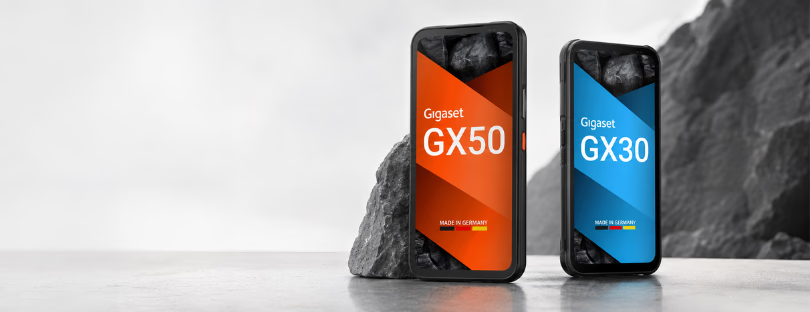
That is the gap Gigaset is trying to close with its new GX generation. Both devices combine 5G, IP68/IP69K protection, MIL-STD-810H certification, eSIM support, removable batteries and seven years of security updates, while staying around 10 mm thick and under 250 g. The phased rollout starts from July 2026, with the GX30 priced at €329 and the GX50 at €449. Gigaset
“Rugged smartphones are often associated with large and heavy devices. With the GX30 and GX50, we demonstrate that modern smartphones can be powerful, durable, slim and elegant at the same time. This combination is exactly what defines the new GX generation,”
says Ralf Lueb, Senior Vice President Global Sales & Marketing at Gigaset.
For travel and mobile work, that positioning matters. A rugged phone is no longer only about surviving mud, rain or a drop on concrete. It is increasingly about dependable connectivity, longer ownership cycles and fewer small failures when people are away from their desk.
GX30
The GX30 is the practical all-rounder. It comes with a 6.58-inch FHD+ display, a 120 Hz refresh rate, wet-hand and glove-touch support, and a removable 5,000 mAh battery with fast and wireless charging. MediaTek’s Dimensity 6400 platform should be enough for navigation, messaging, productivity apps, hotspot use and travel admin.
It also includes a 50 MP dual-camera system, NFC, Nano SIM and eSIM support, plus shortcut keys including a dedicated SOS button. That mix makes the GX30 feel less like a specialist tool and more like an everyday phone for business travelers, outdoor workers, logistics teams or anyone tired of babying fragile devices.
GX50
The GX50 is where Gigaset pushes the premium argument harder. It gets a larger 6.77-inch FHD+ AMOLED display, the MTK7300 5G platform built on 4 nm technology, 8 GB of RAM, 256 GB of storage, Wi-Fi 6E, Bluetooth 5.4, an in-display fingerprint sensor and a Pogo Pin interface.
The camera setup is also more ambitious: a 64 MP main camera, 32 MP ultra-wide camera, dedicated macro camera and 32 MP front camera. That will appeal to field professionals who document work, creators who travel in rougher environments, and users who want durability without giving up a modern media experience.
Software Matters
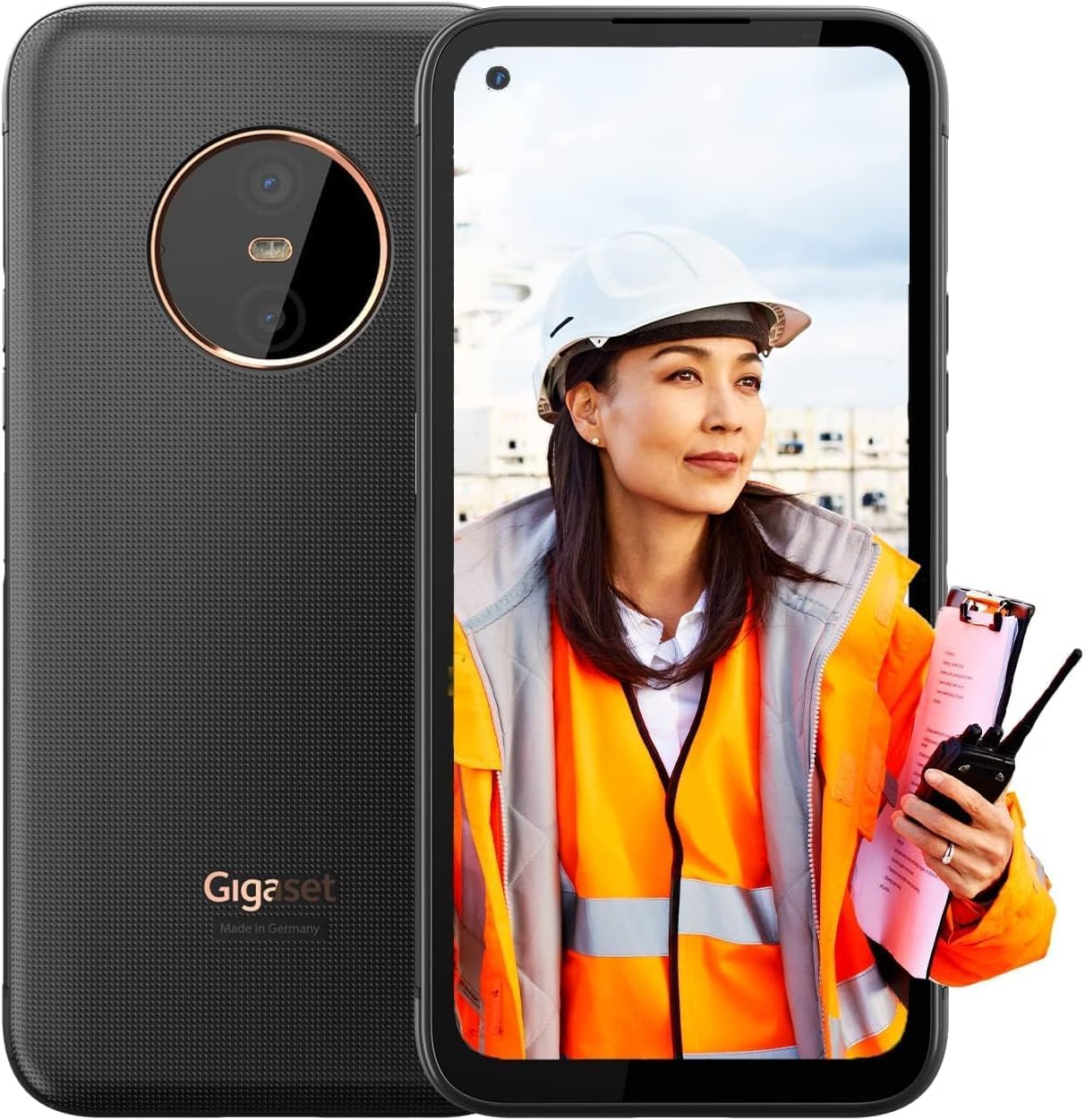
The strongest part of the announcement may not be the rugged shell. It may be the software promise. Both phones ship with Pure Android 16, without third-party pre-installed apps, advertising software or unnecessary background services, and Gigaset says its software and update infrastructure is hosted in Germany. The company is also promising seven years of security updates.
That puts Gigaset in the right conversation. Google’s Android Enterprise Recommended requirements place clear emphasis on published security update information for rugged devices, while Samsung’s Galaxy XCover7 Pro also leans into long support, enterprise security and MIL-STD-810H/IP68 durability. Android Enterprise, Samsung Business
Market Context
There are obvious alternatives. Samsung’s XCover line remains the enterprise benchmark, especially for organizations already invested in Knox and Samsung’s device ecosystem. Fairphone is not rugged-first, but its long software support and repairability make it attractive for sustainability-minded European buyers. Fairphone Support
At the heavier end, brands such as Ulefone and Cat-style rugged devices still serve users who want extreme outdoor features, satellite messaging, night vision or oversized batteries more than pocketability. Ulefone’s Armor devices, for example, lean into IP68/IP69K, MIL-STD-810H and specialist outdoor use cases. Ulefone
This is also where Gigaset’s offer is not for everyone. If someone needs thermal imaging, satellite SOS, huge battery capacity or a device designed for extreme industrial abuse, the GX30 and GX50 may feel too civilized. And while eSIM support is welcome, Gigaset could go further by explaining enterprise deployment tools, repairability details and how many Android version upgrades sit behind the seven-year security promise.
Still, the pricing is sharp. At €329 for the GX30 and €449 for the GX50, Gigaset is not trying to sell rugged as a luxury niche. It is trying to make durability feel normal.
Conclusion
The GX30 and GX50 suggest that rugged smartphones are entering a more mature phase. The winning devices will not simply be the toughest. They will be the ones that combine resilience, clean software, strong update policies, eSIM flexibility and a design people are willing to carry every day.
For Alertify readers, that is the real story. Travel connectivity is not only about the plan you buy. It is also about the device you trust when the airport Wi-Fi fails, the weather turns, the job site is messy or the roaming setup needs to work the first time. Gigaset’s new GX generation looks built for that practical middle ground: tougher than a mainstream phone, less awkward than an old-school rugged brick, and priced for people who need reliability rather than just the idea of it.