Comparison between traditional SIM and eSIM
In the world of mobile technology, the SIM card has been an essential component for cellular connectivity. It is a small chip that stores your phone number, personal data, and account information. Traditionally, a physical SIM card is inserted into your phone to access cellular networks. However, with the advent of eSIM technology, things are changing. eSIM vs traditional SIM
In this article, we will compare traditional SIM cards and eSIMs, highlighting the benefits and drawbacks of each.
Traditional SIM Card eSIM vs traditional SIM
A traditional SIM card is a small, removable card that is inserted into a mobile device in order to connect to a cellular network. These cards have been around since the early days of mobile phones and are still widely used today. Traditional SIM cards are available in different sizes, including the standard SIM, micro-SIM, and nano-SIM.
Benefits of Traditional SIM
One of the benefits of traditional SIM cards is that they are widely available and can be purchased from a variety of sources, including mobile network providers and third-party vendors. They are also very easy to use, as all you need to do is insert the card into your phone and you’re ready to go.
Drawbacks of Traditional SIM
One of the main drawbacks of traditional SIM cards is that they can only be used with one mobile network provider at a time. This means that if you want to switch to a different provider, you will need to purchase a new SIM card and go through the activation process again. Traditional SIM cards can also be lost or damaged, which can result in the loss of your phone number and other important data.
eSIM Technology
eSIM technology represents a new and innovative type of SIM card that is directly embedded into mobile devices. Therefore, there is no physical SIM card to be inserted or removed. The eSIM is built into the device and can be programmed with various mobile network profiles.
eSIM vs Traditional SIM
One of the main differences between eSIMs and traditional SIM cards is that eSIMs can be reprogrammed with different mobile network profiles. This means that users can switch between different providers without the need for a physical SIM card. eSIMs are also much smaller than traditional SIM cards and take up less space inside the device.
Benefits of eSIM
One of the main benefits of eSIM technology is that it allows users to switch between different mobile network providers without having to physically change the SIM card. Frequent travelers or users residing in areas with multiple mobile network providers can particularly benefit from this. Additionally, eSIMs are more durable than traditional SIM cards since they don’t have a physical card that can be lost or damaged.
Mobile Network Providers eSIM vs traditional SIM
When it comes to choosing a mobile network provider, both traditional SIM cards and eSIMs have their advantages and disadvantages. With traditional SIM cards, users are limited to the network provider that they have chosen. With eSIMs, users can switch between providers without having to physically change the SIM card.
International Roaming
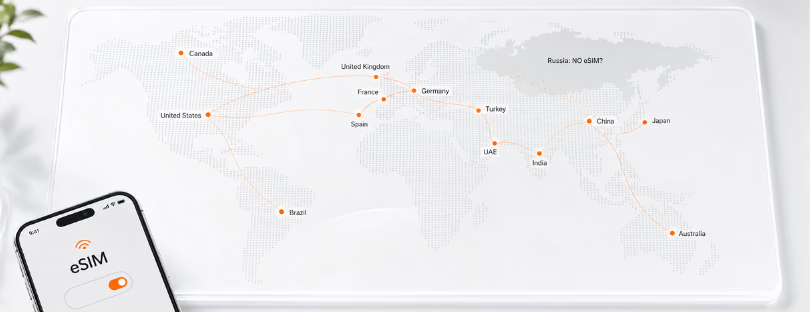
For users who travel internationally, eSIM technology offers some significant benefits. With an eSIM, users can switch between different mobile network providers in different countries, without having to purchase a new SIM card. This can save users a significant amount of money on international roaming charges.
Cellular Connectivity
When it comes to cellular connectivity, both traditional SIM cards and eSIMs offer similar performance. However, eSIMs may offer slightly faster speeds due to their smaller size and the fact that they are embedded directly into the device.
Virtual SIM
Another type of SIM card that is gaining popularity is virtual SIM technology. Unlike eSIMs, which are embedded within a device, virtual SIMs are cloud-based and allow users to switch between different mobile networks using a single device. This is particularly useful for businesses that have employees who frequently travel internationally, as it allows them to manage their employees’ mobile plans remotely and avoid expensive roaming charges.
Remote SIM Provisioning
Remote SIM provisioning is a technology that enables eSIMs to be downloaded and activated over-the-air, without the need for a physical SIM card or a visit to a mobile network provider. This means that users can switch between mobile networks and activate new plans on-the-go, without needing to visit a physical store or contact their mobile network provider. This technology is particularly useful for those who travel frequently and need to switch between different networks to avoid roaming charges.
Mobile Network Providers
Most major mobile network providers now offer eSIM technology, including AT&T, Verizon, T-Mobile, and Sprint in the US, and EE, Vodafone, and O2 in the UK. However, not all providers offer eSIMs for all devices, so it’s important to check with your provider to ensure that your device is compatible.