HTHK Launches INMO GO3 AI Glasses for Travelers
Hutchison Telecommunications Hong Kong is taking a very practical route into AI wearables. Instead of treating smart glasses as a futuristic toy, HTHK is positioning the INMO GO3 as something travelers and business users can actually use: translation, navigation, prompts, meeting notes, and travel planning wrapped into one mobile plan ecosystem.
The company announced an AI product suite built around INMO GO3 glasses, AI Travel Planner, AI tokens, workplace courses, and enterprise productivity tools. The interesting part for Alertify readers is the bundle logic. New or renewing WORLD PLAN customers can get the glasses for as low as HK$0, while the upcoming AI Travel Planner will offer personalised itineraries with limited-time roaming data offers.
Why It Matters
Smart glasses have had a messy history. Many looked clever in demos and awkward in real life. INMO GO3 is trying to solve a more normal problem: how do you travel, meet people, read signs, follow directions, and take notes without constantly pulling out your phone?
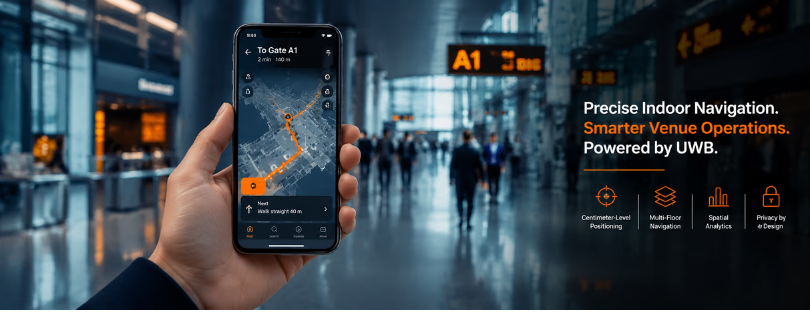
The GO3 supports real-time two-way translation, smart prompts, meeting transcription features, and facial recognition planned for business-card style contact display. HTHK says the device supports translation across 98 languages and offline translation in nine languages. INMO’s own product materials also highlight HERE Maps integration for walking and cycling directions, a four-microphone setup, a binocular micro-LED display, and a swappable battery design.
That battery point is not glamorous, but it matters. Wearables fail when they become another fragile thing to charge. INMO lists a 5-second battery swap, two batteries, and a charging case, with the glasses weighing about 58 grams. That is still not “invisible,” but it is close enough to make the all-day-use claim feel less silly than usual.
The Travel Angle
The AI Travel Planner is where HTHK’s strategy becomes more than hardware distribution. If the planner can connect itinerary creation with roaming offers, the operator gets closer to the moment when travel intent turns into connectivity demand. That is exactly where telecom brands have often been absent.
Today, travelers usually plan in one app, book in another, message hotels somewhere else, then think about roaming at the airport or after the first expensive mistake. HTHK is trying to pull those pieces closer together: plan the trip, translate on arrival, navigate hands-free, and connect through the operator’s roaming ecosystem.
READ MORE: Roaming Reinvented? Inside HTHK’s World Plan 2.0
For business travelers, the appeal is even clearer. A pair of glasses that can show translated subtitles during a meeting or keep presentation notes in view could be genuinely useful. For casual tourists who only need Google Translate twice a year, it may be overkill. And yes, facial recognition in professional settings will need careful handling. Convenience becomes uncomfortable very quickly if people feel they are being scanned without context.
The Competitive Picture
HTHK is not entering an empty field. Meta has pushed hard with Ray-Ban Meta and Meta Ray-Ban Display, including live captions, translations, pedestrian navigation, and in-lens information. Meta’s display model starts at $799 in the US and is clearly aimed at making AI glasses feel more mainstream.
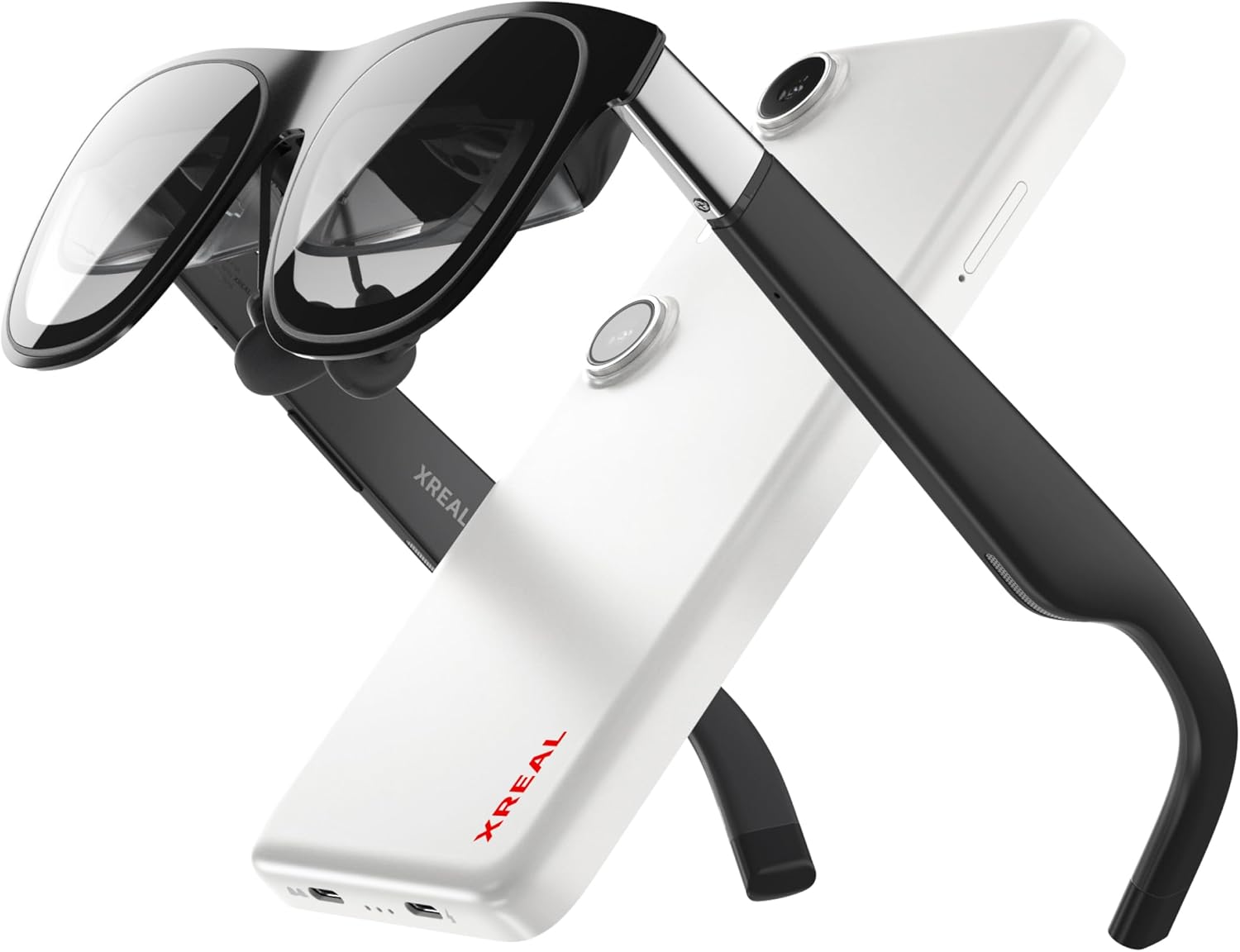
XREAL is approaching the category differently, with Aura positioned as Android XR spatial computing glasses powered by Gemini, a 70-degree optical see-through display, and a split-compute design. That is more immersive and platform-like, but also more ambitious than what most travelers need on a city break or business trip.
READ MORE: Ray-Ban Meta Smart Glasses – Your Ultimate Travel Companion
This is why HTHK’s move is smart. It does not need to beat Meta on consumer cool or XREAL on spatial computing. It needs to make AI wearables feel useful inside a telecom bundle. Translation plus roaming plus itinerary planning is a cleaner story than “look, another pair of smart glasses.”
Conclusion
The INMO GO3 launch says something important about where travel connectivity is going. Operators are no longer just selling gigabytes. They are trying to attach connectivity to the traveler’s actual journey: planning, arrival, movement, meetings, language, and local navigation.
The product still has obvious questions. Display comfort, privacy, app quality, translation accuracy, battery behaviour, and real-world social acceptance will decide whether this feels premium or gimmicky. Some users will still be better served by a phone, earbuds, and a good travel eSIM. Others may prefer Meta for camera-first AI glasses or XREAL for a richer XR experience.
But HTHK’s angle is worth watching. If operators can package AI wearables with roaming and travel services in a way that feels genuinely useful, the next telecom upsell may not be “more data.” It may be “arrive already assisted.”