BazTel Enters Growing Travel eSIM Market With $1 Plans
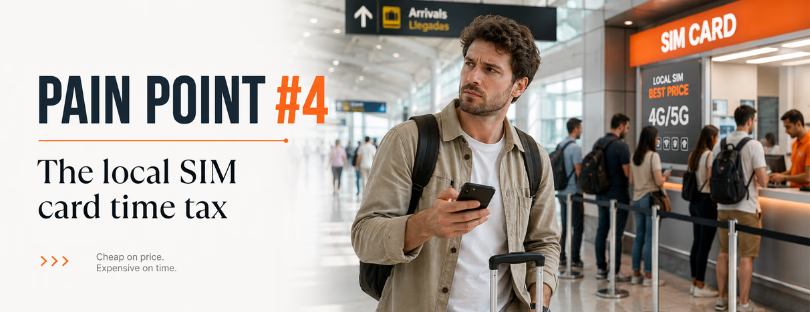
International roaming charges are still one of those travel costs people only think about when it is already too late. You land, switch off airplane mode, open maps, check WhatsApp, look for your transfer, and suddenly the phone becomes the most important travel tool you own.
BazTel is trying to meet that exact moment with its newly launched $1 travel eSIM plans, aimed at popular international destinations during the peak northern-hemisphere travel season. The idea is simple: give travellers a low-risk way to try eSIM connectivity without making the first purchase feel complicated, expensive, or too technical.
“We believe affordable connectivity is not a luxury, it’s a safety essential,” said Peter Basil, Founder and Chief Executive Officer of BazTel. “Whether someone is navigating the streets of Seoul, exploring temples in Bangkok, or visiting a new destination abroad, access to maps, translation services, emergency contacts, and internet connectivity can help support their travel experience. The new plan is intended to help travellers stay connected while managing travel expenses.”
That framing matters. Travel eSIMs are no longer just about cheaper data. They are increasingly being sold as arrival infrastructure: maps, messaging, ride-hailing, translation, banking checks, booking confirmations, and emergency access in the first minutes after landing.
Why the $1 offer matters
The travel eSIM market is growing quickly, but adoption is still not universal. Juniper Research forecast that global travel eSIM users would rise from 40 million in 2024 to more than 215 million by 2028, which shows just how much room is still left in the category.
The hesitation is easy to understand. Many travellers still do not know if their phone supports eSIM. Some worry about installation. Others assume it requires QR codes, apps, settings menus, and a small technical miracle before boarding.
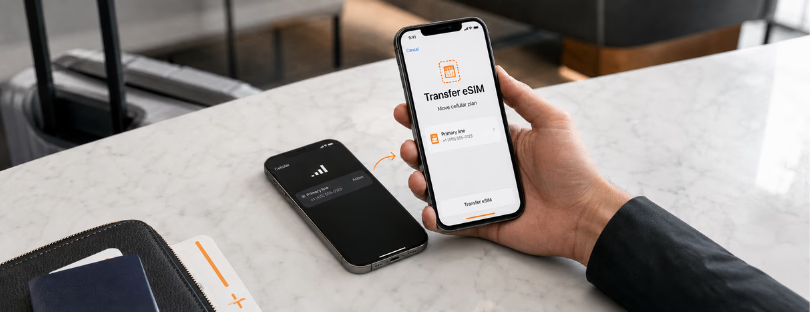
BazTel is clearly aiming at that friction point. Its one-click dashboard installation system lets users activate an eSIM through a web browser, without scanning a QR code, downloading a companion app, or dealing with a physical SIM card. For first-time eSIM users, that may be more important than the price itself.
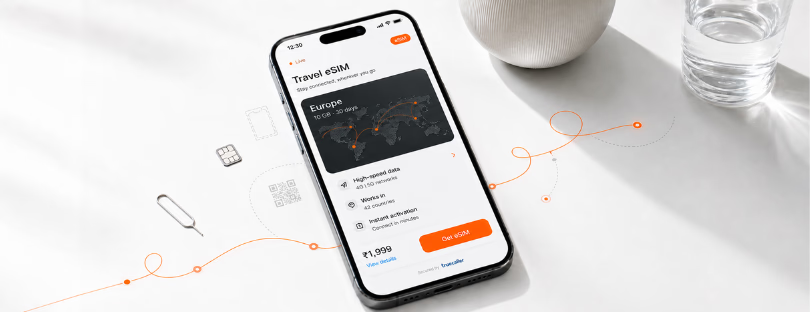
The plans cover destinations across Asia, including Japan, South Korea, China, Hong Kong, Thailand, Singapore, and Vietnam, plus Europe, Turkey, and the United States. BazTel says users can access 4G and 5G where available, and plans can be bought before departure, during transit, or on arrival.
“Reliable connectivity is an important part of the modern travel experience,” added Peter. “Access to a private mobile data connection can help travellers stay connected to essential online services throughout their journey, including during airport transfers and upon arrival in a new destination.”
Not the first $1 hook
BazTel’s move is smart, but it is not happening in isolation. The $1 starter eSIM has become one of the clearest acquisition tactics in travel connectivity.
Jetpac already offers a similar entry-level play with 1 GB of data valid for 4 days in selected popular destinations, including the United States, Japan, and much of Europe. Jetpac’s own “1GB for $1 Global Pack” page positions it as a simple first step into global eSIM coverage. The interesting part is that Jetpac does not stop at price. It also bundles travel-style perks, including airport lounge access if a flight is delayed by more than an hour.
That lounge benefit is important because it shows where the market is heading. eSIM providers are no longer only comparing price per GB. They are trying to attach themselves to the broader travel experience. Connectivity becomes the base layer, but the brand promise can include convenience, airport comfort, loyalty, and peace of mind.
Eskimo Travel takes a different route. Instead of focusing only on a short promotional window, Eskimo is known for long-validity data. Its model includes global eSIM plans with data valid for up to two years, and it has promoted free 1 GB offers across 80-plus countries through partner codes. That appeals to a different type of traveller: someone who hates wasted data, travels irregularly, or wants a backup eSIM sitting quietly on the phone.
So BazTel is entering a market where “cheap first try” already exists. The question is whether its no-app, no-QR dashboard setup is enough to make the offer feel simpler than the alternatives.

Where BazTel fits
BazTel’s strongest angle is accessibility. A $1 plan removes price anxiety, while browser-based activation removes some of the technical anxiety. That combination is useful for families, first-time eSIM users, occasional travellers, and people who only need a small amount of data for arrival basics.
It may be especially relevant for travellers who do not want to download another app before every trip. App-based providers can be convenient once you are inside their ecosystem, but for a first purchase, a clean web-based flow can feel lighter.
The company says it works with carrier network partners in more than 160 countries. That gives BazTel a broad enough footprint to compete in the global travel eSIM space, although the real test will always be destination-level performance, network partners, pricing beyond the promo plan, and how easy top-ups are when data runs out.
This is also where the offer may not be for everyone. A $1 starter plan is useful for testing, arrival, and light travel needs. It is not automatically the best choice for heavy hotspot users, remote workers on video calls, or travellers who need predictable high-volume data for a long trip. Those users may still prefer larger regional plans, unlimited day passes, or annual/global data products from more established players.
A market shifting from data to trust
The broader trend is clear: travel eSIM providers are using starter offers to reduce adoption barriers. The first purchase is the hardest. Once a traveller successfully installs an eSIM and lands connected, the category becomes much easier to understand.
That is why $1 offers are not just discounts. They are trust-building tools.
For BazTel, the opportunity is to prove that simple onboarding can be a real differentiator. For Jetpac, the edge is in combining low-cost data with traveller perks like lounge access. For Eskimo, the strength is long validity and reduced data waste. These are not identical propositions, even if they all compete for the same traveller’s phone.
Final take
BazTel’s $1 travel eSIM plan is a timely move, but the market has already moved beyond “cheap data” as the only story. The best travel eSIM brands are now competing on the first five minutes after landing, the anxiety of setup, the fear of wasting money, and the promise that connectivity will simply work when travellers need it.
That makes BazTel’s one-click dashboard interesting. If it genuinely makes installation easier for non-technical travellers, it has a credible place in the market. But the company will need to show more than a good entry price. Clear destination coverage, transparent network quality, easy top-ups, and honest plan limitations will decide whether users come back after the first $1 experience.
In a crowded travel eSIM category, the winner is not always the cheapest provider. It is the one travellers trust before they board, while they are in transit, and in that slightly chaotic moment when the plane lands and the trip suddenly depends on a signal.