AT&T is making a very deliberate move in the U.S. wireless market: it wants to turn the mobile plan from a fixed bundle into something closer to a monthly budget tool.
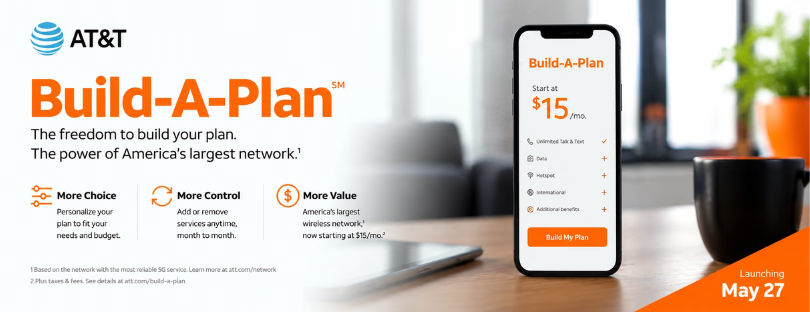
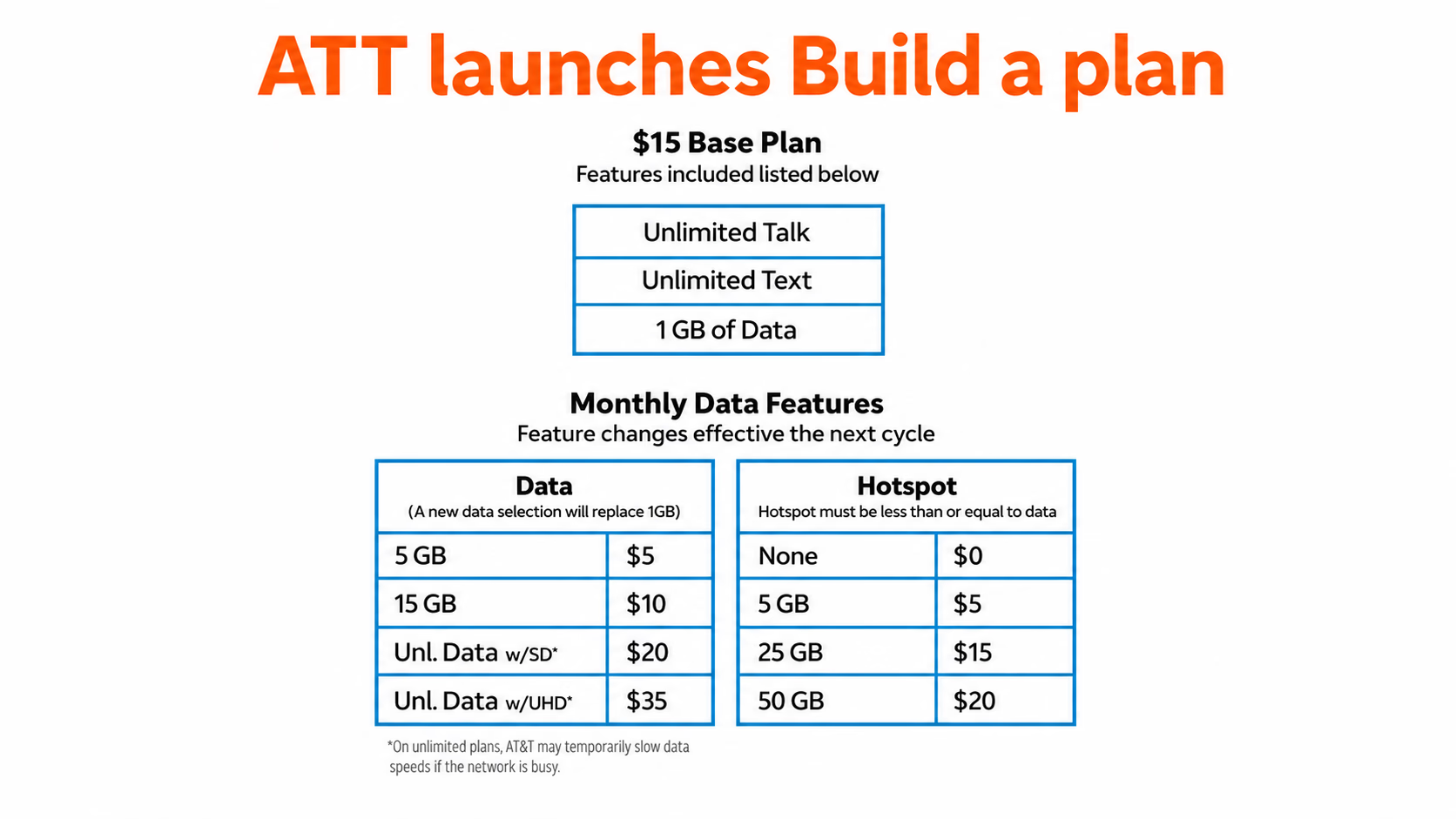
The company has announced Build-A-Plan, a new wireless offer launching online on May 27, 2026, with pricing starting at $15 per month. The core promise is simple: customers can adjust their plan month to month, adding or removing services depending on what they actually need. AT&T is positioning it around three words that matter a lot in today’s telecom market: choice, control, and value.
On paper, this is not just another “cheap plan” announcement. It is AT&T responding to a bigger shift in consumer behavior. People are tired of paying for bundles they barely use, whether that means streaming perks, hotspot data, international features, or premium extras that sound attractive in a campaign but do not always match real monthly usage.
The Monthly Plan Becomes Flexible
Build-A-Plan starts from a low entry point, but the more interesting part is the flexibility. Instead of pushing customers into a fixed wireless tier, AT&T says the plan allows people to adjust their service month by month based on budget, lifestyle, and connectivity needs. That means a customer could prioritize affordability one month, then add more data or features the next.
That sounds obvious, but in U.S. wireless, it is still a meaningful change. Traditional carrier plans have usually been built around tiers: basic, better, and premium. The customer’s job was to choose the least wrong option. AT&T is now trying to make the plan feel more modular.
Jenifer Robertson, executive vice president and general manager of AT&T Consumer, put the strategy bluntly:
“Customers want plans that fit their lives. Other carriers offer structured, one-size-fits-all plans bundled with extra services that customers aren’t asking for while calling it ‘savings’,” said Jenifer Robertson, executive vice president and general manager, AT&T Consumer. “By giving our customers the freedom to tailor their wireless service month to month, we are giving them an affordable way to connect to America’s largest wireless network and still control their budget. It is a win-win.”
That quote is doing two things at once. It sells flexibility, but it also takes a clear shot at the way U.S. carriers have packaged value for years.
More on Alertify
Follow the latest AT&T news
Wireless plans, network updates, telecom strategy and connectivity moves in one place.
Explore AT&T news →
Why AT&T Is Doing This Now
The timing matters. Wireless customers are under more pressure to control monthly spending, but they are also using their phones for more things than ever: payments, travel, work, streaming, maps, authentication, and connected devices. That creates a strange tension. Connectivity is more essential, but people are less willing to overpay for it.
AT&T’s move also comes as the company continues to frame network investment as a major competitive advantage. Reuters reported earlier this year that AT&T outlined a $250 billion U.S. investment plan over five years, focused on infrastructure, including fiber, 5G, and broader network modernization.
So Build-A-Plan is not just a pricing play. It is also a branding play: affordable entry, flexible structure, big-network confidence.
That combination is important because low-cost wireless has often been associated with MVNOs and prepaid brands. AT&T is trying to bring some of that budget flexibility into the main carrier environment, while still leaning on its network reputation.
The Market Is Already Moving This Way
AT&T is not operating in a vacuum. Verizon has been pushing its myPlan structure, where customers can pair unlimited data with optional perks instead of taking a fully pre-packed bundle. T-Mobile, meanwhile, continues to emphasize plans with entertainment, travel, and other benefits, including its Experience plans and price guarantee messaging.
The difference is tone. Verizon talks about modular perks. T-Mobile talks about value-rich bundles. AT&T is now leaning into budget control and monthly adjustability.
And then there is the prepaid and MVNO world, where the pressure is even stronger. Visible, Mint Mobile, Metro by T-Mobile, US Mobile, and others have trained consumers to expect lower prices, simpler offers, and less commitment. Recent market coverage shows cheap mobile plans becoming more aggressive, with some prepaid offers undercutting traditional carrier pricing significantly.
That is the real competitive threat. It is not only Verizon and T-Mobile. It is the idea that customers no longer believe a mobile plan has to be complicated or expensive to be good.
What This Means for Travellers
For Alertify readers, the travel angle is hard to miss. Mobile users are becoming more selective everywhere. At home, they want flexible domestic plans. Abroad, they want transparent roaming, eSIMs, hotspot rules, validity, and no surprise costs.
The same consumer logic applies in both markets: people do not want to decode telecom fine print every time they need data.
This is exactly why eSIM providers, roaming challengers, and mobile operators are all moving toward clearer, more flexible offers. The winner is not always the cheapest provider. The winner is the one who gives the customer confidence before they connect.
AT&T’s Build-A-Plan reflects that wider shift. It says: pay for what you need now, change it when your needs change.
The Real Signal about AT&T Build-A-Plan
The smartest part of AT&T’s move is not the $15 headline. It is the admission that fixed mobile bundles are starting to look outdated.
Verizon has modular perks. T-Mobile has strong bundled value. MVNOs have price simplicity. Travel eSIM providers have trained people to buy connectivity only when and where they need it. AT&T is now trying to blend those ideas into a mainstream carrier plan.
That does not mean Build-A-Plan will automatically be the best deal for everyone. Customers will still need to check data limits, hotspot options, taxes, fees, roaming rules, and how quickly costs rise once extras are added. But strategically, this is where the market is going.
Wireless is becoming less about selling the biggest bundle and more about removing the feeling that the customer is trapped inside one. For AT&T, Build-A-Plan is a pricing product. For the wider industry, it is another sign that flexibility has become the new premium.
Driven by wanderlust and a passion for tech, Sandra is the creative force behind Alertify. Love for exploration and discovery is what sparked the idea for Alertify, a product that likely combines Sandra’s technological expertise with the desire to simplify or enhance travel experiences in some way.