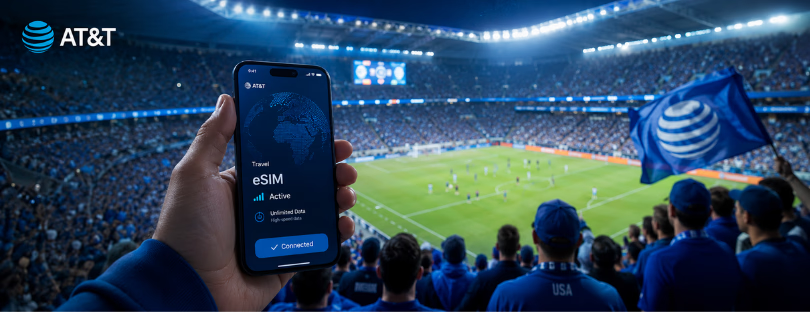
With major soccer games bringing international visitors into the U.S., Mexico and Canada this summer, the carrier is positioning eSIM by AT&T as a simple way for travelers to land, connect, and avoid the usual airport SIM-card scramble. The offer is built around short-term eSIM passes for visitors, with unlimited data, 5GB of hotspot access, and the option to choose coverage for the U.S. only or across North America. AT&T says unlimited talk and text will be added soon.
On paper, this looks like another travel eSIM launch. In reality, it is more interesting than that. AT&T is not only selling data. It is trying to package connectivity around a live-event moment, where mobile networks are under pressure and travelers are at their most impatient.
That matters.
Anyone who has tried to upload a video from a packed stadium knows the problem. Your phone shows signal. The network technically works. But your Instagram story is stuck, your rideshare app is spinning, and the match just ended with 60,000 people trying to do exactly the same thing.
AT&T’s answer is Turbo Live by AT&T, a premium data boost designed for crowded live events. The company describes it as a VIP connection that prioritizes mobile data at select venues, helping users stream, share, check stats, and book rides when network traffic is high. It is data-focused, not a voice or messaging upgrade.
How It Works
The setup is fairly straightforward. Travelers download the Connect on Demand by AT&T app from the App Store or Google Play, then purchase and activate the eSIM after arriving in the U.S. They need a carrier-unlocked, dual-SIM, 5G-capable smartphone and an international phone number.
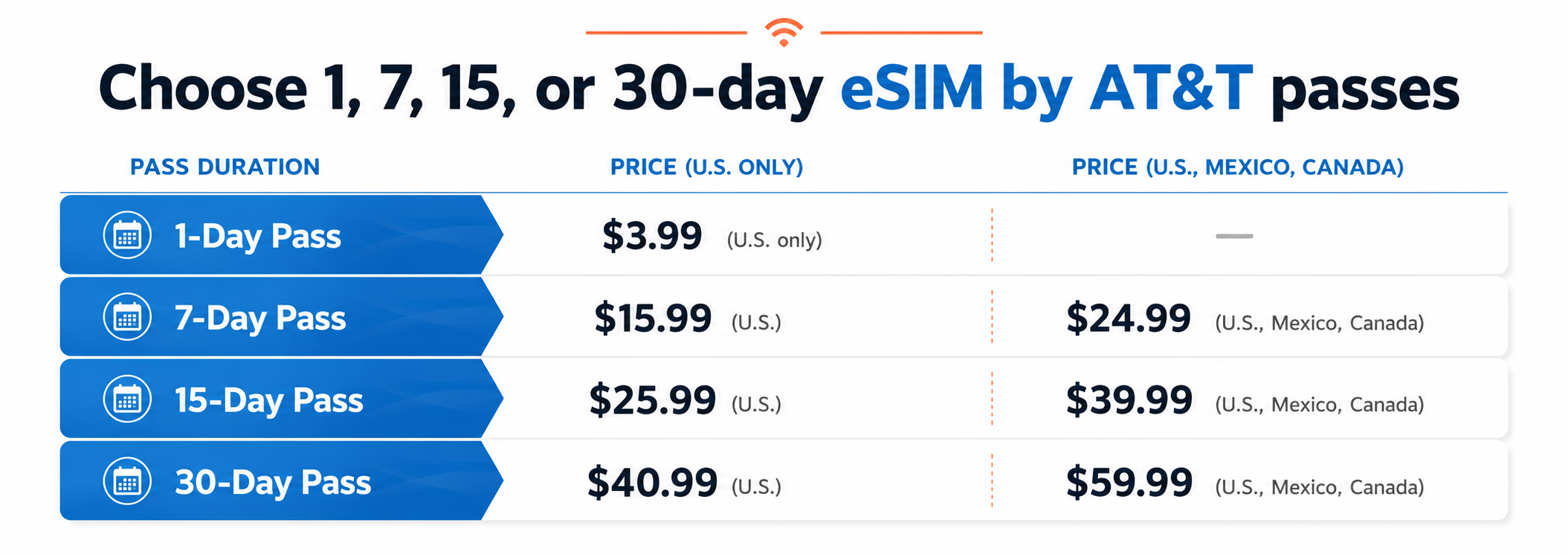
AT&T is offering 1, 7, 15, and 30-day eSIM passes, with prices including taxes and fees according to the company’s announcement. The current version is mainly a data product, with unlimited data and 5GB of hotspot included. Talk and text are not yet part of the package, although AT&T says they are coming soon.
That last point is important because travel eSIM buyers are becoming more demanding. A few years ago, data-only was enough for many tourists. Today, travelers increasingly expect the whole thing: data, hotspot, messaging, calls, app-based activation, no surprises, and ideally coverage that follows them across borders.
The Soccer Angle
AT&T is clearly leaning into soccer as the emotional hook. The company is an official sponsor of U.S. Soccer, the Mexican National Team, and Major League Soccer, which gives this launch a natural marketing frame. This is not just “buy data for your trip.” It is “stay connected while you follow the match, share the moment, and get home without fighting the network.”
“Travelers expect connectivity to be simple, seamless and dependable from the moment they arrive at their destination,” said Jenifer Robertson, executive vice president and general manager for AT&T. “With eSIM by AT&T, we’re delivering an easy, flexible way for international travelers to stay connected so they can follow every match, share every experience with friends and family back home and make the most of every meaningful moment during their stay.”
The quote is polished, of course, but the underlying point is right. Travel connectivity is no longer just about maps and WhatsApp. It is part of the event experience. Fans want to upload video, check ticket apps, coordinate with friends, book transport, translate menus, pay digitally, and stay reachable without thinking about the network underneath.
That is the real shift.
AT&T vs T-Mobile
AT&T’s move also comes just after T-Mobile introduced its own prepaid U.S. Pass eSIM for international travelers. T-Mobile’s offer starts at $25 for 7 days and goes up to $50 for 30 days, with unlimited talk and text in the U.S., Mexico and Canada, unlimited 5G data with 50GB of premium 5G data in the U.S., and hotspot allowances that scale by plan length. The 30-day pass includes 50GB of high-speed hotspot data in the U.S.
That makes the comparison interesting. T-Mobile currently looks stronger on the “complete travel pass” side because talk, text, and larger hotspot allowances are already included. AT&T, on the other hand, is leaning harder into network trust, North America coverage, and the event-specific Turbo Live layer.
So the difference is not only price. It is positioning.
T-Mobile is saying: here is a simple prepaid travel eSIM for visitors.
AT&T is saying: here is visitor connectivity, backed by a major carrier, with an optional premium layer for crowded moments.
For soccer fans, that second message could land well, especially if the experience inside stadiums actually feels better. But AT&T still has a gap to close. Until unlimited talk and text are included, some travelers may see it as less complete than T-Mobile’s offer, especially families, business visitors, and anyone who still needs traditional calling.
Why This Matters
The bigger story is that U.S. carriers are finally treating inbound travelers as a proper eSIM customer segment, not an afterthought.
For years, the travel eSIM market was dominated by digital-first providers like Airalo, Holafly, Nomad eSIM, Ubigi, and Yesim. Their advantage was convenience: install before departure, avoid roaming fees, keep your number, and skip physical SIM cards. Traditional carriers watched that market grow from the side.
Now the carriers are entering with something digital-only eSIM brands cannot always match: direct network ownership, stadium partnerships, premium traffic management, and brand trust among visitors who recognize AT&T or T-Mobile.
That does not automatically make them better. Travel eSIM specialists often win on global coverage, app experience, regional plan flexibility, and transparent comparison shopping. But carrier-led travel eSIMs change the competitive map, especially in high-demand destinations like the U.S.
For Alertify readers, this is the part to watch: travel eSIM is moving from a cheap-data product into a more layered connectivity product. The next battle will not just be “who has the lowest price per GB.” It will be about where the eSIM is sold, what moment it solves, how well it performs in congestion, and whether it can bundle extras that travelers genuinely notice.
Conclusion
AT&T’s new travel eSIM offer is not perfect yet. The lack of unlimited talk and text at launch gives T-Mobile an obvious comparison point, and 5GB of hotspot may feel modest next to T-Mobile’s larger allowances. But AT&T’s idea is strategically smart: connect the travel eSIM to the actual pain point of modern travel, which is not just landing without data, but staying connected when everyone else is fighting for the same network.
That is where Turbo Live makes this launch more than a standard visitor pass. If AT&T can deliver a noticeable stadium experience, it has something travel eSIM apps cannot easily copy: priority access tied to real-world events and physical venues.
The market is moving fast. Digital eSIM brands made travel connectivity simple. Now, major carriers are trying to make it more native, more event-driven, and more controlled. For travelers, that means more choice. For eSIM providers, it means the comfortable middle of the market is getting crowded. And for North America this summer, connectivity may become part of the match-day experience itself.
Driven by wanderlust and a passion for tech, Sandra is the creative force behind Alertify. Love for exploration and discovery is what sparked the idea for Alertify, a product that likely combines Sandra’s technological expertise with the desire to simplify or enhance travel experiences in some way.


 That last point is important because travel eSIM buyers are becoming more demanding. A few years ago, data-only was enough for many tourists. Today, travelers increasingly expect the whole thing: data, hotspot, messaging, calls, app-based activation, no surprises, and ideally coverage that follows them across borders.