Your Customers Travel. Why Aren’t You Monetizing It?
There is a strange blind spot sitting inside many customer businesses.
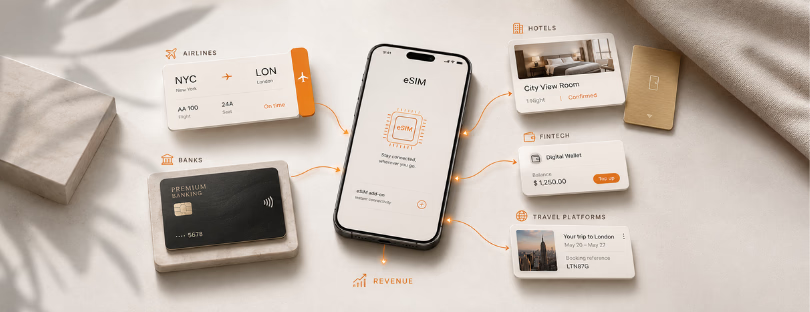
Airlines know where people are going. Hotels know when guests arrive. Fintechs see foreign card transactions. Loyalty platforms know who crosses borders again.
Yet at the exact moment the customer needs mobile connectivity most, many brands send them elsewhere.
Usually, that means a Google search, an airport kiosk, a roaming notification, or a dedicated eSIM app the customer has never used before. The journey continues, but monetization stops.
That is becoming harder to justify. WTTC travel data, GSMA Intelligence eSIM trackers, and Juniper Research forecasts all point in the same direction: travel is growing, eSIM adoption is rising, and connectivity is becoming digital, instant, and contextual. The old model was simple: airlines sold flights, hotels sold rooms, banks sold cards, operators sold roaming. The new model is messier. Whoever owns the customer moment can own the connectivity offer.
The missed moment
The best time to sell travel connectivity is not three weeks before departure. It is not after someone has landed and is fighting airport Wi-Fi. It is usually somewhere in between: after booking, during check-in, while opening a travel wallet, adding a boarding pass, or receiving a “your trip starts tomorrow” reminder.
That is when the need is obvious. The customer knows the destination, the dates, and the likely use case: maps, WhatsApp, Uber, Teams, airline updates, and hotel apps. This is not random shopping. It is a real travel need.
Still, most brands treat connectivity as someone else’s business.
That feels outdated because travel brands already monetize adjacent moments: seats, insurance, transfers, lounges, car rental. Connectivity is different. It is not a luxury add-on. For many travelers, it is the thing that makes the rest of the trip work.
Why eSIM changes economics
eSIM removed much of the physical friction. eSIM monetization for travel brands
No plastic SIM. No store visit. No delivery. No airport counter. A travel eSIM can be purchased, installed, and activated through a digital flow that fits naturally inside another product.
That matters for airlines, banks, OTAs, hotels, loyalty programs, travel insurers, and employers managing mobile workforces. They do not need to become telecom operators. They need the right partner, the right user experience, and enough clarity to explain why the offer is useful rather than just another upsell.
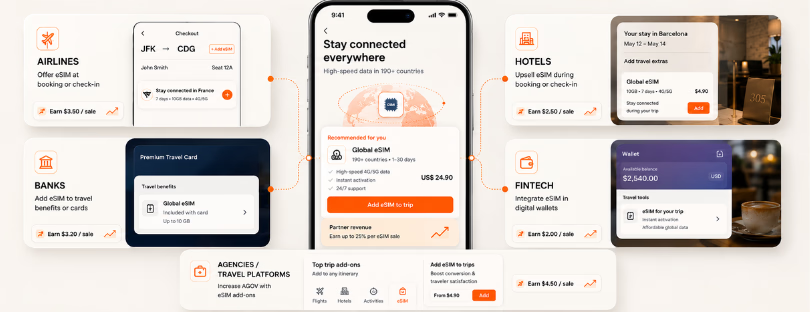
APIs and white-label models now make this practical. A bank can offer destination data plans as part of travel benefits. An airline can offer an eSIM after check-in. A hotel group can include connectivity in a premium guest package. An OTA can bundle it with airport transfer or insurance.
The upside is not only commission. It is retention, app engagement, a better customer experience, and fewer moments where the traveler leaves your ecosystem.
Placement decides everything
This is where many companies get it wrong. They see “eSIM monetization” and immediately think of a product tile: “Buy data for Italy.” That may work, but it is not a strategy.
For an airline, the strongest placement may be check-in, itinerary management, or destination alerts. For a bank, it may sit beside FX cards, travel insurance, and airport lounge access. For a hotel, the best use case may be pre-arrival communication: “Need data before you land? Set it up now.”
READ MORE: Airlines Are Sitting on a Telecom Goldmine — Most Don’t Know It
A weekend traveler may only need a simple data pack. A corporate buyer may care less about cheap gigabytes and more about control, invoices, and support.
The winners will not simply be the brands that add eSIMs first. They will be the ones who place the offer intelligently.
The pressure is already visible
Dedicated eSIM providers helped train travelers to think beyond traditional roaming. Mobile operators are responding too, with more travel eSIM offers and roaming alternatives entering the market. The margin, customer relationship, and travel behavior are all strategically valuable.
At the same time, non-telecom brands are realizing that connectivity fits neatly into the embedded services playbook. Travel companies already sell third-party services. Fintechs wrap travel benefits around cards. Loyalty programs fight to stay relevant beyond points. Adding connectivity is not a wild leap. It is a practical extension of what they already do.
READ MORE: How to Launch Your Own eSIM Product?
But there is a risk. If every brand bolts on the same generic eSIM widget, customers will notice. Or worse, they will ignore it. The offer needs trust, timing, and a reason to exist in that environment. A customer should understand why this eSIM is being offered here, why it fits the trip, what happens if installation fails, and whether support is actually available.
Telecom may be digital now, but trust still feels very human.
Your customers will buy connectivity. The question is: from you, or from someone else?
We help airlines, banks, and travel platforms turn that demand into a built-in product — not a missed opportunity.
Final take about eSIM monetization for travel brands
The next phase of travel eSIM growth will not be won only inside eSIM apps. Those apps will remain important, especially for comparison shoppers and frequent users who already know the category. But the larger opportunity may sit inside the brands that already own the travel relationship.
Airlines have timing. Banks have trust. Hotels have a guest context. OTAs have scale. Dedicated eSIM providers have telecom execution. The smartest partnerships will combine these strengths instead of pretending one side can do everything alone.
For travel brands, the question is no longer whether customers need connectivity. They clearly do. The sharper question is whether you want to solve that need, earn from it, and keep the customer close, or let another brand step in at one of the most valuable moments of the trip.
If your audience travels and you are not thinking about connectivity yet, you may be leaving money on the table. More importantly, you may be leaving the customer journey unfinished.
Alertify helps travel, fintech, hospitality, and connectivity brands shape these offers into credible content, smarter positioning, and partnerships that make sense beyond a simple affiliate link. If you want to explore how eSIM or travel connectivity could fit naturally into your customer journey, contact Alertify and we can look at the opportunity together.