Travel Vacuum Bags: Worth Packing or Not?
A long-haul traveler can tolerate a lot – tight connections, weak hotel Wi-Fi, even a surprise baggage fee once in a while. What gets frustrating fast is bad packing math. Bulky sweaters, a second pair of shoes, a packable coat, and suddenly your carry-on strategy collapses. That is why travel vacuum bags keep showing up in packing conversations. They promise more capacity without upgrading to a bigger suitcase, and for some travelers, that promise is real.
But like most travel gear, the value depends on the trip, the bag, and the trade-off you are willing to make. Travel vacuum bags are not a universal packing hack. They are a space-management tool, and like any tool, they work best when used for the right job.
What travel vacuum bags actually do
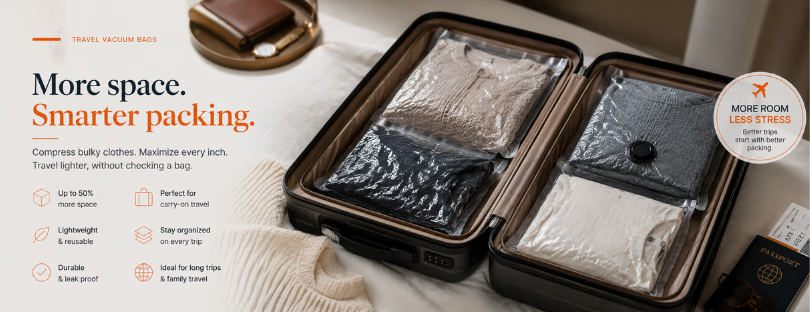
At a basic level, travel vacuum bags compress soft items by removing air trapped between layers of fabric. That makes clothing flatter and denser, which can free up a surprising amount of room in a suitcase or duffel. Coats, knitwear, puffer jackets, baby clothes, and other high-volume, low-structure items benefit most.
The key detail is this: they reduce volume, not weight. If your airline problem is an overstuffed carry-on that will not zip, vacuum bags can help. If your problem is a checked bag already pushing the weight limit, they may make things worse by encouraging you to pack more into the same case.
That distinction matters for both leisure travelers and travel operators. On the consumer side, the appeal is obvious – more room, fewer bags, less hassle. On the industry side, products like this reflect a bigger pattern in modern travel behavior: travelers increasingly optimize every inch of the journey, from digital check-in to luggage organization, because convenience now feels like part of the product, not an extra.
Which kinds of travel vacuum bags work best
Not all compression systems are built the same, and the differences matter in real use.
Some travel vacuum bags require a standard vacuum cleaner. Those are useful at home but much less practical on the road unless you are packing for one leg of a trip and unpacking fully at your destination. Others use roll-up compression, where air exits through one-way valves as you press or roll the bag. For most travelers, that is the more realistic format because it does not depend on hotel equipment.
READ MORE: Travel Tech for Families: Apps and Gadgets to Simplify Group Travel
There are also hybrid compression cubes that use zippers rather than vacuum sealing. These do not compress as aggressively, but they are easier to reopen, repack, and organize. For frequent travelers who move between cities every few days, that lower-friction experience may be more valuable than maximum compression.
This is where product selection becomes less about raw space savings and more about travel workflow. If you are packing once for a two-week stay, more compression is attractive. If you are constantly opening your suitcase in airports, trains, and small hotel rooms, speed and accessibility usually matter more.
When travel vacuum bags make the most sense
Travel vacuum bags are strongest in a few specific scenarios.
Cold-weather travel is the obvious one. A week in a winter destination means heavier fabrics, thicker layers, and outerwear that occupies disproportionate space. Compressing those items can turn a checked-bag trip into a carry-on trip, or at least create room for work gear, tech accessories, and shoes.
They also work well for family travel. Parents often carry extra outfits, emergency layers, and soft items that add bulk quickly. Compressing children’s clothing, spare blankets, or off-season outfits can bring some order to a chaotic suitcase.
Extended trips are another strong use case, especially when travelers need clothing variety but want to avoid hauling multiple bags. Digital nomads and business travelers who blend workwear with casual gear may find vacuum bags useful for segmenting categories – formal clothes in one zone, leisure clothes in another – while keeping luggage compact.
They can even be useful on the return trip. Souvenirs, gifts, or shopping purchases tend to disrupt the careful packing system that worked on departure. Compressing laundry or soft clothing can restore enough space to avoid checking an extra bag.
Where the trade-offs show up fast
The biggest drawback is access. Once clothing is compressed tightly, grabbing one shirt from the middle is no longer simple. You often have to open the bag, let air back in, and repack everything. On a multi-stop itinerary, that gets old quickly.
Wrinkling is another issue. If you are traveling with suits, dress shirts, linen, or garments that need to look polished on arrival, aggressive compression is risky. Vacuum bags are far better for casual wear, outerwear, and soft layers than for presentation-sensitive clothing.
Durability also matters more than people expect. Cheap bags can puncture, lose seal integrity, or fail at the valve after a few uses. That is annoying at home and worse in transit. A failed seal does not ruin your trip, but it does leave you with bulky clothing and a suitcase that suddenly no longer closes the same way.
Then there is the weight trap. Because compressed clothes look smaller, travelers often assume they have “more room” in every sense. In reality, they may just be concentrating more weight into the same luggage. That can push checked bags over airline thresholds or make carry-ons awkward to lift into overhead bins.
Travel vacuum bags and the carry-on economy
There is a broader reason this category keeps gaining attention: airline pricing has changed traveler behavior. More passengers now treat baggage space as a cost center. Avoiding a checked-bag fee, especially on short or regional routes, can justify buying better packing tools if they consistently support carry-on travel.
That makes travel vacuum bags part of a wider efficiency stack. Packing cubes, lightweight luggage, portable chargers, digital boarding passes, and flexible data access all serve the same end goal – fewer points of friction during the trip. Travelers are not just buying products anymore. They are buying reliability, speed, and reduced uncertainty.
From a market perspective, that is why simple accessories can outperform their category. They align with how modern travelers think: control what you can, especially the things airlines and schedules make unpredictable.
How to use travel vacuum bags without regretting it later
The best approach is selective, not total. Use travel vacuum bags for bulky, low-priority items you will not need constant access to. A puffer jacket, extra knitwear, workout clothes, or laundry are good candidates. Your day-one essentials are not.
Pack by usage frequency. Items you will wear in the first 24 hours should stay outside compressed bags. The same goes for anything tied to meetings, events, or weather changes you may need to respond to quickly.
READ MORE: Must Have Travel Gadgets and Accessories
It also helps to test your setup before travel day. Compress the bag fully, place it in your suitcase, and then actually lift the suitcase. If the result is compact but uncomfortably heavy, you have solved the wrong problem.
For return trips, keep one empty compression bag folded in your luggage. That is often smarter than traveling with every item pre-compressed from the start. It gives you flexibility when your packing volume changes mid-trip.
Are they better than compression cubes?
It depends on what problem you are solving.
If your main issue is bulk, vacuum bags usually win. They remove more air and create more space savings, especially for winter gear. If your main issue is organization and frequent repacking, compression cubes are often better. They are quicker, cleaner, and less fussy in real travel conditions.
Many frequent travelers end up using both. Cubes handle the everyday system. Vacuum bags handle the space-hungry extras. That combination makes sense because organization and compression are related, but they are not the same thing.
For business travelers, the decision is usually even more straightforward. If your luggage includes structured garments or you change hotels often, convenience tends to beat maximum compression. For family or leisure travel, where clothing is softer and access is less time-sensitive, vacuum bags have a stronger case.
So, are travel vacuum bags worth it?
Yes, if bulk is your problem and you are realistic about the trade-offs. No, if you expect them to make luggage lighter, keep clothes crisp, and stay convenient through constant repacking.
That is the real answer: travel vacuum bags are useful when they match the rhythm of the trip. They are less about packing more for the sake of it and more about packing smarter under constraints that travelers now feel more acutely than ever – airline fees, smaller cabins, longer itineraries, and the expectation that every part of travel should work with less friction.
The smartest packing gear is not the one that promises the most. It is the one that still feels like a good idea on day six, in a cramped hotel room, when you need one sweater and do not want to unpack your whole trip.