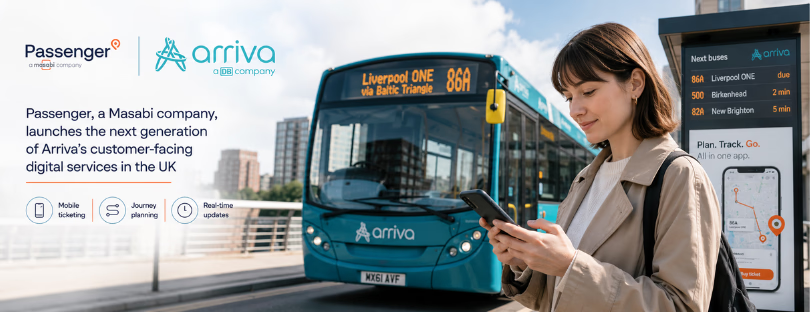
Arriva Launches New UK Bus App With Passenger
Arriva UK has launched a new customer-facing app and website powered by Passenger, the transport information and ticketing specialist now part of Masabi. On paper, that sounds like another operator app refresh. In practice, it points to something bigger: bus travel is being pulled into the same digital-expectation economy as airlines, hotels, banking and food delivery.
The rollout covers Arriva’s seven regional bus operating companies outside London, bringing mobile ticketing, journey planning, real-time information and customer-service content into one cleaner experience. For passengers, the promise is simple. Find the right fare, see where the bus actually is, check service updates, and manage tickets without digging through a confusing mix of pages, PDFs and local operator information.
That may not sound dramatic, but in public transport, removing friction is often the real innovation.
Why it matters
Arriva UK Bus sits inside Arriva Group, one of Europe’s largest passenger transport providers, with operations across 11 countries and more than 1.2 billion passenger journeys a year. In the UK, its regional bus division serves communities where the bus is not a nice-to-have mobility option, but the practical backbone of daily life for students, commuters, older passengers, shift workers, visitors and people without easy car access.
The new Passenger-powered platform combines the basics passengers already expect, such as mobile tickets and live bus locations, with details that are becoming increasingly important: accessibility information, fare visibility, service updates, vehicle branding, onboard Wi-Fi and USB charging. These are small signals, but they matter. A passenger deciding whether to take the bus does not only ask, “Is there a bus?” They ask, “Can I trust this journey?”
Cora Woodhouse, Marketing and Customer Experience Director at Arriva, commented,
“The new Arriva app, powered by Passenger, is making it easier for our customers to plan, track and enjoy their journeys, helping them get where they need to go with greater ease and confidence. Following the successful launch of our new app we’re continuing to invest, with further enhancements planned to make every journey smoother, simpler and more convenient for our customers.”
The operator angle
The launch is also a back-office story. Passenger says the platform gives Arriva better visibility over its online business, helping teams understand how customers are using digital channels and where future improvements should go. That matters because UK bus operations are becoming more complicated, not less.
Franchising, capped fares, multi-operator ticketing, transport hubs and local authority partnerships all create a messy environment for customer information. A decent-looking app is useful. A platform that can manage fares, service data, customer communication and real-time information across multiple operating companies is much more strategic.
Tom Quay, Advisor to the CEO at Masabi, commented,
“We’re delighted that the Arriva team has chosen the Passenger platform to power their new customer-facing app and website. This project is a testament to the reliability and maturity of our solution, which is trusted by leading operators nationwide. We are committed to ensuring Arriva’s digital services are secure, functionally rich, and scalable, allowing them to meet the needs of millions of passengers. We look forward to building a long-term, collaborative partnership.”
Market context
The timing is interesting. Masabi acquired Passenger in early 2026, combining Masabi’s fare payments and account-based ticketing expertise with Passenger’s strength in white-label apps, websites and real-time information. It reflects a wider trend in transport technology: operators do not want disconnected tools for payments, ticketing, journey planning, alerts and customer data. They want a joined-up passenger experience that can scale.
The UK is also a useful test market because bus open data has pushed timetable, vehicle location and fares data into the public domain. That creates opportunities for better apps, but it also raises expectations. If data exists, passengers increasingly expect it to be accurate, readable and useful at the moment they need it.
Arriva is not alone here. First Bus and Stagecoach already lean heavily on their apps for tickets, live tracking and journey planning. The competitive question is no longer whether an operator has an app. It is whether that app reduces uncertainty enough to change behaviour.
This is where Arriva’s move makes sense. It is not necessarily for the passenger who already knows one route by heart and buys the same weekly ticket without thinking. The bigger value is for occasional riders, visitors, multimodal commuters and anyone who hesitates because public transport still feels too unpredictable.
Conclusion arriva app
This launch fits a broader market shift: public transport is moving away from standalone ticketing apps and toward integrated mobility platforms. Masabi, Passenger, First Bus, Stagecoach and local transport authorities are all chasing the same outcome from different angles: make public transport feel less uncertain and more usable.
Arriva’s new digital services will not solve congestion, staffing pressure or network reliability overnight. A polished interface helps, but passengers forgive ugly design faster than wrong live times, missing disruption notices or confusing fare rules. Accessibility data also needs to keep improving, because digital transport cannot call itself modern if it leaves disabled passengers guessing.
For Arriva, the opportunity is bigger than a better app. If the platform keeps improving, it can become a trust layer between the operator and the passenger. That means clearer information before the journey, fewer unpleasant surprises during it, and more confidence to choose the bus next time.