The 6 Moments Where You Could Sell eSIM (But Don’t)
There’s a quiet gap in the travel economy right now. Not a tech gap. Not even a product gap.
A timing gap.
eSIM is no longer the question. The market is already moving fast, with travel eSIM revenues hitting around $1.8 billion in 2025 and projected to grow aggressively in the coming years. Adoption is climbing, devices are ready, and platforms from airlines to fintech apps are exploring integration. eSIM monetization strategy
And yet, most companies still miss the exact moments when users are ready to buy.
Not because they don’t want connectivity. But because nobody offers it at the right time.
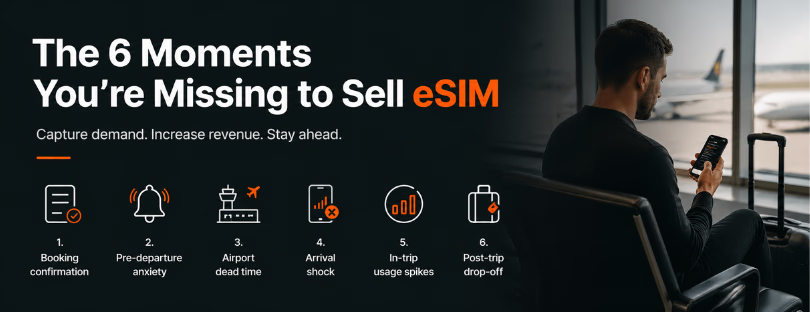
Let’s walk through the six moments where eSIM should already be part of your business model, but usually isn’t.
Booking confirmation
This is the cleanest moment. The user has just committed to travel. Flights are booked. Hotels are locked in. Their brain is in logistics mode.
And yet, what do they get?
A confirmation email. A receipt. Maybe a “Things to do in Paris” guide.
But almost never: “Do you want data when you land?”
That’s a miss.
At this point, intent is high and friction is low. The user is already spending. Adding a €10–€30 connectivity option doesn’t feel like a separate purchase. It feels like part of the trip.
Airlines, OTAs, and travel platforms all sit on this moment. Very few monetize it properly.
Pre-departure anxiety
Two days before departure, something interesting happens.
Users start thinking:
“Do I have data?”
“Will my plan work?”
“Should I buy something at the airport?”
This is where roaming anxiety kicks in. And despite eSIM growth, it’s still very real.
Most companies ignore this entirely. No reminder. No smart prompt. No offer.
READ MORE: How to Launch Your Own eSIM Product?
Meanwhile, the user is actively searching, comparing, and often ending up on third-party sites.
You already have their attention. You just don’t act on it.
Airport dead time
Airports are monetization machines. Food, lounges, upgrades, and insurance.
But connectivity? Still underleveraged.
Think about the actual behavior. Travelers are sitting at the gate, scrolling, killing time, already thinking about arrival.
This is one of the highest-conversion moments for digital products.
And yet, most airlines don’t push eSIM here. No in-app prompt. No check-in upsell. No boarding pass integration.
The irony is obvious. You control the environment, the timing, and the user journey. But you leave connectivity to chance.

Arrival shock
This is where things break.
The plane lands. The phone reconnects. Suddenly: no data.
Maps don’t load. Ride apps lag. Messages stall.
This is the single most emotionally charged moment in the entire journey.
And still, most brands are absent.
Instead, travelers scramble for airport Wi-Fi or buy overpriced roaming packages. Or worse, they make bad decisions just to get online quickly.
If you had offered eSIM here, it wouldn’t feel like a product. It would feel like relief.
In-trip usage spikes
Connectivity isn’t a one-time need. It fluctuates.
A traveler might be fine on Wi-Fi for two days. Then suddenly they need more data. Navigation, remote work, video calls.
This is where dynamic offers should happen.
Instead, most platforms treat connectivity as a one-off transaction. Buy once, forget.
READ MORE: eSIM for Banks: Control the Experience or Lose It
But the smarter players are starting to think differently. Real-time usage triggers. Top-up prompts. Context-based upgrades.
There’s real revenue here. Not just acquisition, but expansion.
And almost nobody is fully capitalizing on it yet.
Post-trip drop-off
This is the most overlooked moment of all.
The trip ends. The user goes home. Connectivity disappears from your product.
But think about behavior.
Many travelers repeat destinations. Many travel frequently. Many would keep a “baseline” connectivity solution if it were easy enough.
Some providers are already experimenting with annual plans, bundled services, and even post-trip utility like security or VPN layers. These strategies increase retention and lifetime value, not just one-time revenue.
Most brands? They just say “Thanks for your trip.”
And lose the relationship entirely.
Your customers will buy connectivity. The question is: from you, or from someone else?
We help airlines, banks, and travel platforms turn that demand into a built-in product — not a missed opportunity.
Why these moments matter more now
The timing problem is becoming more visible because the market itself is maturing.
eSIM is no longer niche. Around 15% of travel connectivity is already powered by eSIM, and that number is rising quickly. Device penetration is increasing, with eSIM expected to reach over half of smartphones globally by 2030.
At the same time, awareness is still surprisingly low. Only about one-third of consumers actually understand what eSIM is.
That creates a very specific opportunity.
Users don’t necessarily search for eSIM. But they do feel the need for connectivity at very predictable moments.
The companies that win are the ones that connect those two things.

What the smartest players are doing differently
If you look at how the ecosystem is evolving, there’s a clear shift.
Connectivity is moving away from telecom products and into platforms. Travel apps. Fintech. Mobility ecosystems.
It’s becoming embedded.
We’re seeing early versions of this everywhere. Banks are experimenting with travel perks. Airlines testing bundled services. Super apps are integrating connectivity as just another feature.
READ MORE: How to Choose an eSIM Provider for Your Platform
The logic is simple. The closer you are to the user journey, the more valuable connectivity becomes.
And yet, most implementations are still surface-level. Static offers. Poor timing. Generic messaging.
The infrastructure is there. The execution isn’t.
Conclusion about eSIM monetization strategy
Here’s the uncomfortable truth.
The eSIM market isn’t limited by technology anymore. It’s limited by imagination and timing.
Plenty of companies have access to the same infrastructure. Similar pricing. Similar coverage. Similar APIs.
What separates them is when they show up.
Right now, most businesses treat eSIM like a product you “add” to your portfolio.
The more advanced ones treat it like a behavior layer. Something that aligns with how users move, travel, and make decisions in real time.
And that’s where the gap is widening.
Because if you compare current approaches across the market, you’ll notice a pattern. Traditional telecom players still think in terms of plans. Travel brands think in journeys. Fintechs think in user flows.
Guess who’s winning?
The ones who understand that connectivity is no longer sold. It’s triggered.
So the real question isn’t “Should you offer eSIM?”
It’s this:
At which moment do you become relevant?
Because if you don’t pick one, someone else already has.