Nomad eSIM App Explained: Plans, Setup and Travel Use
For a long time, travel eSIMs were sold as a cheaper alternative to airport SIM cards. That story is still true, but it is becoming a little too small. The more interesting shift is this: the eSIM app is becoming the real travel product.
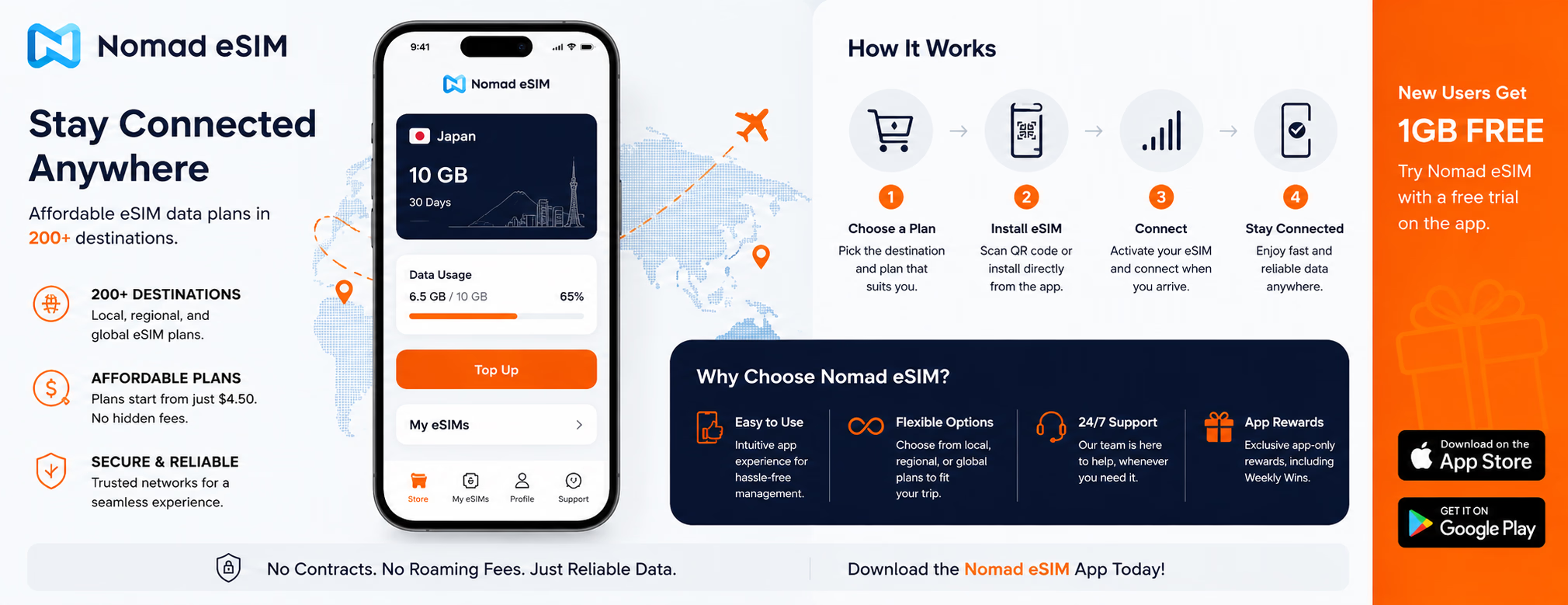
Nomad eSIM is a good example of that shift. The company sells international eSIM data plans for 200+ destinations, with country and regional options, and its website clearly pushes users toward the app experience for buying, installing, and managing travel data on the move. Nomad also says plans start from around USD 4.50, with examples such as Italy, China, Japan, France, Turkey, and the United States shown with per-GB starting prices on its homepage.
That matters because most travelers do not want to “learn eSIM.” They want their phone to work when they land. They want maps, WhatsApp, Uber, translation, hotel check-in, QR menus, banking apps, and airport transfers to behave normally. The less they have to think about connectivity, the better the app is at doing its job.
Why Nomad’s app matters
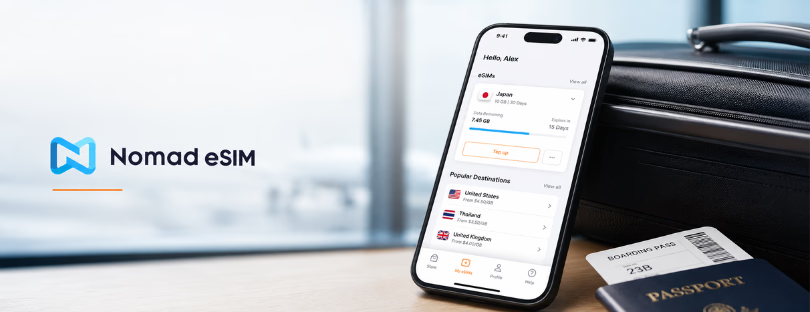
Nomad’s download page keeps the message simple: get the app for eSIM purchases and management on iOS or Android. That is not glamorous, but it is practical. Travel connectivity is full of tiny friction points: picking the right plan, installing the eSIM, checking usage, topping up, finding the QR code again, and making sure the plan is ready before departure. Moving those actions into one app reduces the usual pre-trip mess.
Nomad says users can buy a plan for a chosen country or region, install the eSIM using one-tap installation or QR code, then connect when they arrive. It is the standard travel eSIM journey, but the app makes the sequence feel less like a telecom task and more like buying a travel add-on.
READ MORE: Nomad eSIM Explained: Plans, Pricing, Real Value
There is also a subtle but important difference between buying an eSIM from a browser and managing one from an app. A website is fine before the trip. An app is more useful during the trip. When you are standing outside a train station in Tokyo, or waiting for a Bolt in Istanbul, or trying to reload Google Maps in Rome, you do not want to dig through emails for an activation code. You want a clean dashboard and a clear answer: how much data do I have left, is my eSIM active, and can I top up fast?
The beginner advantage
Nomad is not the only eSIM provider with an app, of course. Airalo, Holafly, Ubigi, Saily, aloSIM, and others also understand that the app experience is now part of the value proposition. But Nomad’s positioning is quite beginner-friendly. Its app store descriptions emphasize flexible data, no contracts, easy setup, and access in 200+ destinations and 10 regions.
That kind of simplicity is important because travel eSIM adoption still has a psychological barrier. Many travelers know their phone supports eSIM, but they are not fully confident about installing one. They worry about deleting their main SIM, losing WhatsApp, messing up settings, or arriving without data. Nomad’s own installation content notes that app-based installation can remove the need to scan a QR code and is often the fastest option, with users opening the app, selecting the purchased plan, tapping install, and following the instructions.
That is where apps can win. Not by adding ten clever features, but by making the risky-feeling part feel boring.
Not app-only, but app-better
One point in Nomad’s favor is that it does not appear to force everything through the app. Nomad says users can buy a travel eSIM without downloading a mobile app, but that the app makes it easier to track data usage and manage eSIMs while traveling.
That is the right balance. Some travelers still prefer buying from a desktop before departure, especially business users, families, or people comparing several destinations. But once the trip starts, the app becomes the control center. That is where data tracking, top-ups, plan visibility, and quick access to installation details become genuinely useful.
READ MORE: Traveling Soon? Try Nomad eSIM’s 1GB Free Trial Before You Fly
For Alertify readers, this is probably the most practical way to judge the Nomad eSIM app: not whether it has the most dramatic interface, but whether it reduces travel stress. If it helps you buy before the trip, install without panic, monitor usage while abroad, and avoid last-minute roaming charges, it is doing the job.
Rewards and app-only behavior
Nomad is also leaning into app-based loyalty. Its homepage promotes “Weekly Wins,” described as an app-only reward feature where users can check in weekly for data and discounts. It also highlights a free trial eSIM for new users, with 1GB available for a future trip.
This is a smart move. The travel eSIM market is crowded, and price alone is a weak loyalty tool. Someone can always offer a cheaper 3GB plan for Spain or Japan next week. App habits are harder to copy. If users already have Nomad installed, have used it successfully once, and see occasional rewards or trial incentives inside the app, Nomad has a better chance of becoming their default travel connectivity option.
That does not mean every traveler should blindly stick with one provider. Prices, fair usage rules, local network partners, and regional coverage still vary. But the app is becoming the place where trust compounds. A good first trip can turn into a second purchase without another Google search.
Where Nomad sits in the market
Nomad sits in a competitive middle ground. Airalo has huge brand recognition and broad consumer awareness. Holafly leans hard into unlimited plans for travelers who do not want to count gigabytes. Ubigi has a strong technical background through Transatel and often appeals to users who care about reliability, vehicles, laptops, and connected devices. Saily has pushed hard with security-led consumer branding. Nomad’s strength is more understated: clean country and regional plans, wide coverage, app-led management, and a relatively approachable user journey.
For most mainstream travelers, that combination is enough. The person booking a week in Japan, a business trip to the United States, or a multi-country Europe route usually does not want a telecom lecture. They want a plan that is easy to understand, simple to install, and not ridiculous in price.
READ MORE: Nomad eSIM Promo Code: What’s Actually Worth Using in 2026?
The caution is the same as with all travel eSIM apps: users still need to check destination details carefully. “Unlimited” does not always mean unrestricted. “5G” does not always mean 5G everywhere. A regional plan may be convenient, but not always cheaper than country-specific plans. And eSIMs are typically data-first products, so traditional voice and SMS are not always included.
Conclusion about Nomad eSIM app
The Nomad eSIM app is interesting because it shows where the travel eSIM category is heading. The old question was, “Who has the cheapest data for this country?” The new question is, “Which provider can become the easiest connectivity habit for travelers?”
Nomad is not trying to look like a heavy telecom platform, and that is probably a good thing. Its app is built around the actual traveler workflow: choose a destination, buy data, install, track, top up, and move on with the trip. Compared with Airalo, Holafly, Ubigi, and newer app-first challengers, Nomad’s advantage is not one single spectacular feature. It is the practical packaging of travel connectivity into something normal people can use without feeling they are configuring a network profile.
That is also why we would recommend giving Nomad a look, especially for travelers who want a simple app-based eSIM experience rather than a complicated comparison exercise. In a market full of loud claims, the best eSIM app may be the one you barely have to think about once you land.