Nomad eSIM Promo Code: What’s Actually Worth Using in 2026?
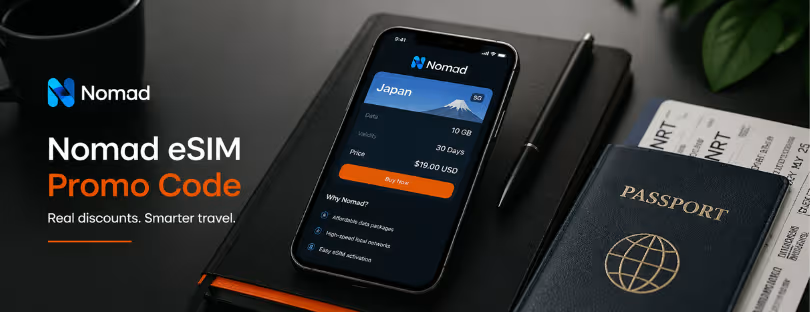
If you’ve searched for a Nomad eSIM promo code recently, you’ve probably noticed something odd. There are dozens of codes floating around, but only a handful actually work consistently, and even fewer genuinely matter.
This isn’t just about discounts anymore. It’s about how eSIM pricing is evolving, and why promo codes are becoming a strategic lever for providers like Nomad eSIM rather than just a quick marketing trick.
Let’s break it down properly.
The current state of Nomad promo codes
As of April 2026, there are multiple active Nomad offers circulating across coupon platforms, affiliate sites, and referral programs. The reality is a mix of:
Verified working codes and deals
- 15% off codes like TRAVELESIMEXPERT
- Around 20% discounts via codes such as MYBESTSIM20
- Smaller fixed discounts like $3–$5 off for new users
- Community-shared codes (e.g. SIMPLYCODES15) that occasionally work
And then there are non-code offers, which are often more reliable:
- Referral credits (typically $5 per user)
- Free 1GB trial campaigns
- Region-specific discounts (up to 40–45% on certain destinations)
In theory, discounts can go as high as 30–50% depending on timing and geography . In practice, most users land somewhere between 10% and 20%.
That’s the realistic baseline.

Why promo codes matter more than you think
Here’s the interesting part. Promo codes in the eSIM space are not just about saving money. They are a signal.
Nomad, backed by the LotusFlare ecosystem, operates with a very specific model: competitive base pricing + aggressive promotional layering.
You’ll often see:
- Low entry prices (for example, a few dollars for 1GB plans)
- Stacked promotions depending on region
- Time-sensitive deals tied to travel demand
This isn’t random. It reflects a broader shift in how travel connectivity is being sold.
Instead of fixed pricing like traditional telcos, eSIM providers are moving toward dynamic, campaign-driven pricing, closer to airlines or hotel booking platforms.
Promo codes are just the surface of that shift.
Where users get it wrong
Most travelers approach promo codes the same way: find the biggest percentage discount and apply it blindly.
That’s usually a mistake.
Because with Nomad (and most eSIM providers), the real value depends on:
- Destination pricing (Asia vs Europe vs US varies a lot)
- Plan structure (local vs regional vs global)
- Data usage patterns
A 20% discount on a poorly matched plan is still a bad deal.
For example, Nomad is widely considered one of the more affordable eSIM providers, especially for short-term and mid-range data bundles. But its “unlimited” plans come with a daily high-speed cap before throttling kicks in.
So if you’re a heavy user, even a strong promo code won’t fix the underlying limitation.
That’s where things get more interesting.
How Nomad compares to the market
Promo codes are everywhere now. Nomad is not unique in offering them.
Here’s how it stacks up:
Nomad sits somewhere in the middle. It’s more promo-driven than most, but still relies on competitive base pricing to stay relevant.
That combination is why it shows up so often in “budget-friendly” rankings.
The bigger trend: promo-driven telecom
Zoom out, and this is not just about Nomad.
Across the eSIM market in 2026, we’re seeing three clear pricing models emerge:
1. Discount-led (Nomad-style)
- Frequent promo codes
- Regional campaigns
- Price-sensitive audience
2. Predictability-led (Fairplay-style)
- Fixed pricing
- Cost caps
- Minimal reliance on discounts
3. Experience-led (Holafly-style)
- Premium positioning
- Simple unlimited messaging
- Less emphasis on promotions
Promo codes are strongest in the first category. But that model also creates friction.
Users need to:
- Search for codes
- Test multiple options
- Understand fine print
It’s not exactly seamless.
What actually works right now
If you’re advising someone or building content around this keyword, here’s the honest takeaway:
- Use codes in the 10–20% range as your baseline expectation
- Always check regional deals first, not just global codes
- Treat referral credits as part of the discount stack
- Don’t rely on outdated coupon pages
And most importantly:
Match the plan first, discount second.
Because in travel connectivity, pricing structure beats discount size every time.
Where is it heading?
Promo codes aren’t going away. But they’re becoming less about one-time savings and more about acquisition strategy.
Providers like Nomad are using them to:
- Enter new markets quickly
- Compete with local telecom pricing
- Drive affiliate and media partnerships
This is why you see so many “exclusive” codes floating around. They’re part of distribution, not just marketing.
Expect more:
- Personalized discounts
- App-based offers
- Dynamic pricing tied to demand
Basically, telecom is starting to behave like travel tech.
And that’s exactly where Alertify should be paying attention.
Conclusion
Promo codes feel like a small detail, but they reveal something bigger about the eSIM industry.
Nomad’s approach shows how pricing is becoming fluid, competitive, and campaign-driven. It works, especially for price-sensitive travelers, but it also adds complexity that not every user wants to deal with.
Compared to players focusing on predictability or simplicity, Nomad leans into flexibility and promotion. That makes it attractive on the surface, but not always the best fit depending on usage.
The real shift is this:
We’re moving from static telecom pricing to dynamic connectivity markets.
And in that world, promo codes are no longer just discounts. They’re signals of how providers compete, scale, and position themselves globally.
For travelers, the smart move is simple. Stop chasing the biggest code. Start understanding the model behind it.