Nomad eSIM Explained: Plans, Pricing, Real Value
There’s a pattern emerging in travel connectivity. Not loud, not hyped, not built on flashy “unlimited” claims. But quietly… consistently… effective.
That’s where Nomad eSIM sits right now.
It’s not the most talked-about eSIM brand. But if you actually look at how the market is evolving, it’s one of the more interesting ones to watch.
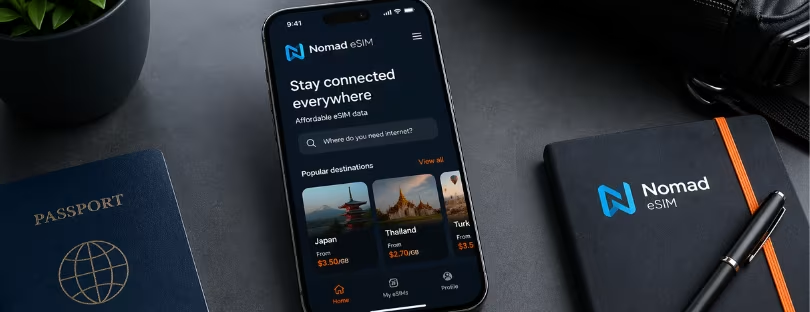
Because Nomad isn’t just selling data. It’s selling a very specific idea: predictable, app-driven connectivity without friction.
And that’s exactly where the industry is heading.
What Nomad eSIM Actually Is
At its core, Nomad is a global travel eSIM provider launched in 2020 by LotusFlare, a company better known for telecom infrastructure than consumer apps.
That matters more than it seems.
Unlike many eSIM brands that are essentially resellers with a frontend, Nomad is built on telecom-grade backend infrastructure. It’s not just packaging connectivity. It’s closer to a marketplace layer connecting users to local networks globally.
From a user perspective, though, it’s simple:
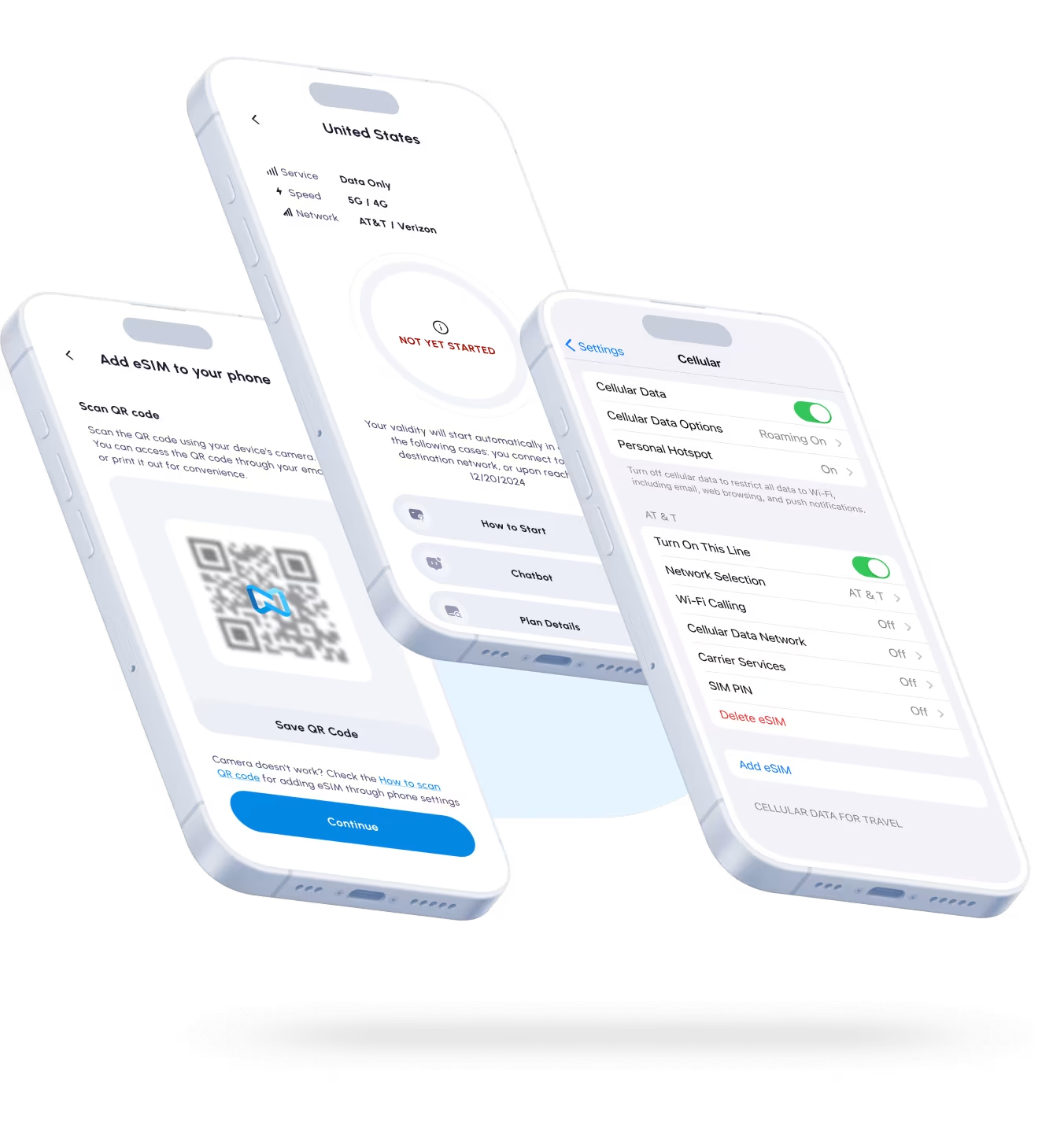
- Buy a plan via app or web
- Scan a QR code
- Connect instantly
No physical SIM. No airport queues. No surprises.
And importantly, no contracts.
Quiet Scale, Real Adoption
Nomad doesn’t push numbers aggressively in marketing, but the scale is already there.
- 3+ million users globally
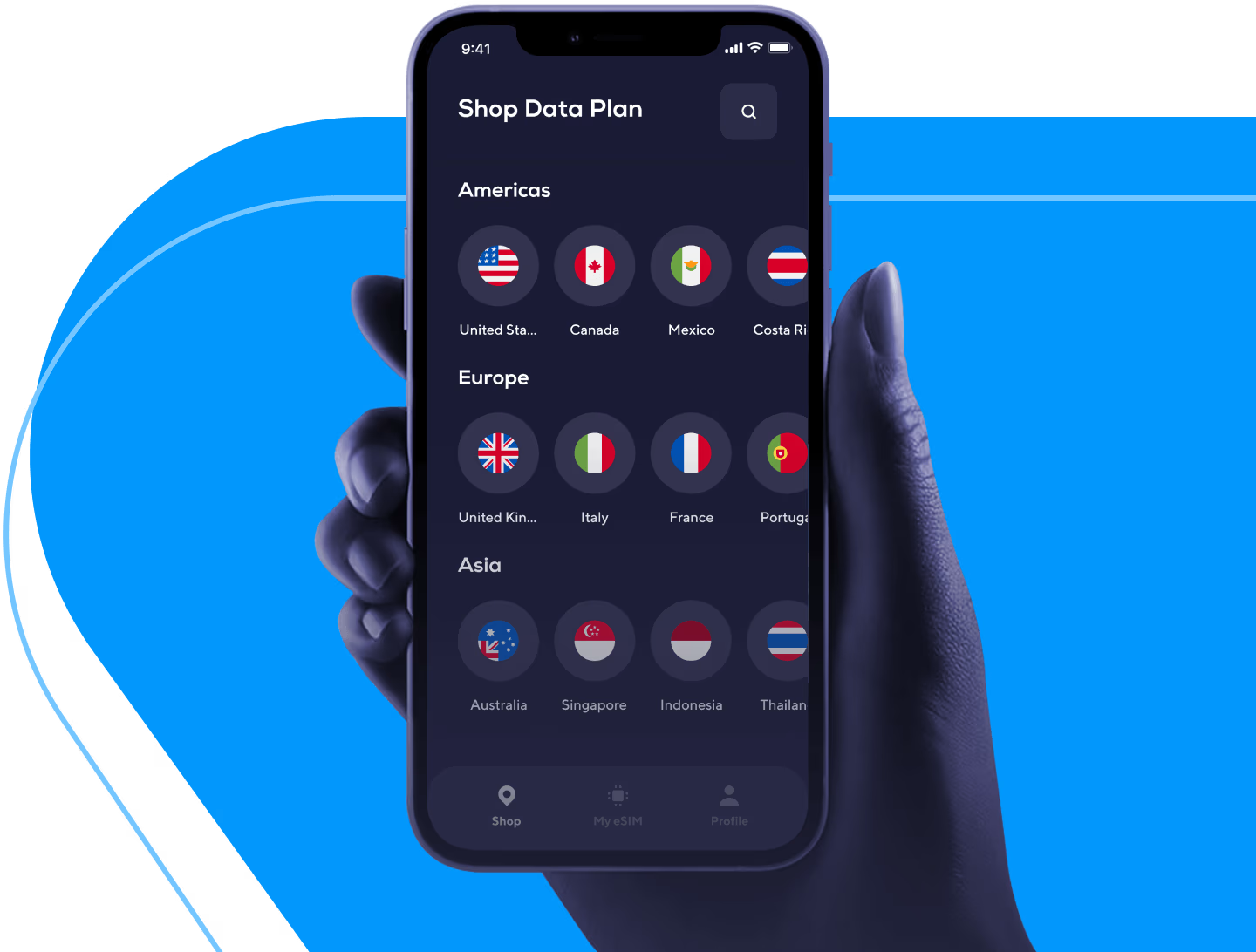
- Coverage in 200+ destinations
That puts it in the same league as major players in terms of reach.
The difference is in positioning.
Nomad leans heavily into flexibility and cost control rather than lifestyle branding or “unlimited everything” narratives.
And for a certain type of traveler, that lands better.
 The Real Value: Frictionless Travel Data
If you strip away the marketing, Nomad’s core value proposition is actually very simple:
You get local data rates without acting like a local.
That sounds obvious. But it solves a very real problem.
Traditional roaming still carries cost uncertainty. Even in 2026, bill shock hasn’t disappeared. Nomad users can save up to 70% compared to standard roaming charges, according to company data.
But what’s more interesting is the operational side:
- Instant provisioning
- App-based management
- Easy top-ups
- Multi-country plans
All of it designed to remove the “connectivity moment” from travel entirely.
You don’t think about it. It just works.
And that’s exactly the shift happening in travel tech right now.
Where Nomad Fits in the eSIM Landscape
The eSIM market has quietly split into distinct categories:
Nomad clearly sits in the first category.
But within that category, it leans more toward:
- Clean UX
- Transparent pricing
- Wide coverage
And less toward:
- Aggressive discounting
- Cashback gimmicks
- Marketing-heavy positioning
That’s why you often see it ranked as a strong “value” option in industry comparisons.
The Limitations (And Why They Matter)
Let’s be clear. Nomad isn’t perfect.
The biggest constraint is structural:
It’s primarily a data-only service (except new UK plans).
No native voice or SMS.
That’s fine for most travelers using WhatsApp, FaceTime, or Teams. But it does limit use cases, especially for:
- Business travelers needing local numbers
- Authentication flows relying on SMS
- Users expecting a full telco replacement
There’s also the “unlimited” question.
Nomad does offer unlimited plans in some markets, but like most of the industry, these typically come with daily fair usage limits and speed throttling.
So it’s not trying to compete with true unlimited providers. And honestly, that feels intentional.
The Bigger Story: Nomad as a Platform, Not Just a Product
This is where things get more interesting.
Nomad isn’t just a consumer app. It’s part of a broader telecom model built by LotusFlare.
Under the surface, it operates more like:
- A connectivity marketplace
- A digital telco layer
- A distribution channel for global data plans
That’s a different game compared to typical travel eSIM brands.
And it explains why Nomad has been expanding into enterprise connectivity as well.
You’re not just looking at a travel product. You’re looking at a modular telecom service that can scale across:
- Consumers
- Businesses
- Platforms
That’s a big shift.
What Travelers Actually Experience
From a user standpoint, Nomad is… uneventful.
And that’s a good thing.
You install it before your trip. It activates automatically when you land. You top up if needed. That’s it.
No drama. No decisions mid-trip.
That reliability is what keeps users coming back, not flashy features.
And it’s why Nomad consistently scores high in app ratings and user satisfaction.
Where It Stands Against Competitors
Let’s put it in context.
- Compared to Airalo: Nomad feels cleaner but slightly less aggressive on pricing tactics
- Compared to Holafly: less “unlimited,” more controlled and predictable
- Compared to Yesim: less feature-heavy, more streamlined
And that positioning matters.
Because the market is slowly moving away from novelty toward reliability.
The Trend It Taps Into
If you zoom out, Nomad aligns with three bigger shifts in travel connectivity:
Nomad fits all three.
And that’s why it’s quietly gaining traction.
Conclusion
Nomad eSIM isn’t trying to dominate headlines. It’s not reinventing the category. And it’s definitely not the loudest player in the market.
But it doesn’t need to be.
What it does is execute the fundamentals extremely well: global coverage, simple onboarding, predictable pricing, and a frictionless experience.
And in a market still dealing with trust issues around “unlimited” data and hidden restrictions, that’s a strong position.
The bigger takeaway is this: the future of travel connectivity isn’t about more features. It’s about less friction.
That’s where players like Nomad, built on real telecom infrastructure rather than just marketing layers, start to stand out.
Not because they’re the cheapest.
Not because they’re the most powerful.
But because they’re the closest thing we currently have to invisible connectivity.
And that’s ultimately what travelers want.