Nomad eSIM Plan: Best Option for Digital Nomads?
There’s a subtle shift happening in the travel connectivity space. Not loud, not overhyped. But if you’ve been watching closely, it’s clear: the “Nomad eSIM plan” is becoming less of a product category and more of a mindset.
And one of the clearest examples of that shift is Nomad eSIM.
What started as just another travel eSIM option is now a blueprint for how connectivity is evolving for digital nomads, remote workers, and frequent travelers.
Let’s unpack what’s really going on here.
What a “Nomad eSIM Plan” Actually Means Now
A few years ago, this was simple. You bought a data package for a country, used it, and moved on.
Today, a nomad eSIM plan is something else entirely.
It’s:
- Multi-country by default
- App-managed, not operator-managed
- Flexible in duration and data
- Built for movement, not destinations
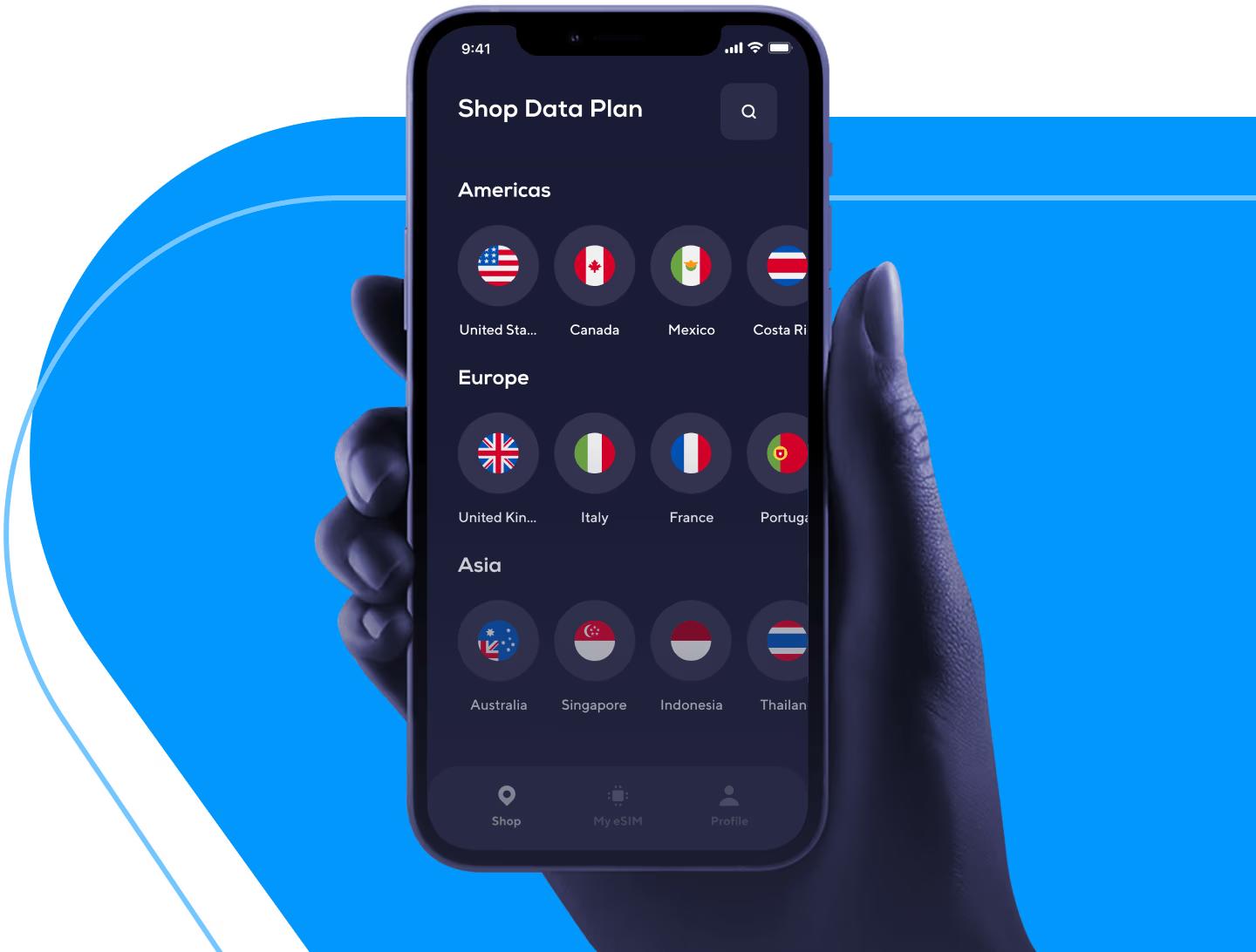
Nomad eSIM itself operates across 200+ destinations, offering both regional and global plans instead of forcing travelers into country-by-country decisions.
That sounds basic. It isn’t.
Because the real shift is psychological: you stop thinking about “where am I going?” and start thinking “how do I stay connected, continuously?”
That’s a completely different product philosophy.
The Real Value: Frictionless Movement
If you talk to actual users, the biggest selling point isn’t price. It’s friction.
Nomad-style plans remove:
- SIM swapping
- Roaming bill anxiety
- Network uncertainty on arrival
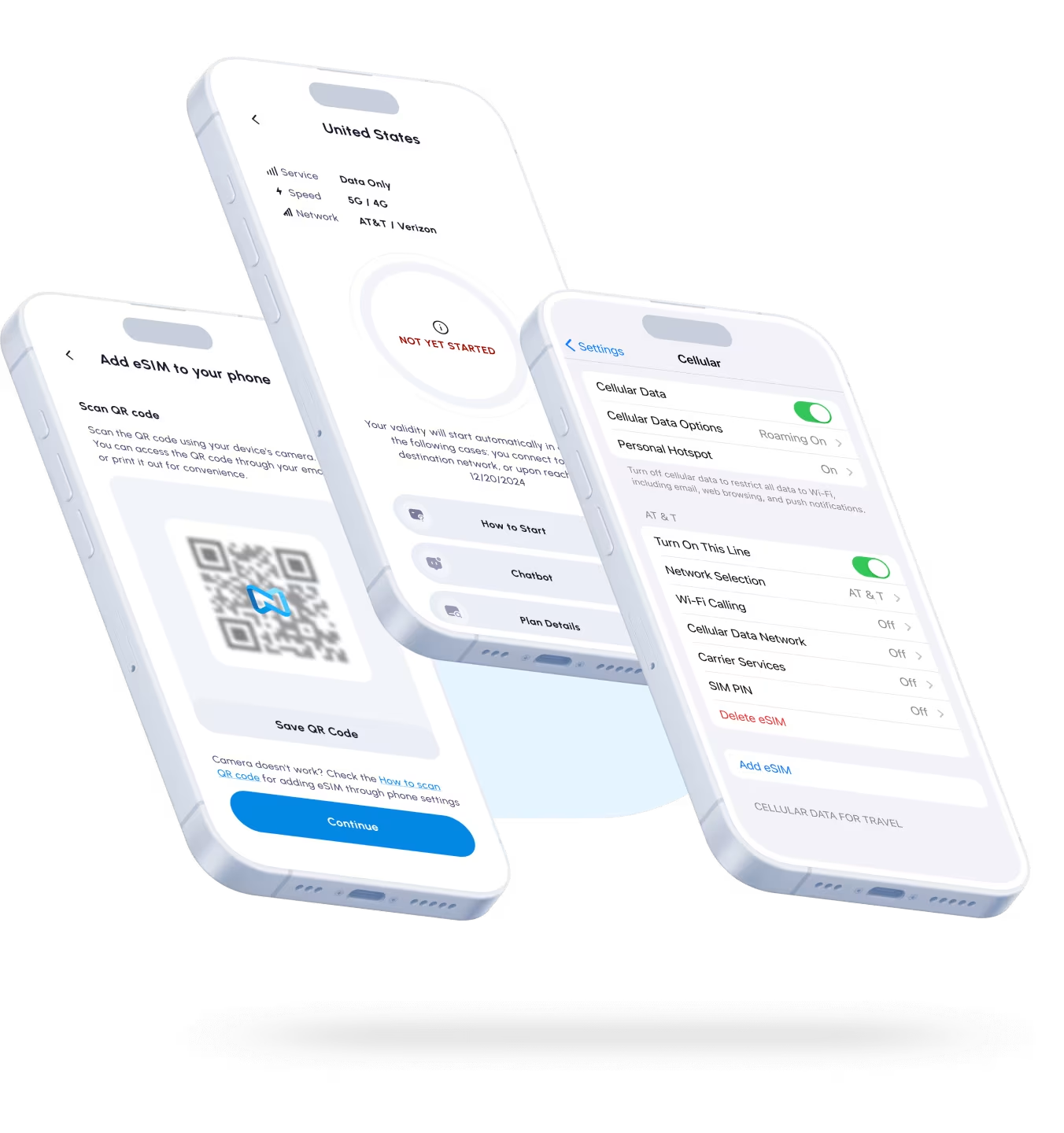
Instead, you install once, activate when needed, and move across borders without thinking twice.
This is where LotusFlare (the company behind Nomad) plays a bigger role than most people realize. They’re not just selling data plans. They’re building the infrastructure layer that makes this experience possible.
And that’s important, because it explains why Nomad feels more “productized” than many competitors. It’s closer to a software experience than a telecom one.
Where It Stands Against the Market
Let’s be honest. Nomad isn’t alone here.
The nomad eSIM space is crowded, and increasingly aggressive.
Here’s how it stacks up:
Where Nomad Fits
Nomad sits somewhere in the middle.
Not the cheapest.
Not the most “unlimited.”
Not the biggest marketplace.
But arguably one of the most balanced.
In independent comparisons, it often ranks highly for:
- Ease of setup
- App usability
- Mid-tier pricing value
- Reliable coverage across major networks
That combination matters more than it sounds. Because for most travelers, the experience is the product.
 The Digital Nom
ad Use Case Is Driving Everything
This is the part many providers still underestimate.
Nomad eSIM plans are not designed for tourists anymore.
They’re built for:
- People working from cafés in Lisbon
- Founders hopping between Dubai and Singapore
- Remote teams managing travel across continents
In other words, connectivity is no longer a travel accessory. It’s infrastructure.
And that’s changing how plans are designed:
- Longer validity periods
- Regional coverage instead of single-country
- Larger data bundles or pseudo-unlimited options
- App-level controls and top-ups
Even enterprise layers are starting to appear. Nomad has already introduced business-focused solutions to manage employee connectivity globally.
That’s not a coincidence. It’s where the money is going.
The Hidden Limitation Nobody Talks About
Here’s the honest part.
Most nomad eSIM plans, including Nomad, are still:
- Data-only (except UK for now)
- Dependent on partner networks
- Not true replacements for local operators
No native phone number
No guaranteed priority bandwidth
No full telco-level service
Yes, VoIP apps solve a lot of this. But not everything.
This is exactly why we’re starting to see moves like:
- Holafly adding phone numbers
- B2B platforms building full-stack telecom layers
- API-driven connectivity models emerging
The next phase is clear: eSIM providers want to become real operators, not just resellers.
What This Means for the Future of Nomad Plans
If you zoom out, the trend is obvious.
Nomad eSIM plans are evolving into three distinct directions:
Nomad already touches all three, but doesn’t fully own any yet.
That’s the opportunity.
Bottom line
The “nomad eSIM plan” isn’t really about Nomad anymore. It’s about a category that’s still being defined in real time.
Nomad does a lot right. Clean UX, solid pricing tiers, global coverage, and a product that actually feels designed for movement. It’s one of the few providers that understands that connectivity should disappear into the background.
But the market is accelerating fast.
Airalo is scaling distribution.
Holafly is pushing subscription and unlimited narratives.
Yesim is moving toward programmable telecom.
And under all of it, infrastructure players like LotusFlare are quietly shaping the future of how connectivity is delivered.
If you’re reading this as a traveler, the takeaway is simple: you’re no longer buying data. You’re choosing an ecosystem.
If you’re reading this as a business, it’s more strategic: connectivity is becoming part of the product experience, not a utility.
Nomad is a strong player in this transition. But the real story is bigger.
The endgame isn’t “best eSIM plan.”
It’s invisible connectivity.
And we’re not fully there yet.