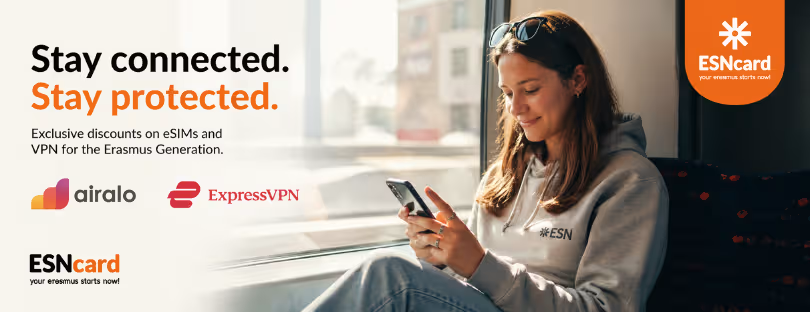
Erasmus Student Network Adds Airalo & ExpressVPN for Students
Every year, hundreds of thousands of students move abroad through the Erasmus+ program. But this isn’t a niche exchange anymore.
Since launch, more than 13 million people have taken part, and the EU plans to support another 10 million by 2027. Erasmus has effectively become one of the largest cross-border mobility ecosystems in the world.
In practice, that means constant movement. Students studying in one country, traveling to another, working remotely from a third. Switching networks, apps, and digital environments almost weekly.
And yet, one layer of that experience has remained fragmented.
Connectivity. And security.
That’s exactly where the Erasmus Student Network is stepping in, with two new global partnerships that signal a shift in how student mobility is being supported.
Airalo and ExpressVPN enter the picture
The update is simple on paper. Airalo and ExpressVPN are now part of the ESNcard ecosystem, offering students easier access to mobile data and online security tools.
But this goes beyond discounts.
It reflects a growing recognition that being abroad today is not just a physical experience. It is a digital one.
And that experience needs infrastructure.
Connectivity without the usual friction
For years, the first hour in a new country looked the same. Find Wi-Fi. Search for a SIM card. Compare offers. Try not to overpay.
It worked, but it was inefficient.
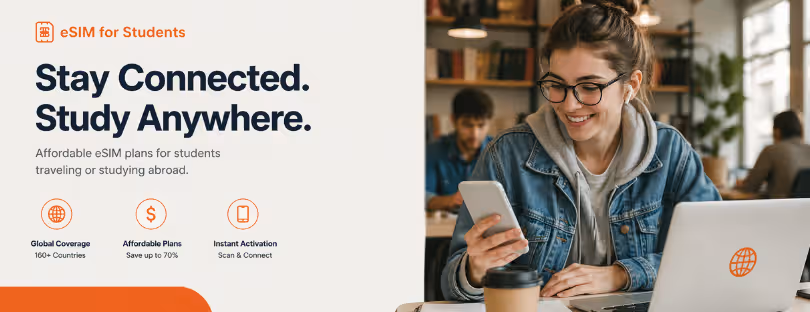
Airalo removes that entire process. With eSIM, students can install a data plan before they travel and connect instantly upon arrival.
READ MORE: eSIMo Partners with Student Beans for Travel Data
For Erasmus students, this matters more than it sounds. Their mobility is not a single trip. It is continuous. Weekend travel, short visits, multiple destinations within one semester.
Each move used to reset connectivity.
Now it doesn’t.
This aligns with broader industry trends. The GSMA has consistently highlighted eSIM as a key driver of future mobile adoption, particularly among frequent travelers and digitally mobile users.
Students fit that profile perfectly.
Security finally becomes part of the experience
Connectivity solves access. But it doesn’t solve risk.
And that’s where ExpressVPN comes in.
Students rely heavily on public Wi-Fi. Libraries, cafés, airports. Convenient, but often unsecured. Most users are aware of the risks, but behavior rarely changes unless the solution is simple.
That’s what makes this partnership relevant.
By integrating a VPN into the ESN ecosystem, security becomes part of the default setup rather than an afterthought. Not just for accessing content from home, but for basic protection: encrypted traffic, safer browsing, more control over personal data.
It reflects a shift in how digital safety is being positioned. Less as a technical feature, more as a standard expectation.
ESN is building more than a discount program
What stands out is the direction.
Erasmus Student Network is gradually turning the ESNcard into a service layer, not just a perks program.
Traditionally, student support focused on logistics. Housing, paperwork, transport. Those are still essential, but largely solved.
The new layer is digital.
How easily can you connect?
How securely can you operate across networks?
How seamlessly can you stay functional across borders?
These questions are now becoming part of the student experience itself.
And once they are addressed centrally, expectations shift quickly.
A broader shift toward embedded connectivity
This move fits into a wider pattern.
Connectivity is increasingly being embedded into platforms rather than sold separately. Airlines, fintech apps, and travel companies are all experimenting with integrating eSIM into their offerings.
The logic is straightforward. If your user travels, connectivity is part of your product.
What ESN is doing with Airalo and ExpressVPN follows that same logic, tailored to students.
And students are a strategic segment. Highly mobile, digitally native, and quick to adopt new behaviors.
Conclusion
This is more than a partnership update.
Erasmus Student Network is aligning itself with a broader industry shift where connectivity and security are becoming embedded layers of the user experience. The same direction is already visible in platforms like Revolut and N26, and supported by market forecasts from the GSMA and Juniper Research.
The difference is timing.
By integrating these services early into the Erasmus ecosystem, ESN is shaping expectations before they fully form. For a generation that moves constantly, connectivity will not be something to arrange. It will be something already there.
And that is where the real shift happens.