N26 SIM Spain Launches With Orange 5G Network
N26 has taken another step into mobile connectivity, and this one is more interesting than a standard travel eSIM launch.
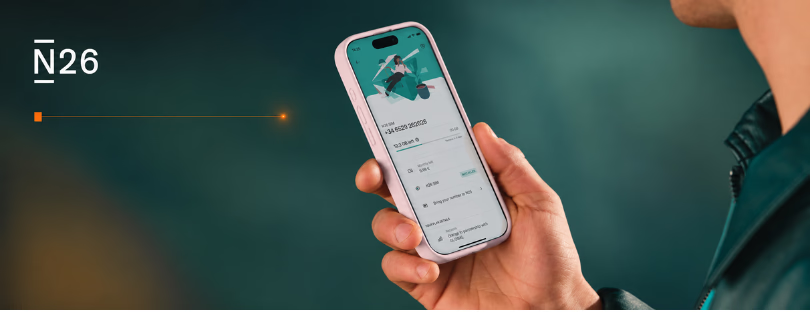
The digital bank has introduced N26 SIM in Spain, its second local telecommunications market after Germany. Eligible customers can now open the N26 app, choose a mobile plan, activate an eSIM, and connect to Orange’s 5G network without visiting a store, waiting for a plastic SIM, or dealing with the usual operator paperwork.
The plan is offered in collaboration with 1GLOBAL, the connectivity partner behind the service. It costs €11.99 per month, with an introductory price of €9.99 per month for the first year for customers who sign up before July 31, 2026. It includes national calls and SMS, EU and EEA roaming, and what N26 calls unlimited data. The important small print: the plan includes 150 GB at 5G speeds, after which speeds may be reduced.
That is not necessarily a problem, but it is the kind of detail customers should notice before treating “unlimited” as infinite.
Why Spain matters
Spain is a smart next market. It has a large mobile-first banking audience, strong travel flows, and a competitive telecom market where users are already familiar with SIM-only offers, prepaid options, MVNOs, and no-contract plans.
But N26 is not trying to behave like a traditional operator with shops, routers, family bundles, and confusing tariffs. The bet is different. It is saying that mobile connectivity can become another financial lifestyle feature, sitting next to cards, payments, travel tools, and everyday account management.
That is where this launch becomes bigger than Spain. Banks already own one of the most valuable digital surfaces on a customer’s phone: the daily finance app. If that app can also solve roaming, local connectivity, subscriptions, and number management, the relationship gets stickier.
Antón Díez Tubet, General Manager of N26 Spain and Portugal, puts it clearly:
“Customers value simplicity, flexibility, fair pricing and a seamless experience. Modern banking is fundamentally a mobile experience, meaning seamless connectivity and personal finance now go hand in hand. With N26 SIM, we are leveraging our scale to offer mobile connectivity at a fair price directly within our app. This launch reflects our core focus: delivering exceptional value and making everyday life easier for our customers.”
Not just another travel eSIM
N26 already launched a Travel eSIM in 2025, designed for data abroad in more than 100 countries. N26 SIM Spain is different. This is not just a holiday add-on. It is a local mobile plan with a number, national usage, EU and EEA roaming, and the option to port an existing number or receive a new one from N26.
That distinction matters. Travel eSIM providers such as Airalo, Nomad eSIM, Roamless, Ubigi, Saily, and others generally win when a customer needs short-term data abroad. Their strength is destination coverage, fast purchase, and flexibility for trips. A bank-led local mobile plan is aiming for a more permanent role.
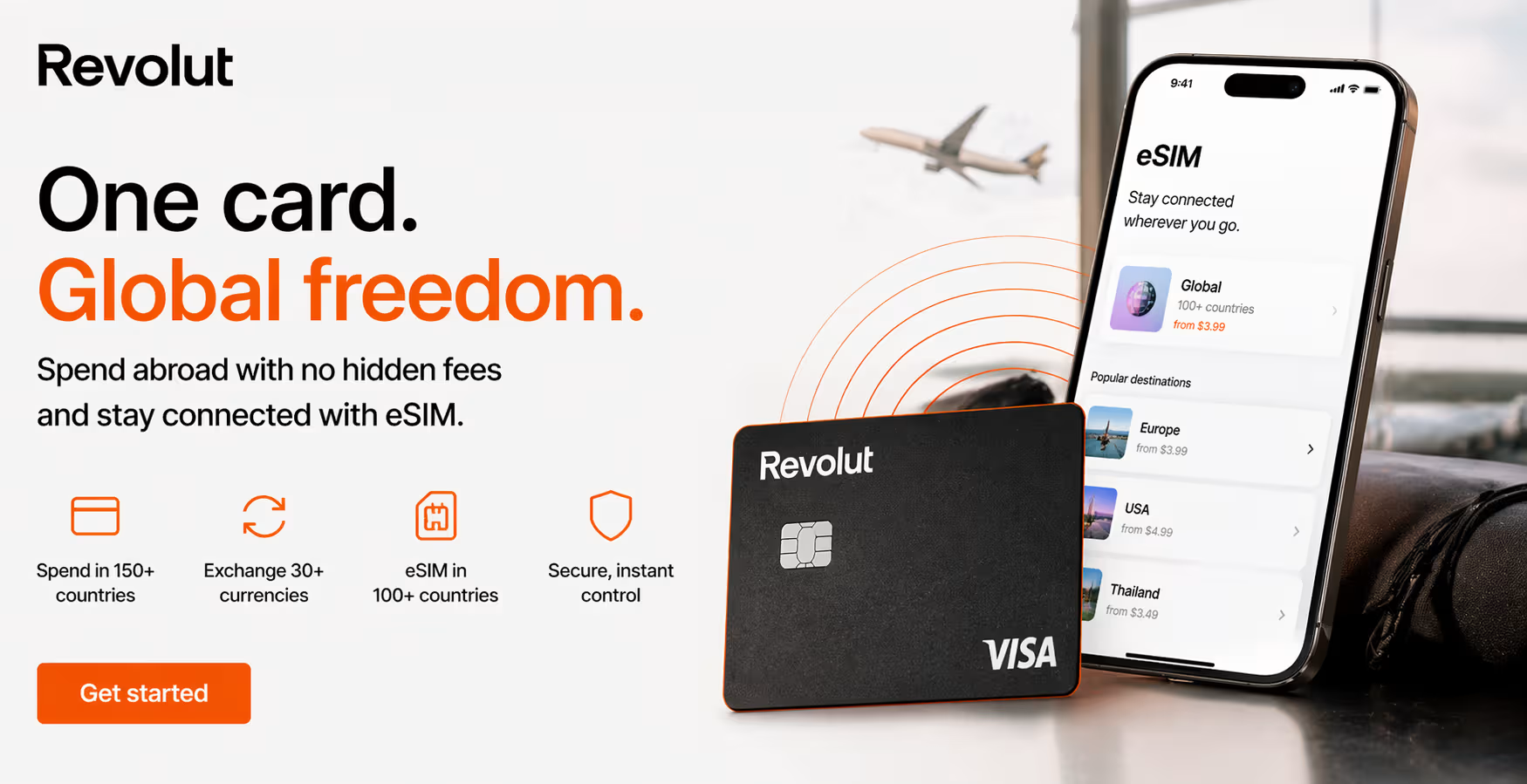
Revolut, bunq, Klarna, and other digital finance players have also moved toward eSIMs or mobile plans, which shows this is no longer a side experiment. It is part of a wider embedded telecom trend. GSMA Intelligence has pointed to accelerating consumer eSIM adoption, while Juniper Research has been tracking how travel eSIM margins and distribution models are changing. In plain English: connectivity is becoming easier to package, and non-telco brands want a piece of the relationship.
Where it fits
For existing N26 customers in Spain who want a clean, no-contract mobile plan, this could be attractive. The price is clear, activation is digital, cancellation is flexible, and Orange’s 5G network gives the offer a familiar infrastructure layer rather than making it feel like a vague virtual service.
Still, it will not fit everyone. Heavy data users should read the 150 GB speed threshold carefully. Families looking for multi-line discounts, fiber bundles, TV packages, or in-store support may still prefer established Spanish operators or local MVNOs. Frequent long-haul travelers may also find that dedicated travel eSIM providers offer more useful options outside Europe.
The biggest question is not whether N26 can sell a mobile plan. It probably can. The real test is support. Telecom customers do not only judge a provider when activation works. They judge it when number porting gets stuck, roaming behaves oddly, speeds drop, or a phone is replaced. That is where banks entering telecom will either look brilliant or suddenly very exposed.
Your customers will buy connectivity. The question is: from you, or from someone else?
We help airlines, banks, and travel platforms turn that demand into a built-in product — not a missed opportunity.
The real signal
N26 SIM in Spain is not just a fintech adding one more perk. It is a signal that mobile connectivity is moving into apps people already trust and use every day.
For telcos, that should be slightly uncomfortable. Their network remains essential, but the customer relationship is becoming more flexible. For eSIM providers, it confirms that distribution may be just as important as coverage. And for banks, it opens a useful but demanding category: if you sell connectivity, you inherit telecom expectations too.
The winners will not be the brands that simply hide a SIM inside an app. They will be the ones that make connectivity feel as simple, transparent, and recoverable as a good digital payment. N26 has made a strong move in Spain. Now it has to prove that banking-grade simplicity can survive real-world telecom problems.