Japan SIM for MyJapan+: KDDI, JCB Launch eSIM
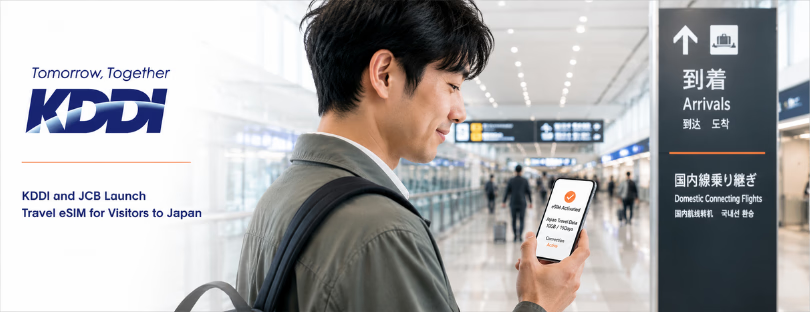
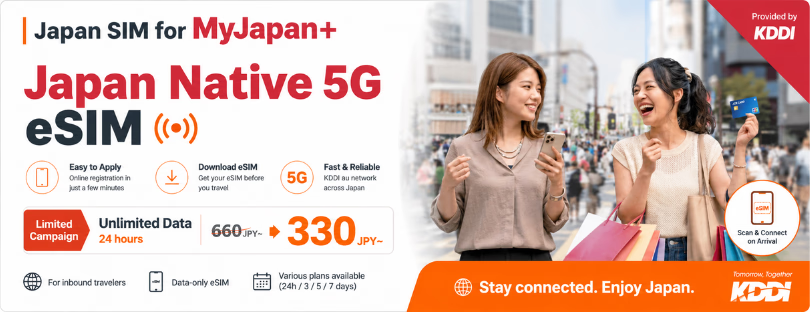
KDDI and JCB are making Japan connectivity a little easier for inbound travellers, with the launch of “Japan SIM for MyJapan+,” a data-only eSIM service available through JCB’s MyJapan+ app.
On paper, this is a simple product: tourists visiting Japan can buy an eSIM, install it before departure, and connect when they land. In practice, it points to something bigger. Travel connectivity is no longer being sold only by telecom brands or specialist eSIM marketplaces. It is moving into the apps travellers already use for payments, discounts, bookings, shopping and local recommendations.
The service is provided through KDDI’s povo2.0 platform and runs on the au mobile network, giving visitors access to 5G and 4G connectivity across Japan. For a country where navigation, translation, restaurant searches, train routes and cashless payments all sit heavily on the smartphone, that “connect on arrival” moment is not a small convenience. It is the difference between landing prepared and starting the trip by hunting for airport Wi-Fi.
Built into the travel journey
The interesting part here is not only the eSIM itself. Japan already has a crowded market for tourist SIM cards, airport counters, pocket Wi-Fi rentals and global eSIM brands. What makes this launch more strategic is the distribution route.
MyJapan+ by JCB is designed for inbound travellers, starting with JCB cardholders in Taiwan, and combines Japan travel support, merchant offers, coupons, shopping information and concierge-style features. Adding an eSIM to that environment makes sense. A visitor who is already using an app for Japan-specific benefits is a very natural candidate for mobile data before arrival.
READ MORE: KDDI povo eSIM Adds Unlimited Plans for Travelers
This is where banks, card networks and travel platforms are quietly becoming connectivity distributors. They do not need to become telecom operators. They need to place the right connectivity offer at the right travel moment. JCB brings the customer relationship and the Japanese travel context. KDDI brings network access, provisioning and local telecom credibility.
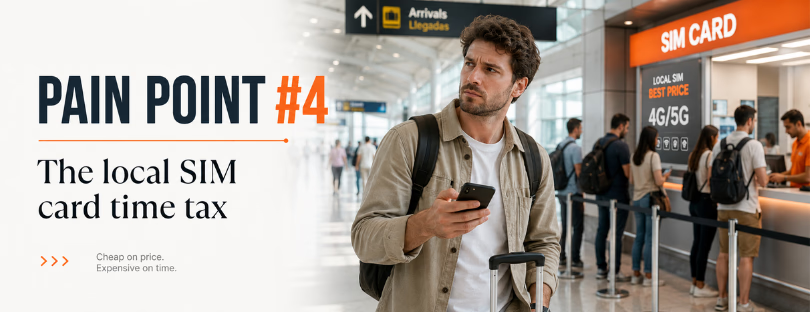
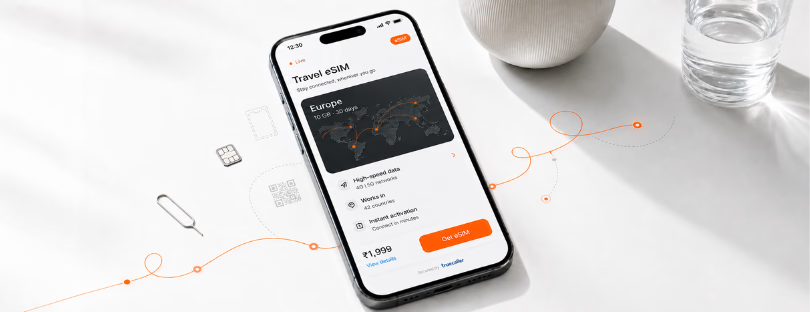
For travellers, the pitch is straightforward: apply online, download the eSIM before leaving home, and use data soon after arriving in Japan. No plastic SIM. No kiosk queue. No confusing roaming surprise.
Unlimited, but still worth reading carefully
Japan SIM for MyJapan+ offers four unlimited data “toppings”: 24 hours, 3 days, 5 days and 7 days. Launch materials also mention campaign pricing, which makes the offer look especially attractive for short trips, city breaks and quick business visits.
That said, “unlimited” should always be read with a little attention. Like most mobile services, performance can depend on network conditions, congestion and certain high-traffic uses such as video or cloud gaming. This does not make the product weak. It just means travellers should understand what unlimited usually means in the real mobile world.
The service looks particularly useful for visitors who want a Japan-specific connection for everyday travel needs: Google Maps, translation, WhatsApp, ride-hailing, restaurant searches, QR payments and social sharing. It may be less ideal for someone who needs a phone number, voice calls, heavy tethering for work, or one regional eSIM covering Japan plus Korea, Taiwan or Southeast Asia in the same trip.
Why this matters
Japan is one of the best examples of why travel connectivity has become a core travel product, not an accessory. The country is easy to explore, but many daily actions are digital: checking train transfers, translating menus, scanning product information, finding local stores, using map layers inside stations and staying reachable in busy urban areas.
READ MORE: Japan Tests Free eSIM for Tourists via Tax Refund
For KDDI, putting Japan SIM inside MyJapan+ extends povo2.0 beyond a telecom storefront and into a partner-led travel channel. For JCB, it makes the app more useful before and during the trip, rather than being only a place for offers after the traveller is already in Japan.
This also says something about the direction of the eSIM market. Global players such as Airalo, Ubigi, Holafly, Nomad eSIM and Saily have trained travellers to expect instant mobile data. Local operators and payment brands are now responding with more embedded, country-specific products that feel closer to the destination experience.
A smarter kind of travel bundle
Japan SIM for MyJapan+ is not trying to be everything for everyone, and that is probably its strength. It is a focused Japan product, attached to a Japan travel app, supported by a major Japanese network group and distributed through a trusted payment brand.
The main limitation is obvious: the early MyJapan+ rollout is tied to JCB’s inbound strategy, beginning with Taiwan, so this is not yet the most open, universal route for every visitor to Japan. Travellers who want multi-country coverage, longer validity or broader app independence may still compare it with established eSIM marketplaces or airport SIM options.
But strategically, this is the right move. The future of travel connectivity will not be won only by whoever has the cheapest gigabytes. It will be won by whoever makes connectivity appear at the exact moment the traveller needs it. KDDI and JCB have understood that the best eSIM experience may not start in a telecom app. It may start inside the travel journey itself.