Get eSIM Travel by NOS Unveils World Cup 26 eSIM
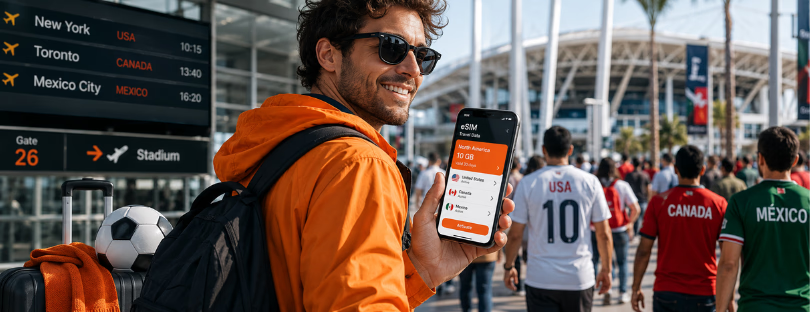
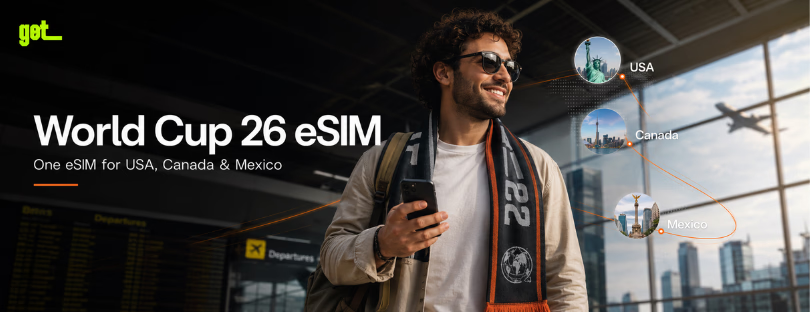
Get eSIM Travel by NOS has launched a dedicated “World Cup 26 eSIM”, aimed at football fans travelling across the United States, Canada and Mexico during the 2026 tournament. The plan is available from June until 19 July 2026, matching the rhythm of a World Cup that is bigger, longer and more geographically spread out than anything football fans have dealt with before.
The entry plan starts at €19.99 for 5GB valid for seven days, while the product page also lists 10GB for 15 days at €29.99, 30GB for 30 days at €59.99 and 60GB for 60 days at €99.75. It is managed through the Get App, with installation available directly in the app or manually through instructions sent by email.
That sounds simple, but the real story is the timing. World Cup 2026 is not a single-country travel event. It is a three-country tournament across 16 host cities, with fans potentially moving from Mexico City to Los Angeles, Toronto, New York, Dallas, Miami or Vancouver depending on fixtures, tickets and team progress. For that kind of trip, old roaming habits start to look very expensive very quickly.
Why does this tournament change connectivity?
Most football travel is already messy. You are checking tickets, hotel bookings, transport apps, fan zones, stadium rules, maps, ride-hailing, airline updates and messaging groups. Now add three countries, different mobile networks, different roaming agreements and thousands of fans trying to upload videos at the same time.
That is where a regional eSIM becomes useful. Instead of buying a separate plan for each destination or gambling on your home operator’s roaming rate, Get eSIM Travel is packaging the tournament as one travel corridor. The plan is data-only, so it does not include traditional calls or SMS, but that is not necessarily a problem for most travellers. WhatsApp, iMessage, FaceTime, Telegram, Google Maps, Uber, airline apps and ticketing platforms are already the real travel layer for many fans.
READ MORE: World Cup eSIM Offers Rise Ahead of FIFA 2026
Hotspot support is also important. Fans often travel in pairs or groups, and being able to share a connection with a second device, tablet or friend can matter when you are navigating a new city after midnight or trying to keep a laptop connected between matches.
What the plan gets right
The strongest part of this offer is the focus. It is not trying to be a generic global eSIM with a football label attached. It is built around the three host markets: the US, Canada and Mexico. That matters because World Cup travel will not behave like normal tourism. Fans may move between countries quickly, stay for short periods, or change routes depending on knockout-stage results.
The pricing also gives travellers some flexibility. A seven-day 5GB plan makes sense for a short group-stage trip. A 15-day 10GB plan fits fans following one team through the early rounds. The 30GB and 60GB options are more realistic for heavier users, especially those who stream highlights, use hotspot, upload video, work remotely between matches or stay for most of the tournament.
READ MORE: World Cup 2026 eSIM Guide: What Fans Must Check
Setup is another plus. The product can be installed through the get app, and the page advises travellers to install the eSIM before the trip, then activate data roaming on arrival. That is exactly the kind of instruction casual eSIM users need. Many people still confuse installing an eSIM with activating a plan, so clearer guidance reduces stress at the airport.
Where it may not fit
This is not the right plan for everyone. Travellers who need a local phone number, traditional SMS verification or voice calls should pay attention before buying, because the package is data-only. That is standard for many travel eSIMs, but it still matters when banks, ticketing accounts or ride-hailing apps rely on SMS codes.
There is also one area where the offer could be clearer: network transparency. The product page says speed goes up to 5G, depending on available local networks and that specific networks by region are available separately. For casual users, that may be enough. For power users, business travellers or creators planning to upload from stadium zones, clearer upfront network names, fair usage details and latency expectations would make the buying decision easier.
The wider eSIM race
The World Cup is becoming a test case for travel eSIM marketing. Providers such as Airalo, Saily, Ubigi, Nomad eSIM, GigSky, Yesim and other regional players are all likely to compete aggressively around the tournament because football fans are a perfect eSIM audience: international, mobile-first, price-aware and highly dependent on data.
READ MORE: FIFA World Cup 2026 Travel Risks: What You Need to Know
Get eSIM Travel’s advantage is that it has created a dedicated product for the event rather than leaving users to assemble separate country plans. Holafly-style unlimited offers may appeal to heavy video users, while Airalo or Nomad eSIM may attract travellers who prefer familiar global marketplaces. Saily may appeal to users who want a polished app-first experience. Get’s offer sits somewhere practical: clear regional coverage, several data tiers and tournament-specific positioning.
Final thoughts
The World Cup 26 eSIM from Get eSIM Travel is a smart product because it understands the real problem of this tournament. Fans are not just visiting one destination. They are navigating a football map spread across three countries, multiple time zones and very different travel conditions.
It is not the most advanced offer on the market, and it would benefit from stronger network-level detail. But for travellers who mainly need mobile data, maps, messaging, ticket access and hotspot support across the US, Canada and Mexico, it is a timely and useful option.
The bigger trend is clear: major sports events are becoming connectivity moments. Fans no longer ask whether they need data abroad. They ask which provider will keep them online without roaming shock, confusing activation or country-by-country planning. In that sense, this launch is not just about one eSIM. It is another sign that travel connectivity is moving from afterthought to essential trip infrastructure.