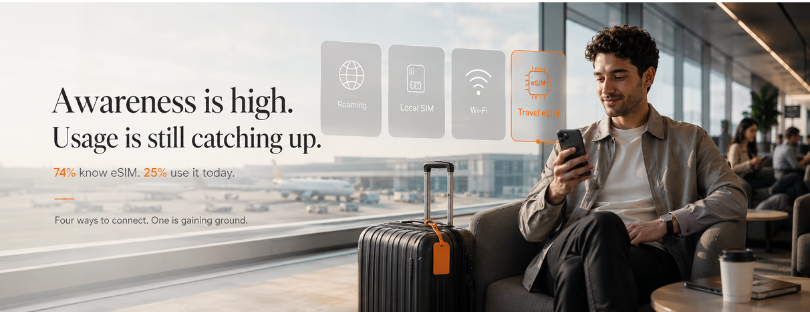
How eSIM Is Changing Traveller Behaviour in 2026
For years, travel connectivity was treated like a small admin problem. You booked flights, found a hotel, packed chargers, then maybe thought about roaming on the way to the airport. If the price looked scary, you waited for hotel Wi-Fi. If you were organised, you bought a local SIM at arrivals.
That behaviour is starting to look old.
In the eSIM era, travellers are becoming less tolerant of “I’ll sort it out when I land.” They expect to arrive already connected, open maps before passport control, message the driver, pay for transport, and share their arrival without hunting for a plastic SIM card. The shift is about confidence.
Before departure is the new arrivals hall
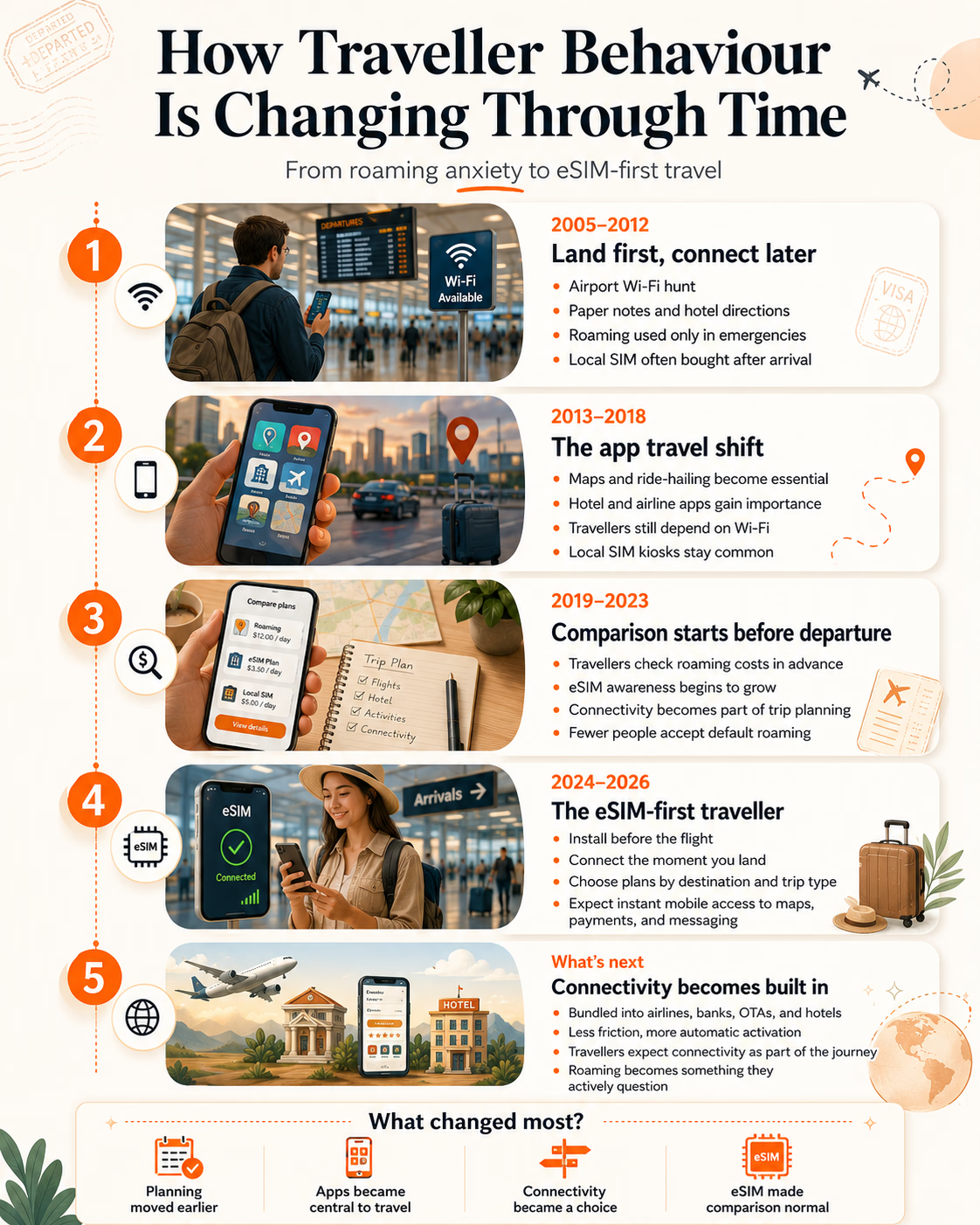
One of the clearest behavioural changes is timing. Travellers used to solve connectivity locally. Now many solve it before departure, often while packing, checking in online, or reading destination tips.
That sounds small, but it changes the market. The old roaming model depended on inertia. Most people did not compare anything because the default operator plan was already attached to the phone. Travel eSIMs interrupt that default. Suddenly the customer is browsing Airalo, Holafly, Yesim, Ubigi, Nomad eSIM, GigSky, or a niche provider before the home operator enters the conversation.
The traveller is no longer simply accepting a roaming SMS pass. They are comparing destination, validity, data size, hotspot rules, app reviews, and installation steps. Some still choose their home operator because it is simpler, especially business travellers with company plans. But the habit of checking alternatives is becoming normal.
Travellers now think in use cases
The eSIM market has made travellers more precise about what they actually need.
A weekend in Milan is not the same as three weeks across Thailand, Vietnam, and Singapore. A digital nomad on video calls is not the same as a family using maps, WhatsApp, and ride-hailing. Someone transiting through Istanbul may only need enough connectivity to manage transfers.
READ MORE: Why Data-Only eSIMs Still Create Problems for Travelers
Traditional roaming usually sold broad bundles or daily passes. Travel eSIMs encourage people to think in smaller units: destination, duration, device, and price per gigabyte. That is good for smarter buyers, but it can also create fatigue. Too many plans, too many similar claims, and too many “unlimited” offers with fair usage rules buried in the details.
The best providers are reducing decision stress without hiding the trade-offs.
The app is becoming the travel desk
Recent IATA passenger research shows how strongly travel is moving toward mobile-first behaviour, with travellers wanting smartphones to combine payment, identity, loyalty, and journey management. SITA’s passenger technology research points in the same direction: passengers want more control from the devices they already use.
eSIM fits neatly into that pattern. It sits beside mobile boarding passes, digital wallets, ride-hailing, hotel apps, translation tools, biometric airport flows, and live baggage tracking. A traveller without mobile data is not just offline. They are cut off from the operating system of modern travel.
This is why travel eSIMs are spreading beyond specialist apps. Airlines, OTAs, banks, fintechs, loyalty programmes, and hotel groups are starting to see connectivity as a service they can bundle into the journey.
The behaviour is not universal yet
Not every traveller needs an eSIM. In the EU, many people still benefit from regulated roaming. Some casual travellers use little data and are happy with hotel Wi-Fi. Others find installation confusing, especially when phones have multiple SIM settings, QR codes, APNs, or separate voice and data lines.
READ MORE: Why I Stopped Buying a New eSIM Every Trip?
There are also destinations where local SIMs remain strong, especially when travellers need a local number, high data allowances, or very cheap domestic pricing. And for people travelling with older phones, eSIM is simply not an option.
So the behaviour change is real, but uneven. The next wave will need clearer onboarding, more honest plan labels, and fewer lookalike offers.
Operators are losing the invisible advantage
For years, operators owned the customer relationship because they were already inside the phone. eSIM weakens that advantage. It makes connectivity searchable, comparable, and switchable.
GSMA Intelligence has noted that travel eSIM is becoming one of the strongest consumer use cases for eSIM adoption, while Juniper Research expects travel eSIM revenue to grow sharply through 2030. CCS Insight has also framed travel eSIMs as a pressure point for the roaming market. The direction is consistent: travel connectivity is moving from passive roaming to active choice.
That does not mean operators are finished. Some will respond well, especially those that offer transparent roaming bundles, digital activation, and travel eSIM options of their own. But they are now competing with app-native brands built around speed, simplicity, and comparison.
Conclusion about eSIM traveller behaviour
Traveller behaviour is changing because eSIM gives people a new habit: check before you roam.
That habit is more dangerous to traditional operators than any single eSIM brand. Airalo may win one traveller, Holafly another, Yesim another, Ubigi another, and a local SIM may still win in some destinations. But the bigger shift is that the traveller has learned there is a choice.
Once that happens, roaming is no longer invisible. It has to justify itself.
The winners will not necessarily be the cheapest providers. They will be the ones that understand how travellers actually behave now: they plan later, move faster, rely on apps more, expect instant setup, and dislike unpleasant surprises. Increasingly, connectivity is part of deciding how smooth the journey feels in the first place.