eSIM Inventory Problem: The Hidden Stock Behind Digital SIMs
eSIM was supposed to make one telecom headache disappear: stock.
No plastic card. No warehouse. No shipping delay. From the customer side, it feels simple. You buy a plan, scan a QR code or tap an in-app install button, and the connection appears.
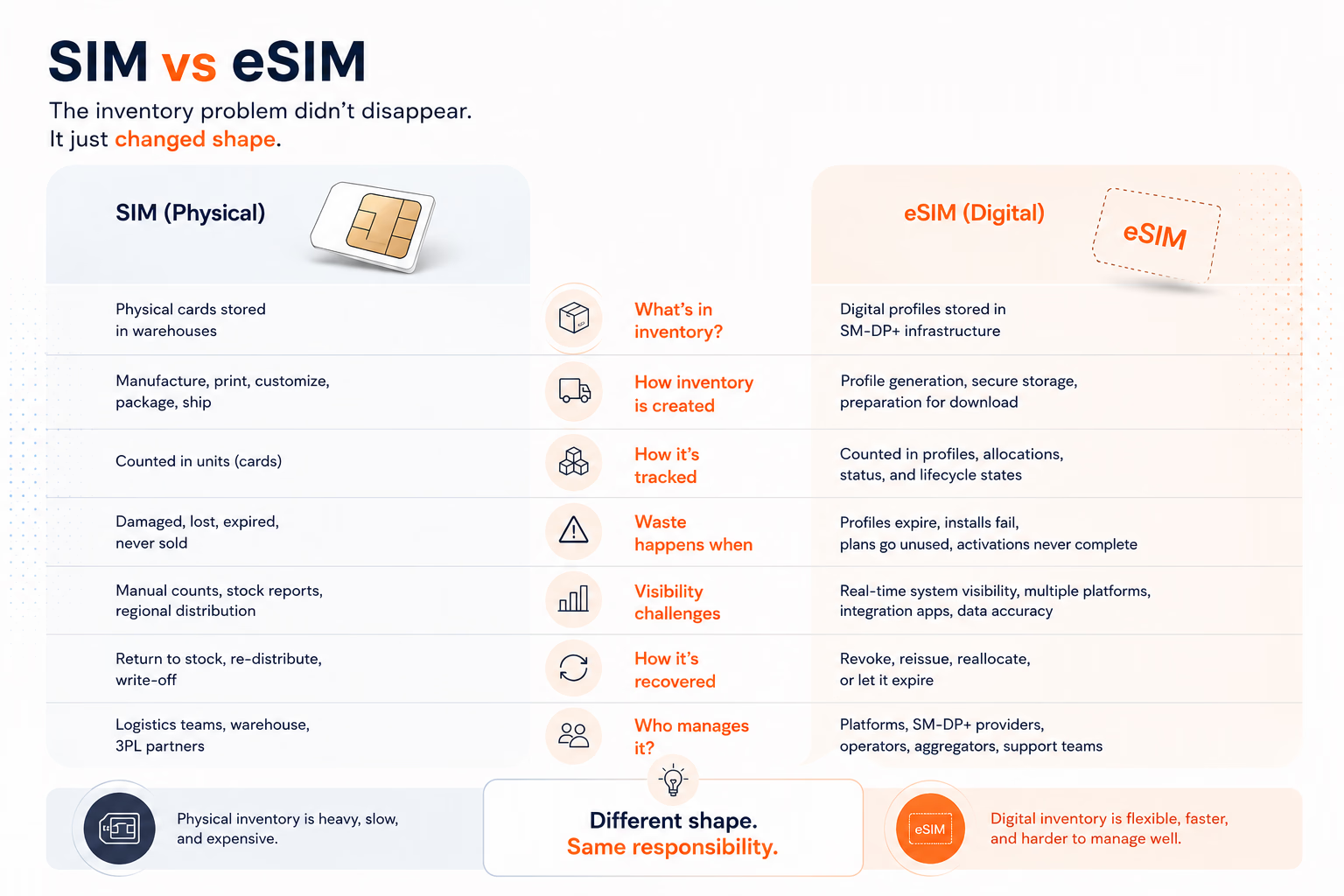
But behind that clean moment sits a different kind of inventory problem. The stock is now a pool of digital profiles, activation codes, provisioning rules, expiry windows, unused allocations, failed downloads, and support cases waiting to happen. The card disappeared. The operational discipline did not.
Digital does not mean limitless
A physical SIM has constraints. Someone has to manufacture it, ship it, count it, and replace it when it is lost. eSIM removes much of that logistics burden. It cuts waste, speeds up distribution, and lets travel brands sell connectivity without sending anything through the post.
But an eSIM profile is not just a “digital file” sitting in an endless folder. It has to be securely stored, matched to a subscription, delivered through an SM-DP+ platform, downloaded to the right eUICC, and activated in the right commercial context.
READ MORE: The Future Is Not Roaming vs eSIM. It Is Friction vs Frictionless
If profiles are reserved but never used, that is still inventory inefficiency. If activation systems cannot keep up, the customer experiences it as “the eSIM does not work.” If expiry rules are unclear, the problem moves from warehouse management to customer support.
Where the problem lives
The technical heart of consumer eSIM is remote SIM provisioning. The SM-DP+ prepares, stores, protects, and delivers the eSIM profile to the user’s device. The eUICC in the phone stores the profile and allows it to be installed or activated.
That sounds tidy. In practice, every step creates operational questions.
How many profiles are available for a destination? Are they pre-generated or generated on demand? How long can a QR code remain valid? What happens when a customer buys a plan but never installs it? Can the profile be reissued after a failed installation? Who owns support when the app says installed, but the network does not attach?
These questions are not glamorous, but they decide whether an eSIM product feels premium or fragile.
This matters even more as eSIM moves into travel platforms, banks, airlines, employee mobility tools, and IoT deployments. A small provider can sometimes fix issues manually. A bank or airline cannot rely on heroic support teams and spreadsheets.
The reseller layer
The travel eSIM market has grown partly because distribution has become easier. A brand can add eSIMs to its app, website, loyalty program, booking flow, or employee travel service without becoming a full mobile operator.
That is the opportunity. It is also where inventory gets messy.
Once eSIM becomes embedded, the front-end seller may not control the underlying network, profile lifecycle, or provisioning platform. The customer, however, does not care. If they bought connectivity from an airline app, they blame the airline. If the QR code fails inside a booking flow, they do not separate the reseller, aggregator, SM-DP+ vendor, and mobile operator.
READ MORE: Enterprise eSIM: Why Mobile Provisioning Still Lags
For B2B buyers, this is the real lesson: do not evaluate eSIM only by country coverage and wholesale price. Ask about lifecycle management, activation reliability, refund logic, reissue rules, API visibility, expiry handling, reporting, and support escalation. Cheap data is nice. Clean operations are what protect the brand.
Operators still matter
There is a fashionable idea that eSIM weakens traditional operators because distribution can move to apps, platforms, and marketplaces. That is partly true.
But operators are not disappearing. Someone still needs network access, subscriber management, compliance, roaming relationships, quality controls, and profile governance. The best digital experience still depends on boring telecom competence behind it.
This is where Thales, G+D, IDEMIA, Kigen, 1GLOBAL, and other eSIM infrastructure players become important. They are not usually the brands a traveler sees at checkout, but they help make the checkout promise technically possible. GSMA specifications give the market a common framework, but implementation quality is where providers separate themselves.
What needs to improve
The market still talks too much about coverage maps and too little about activation quality. It celebrates instant delivery, but rarely explains what happens when instant delivery fails.
A more mature eSIM market would be clearer about profile states: purchased, issued, downloaded, installed, activated, expired, deleted, and refunded. It would give partners better dashboards.
READ MORE: Roaming Shock Created the eSIM Market. Trust Will Decide Its Winners
A casual traveler buying a weekend plan probably does not want a technical essay before checkout. But B2B partners, enterprise buyers, travel platforms, and serious resellers need the operational layer. Otherwise, eSIM becomes another digital product sold beautifully and supported painfully.
Final signal
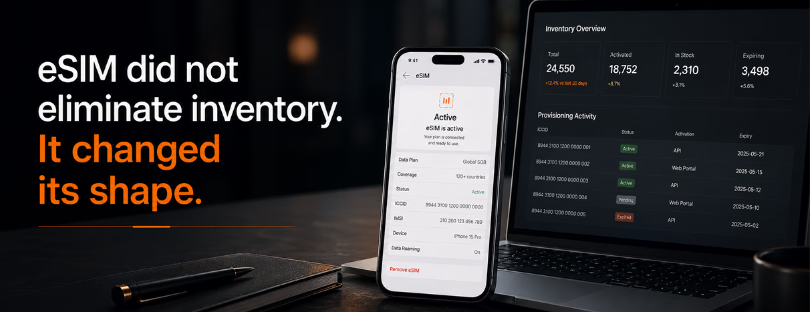
The eSIM market did not eliminate inventory. It changed its shape.
Plastic SIM inventory was visible, countable, and annoying. eSIM inventory is quieter, more flexible, and easier to underestimate. A physical SIM shortage looks like an empty drawer. A digital profile problem looks like a bad app review, a failed trip, or a corporate buyer quietly deciding not to renew.
The next eSIM phase will not be won only by brands with the most destinations or the lowest gigabyte price. It will be won by those who understand lifecycle management as a product feature, not back-office plumbing.
For airlines, fintechs, hotels, OTAs, and enterprise mobility teams, the message is simple: eSIM is not just something you add to your checkout. It is an operational promise. And promises, even digital ones, still need inventory control.