Not because mobile operators could not deliver connectivity abroad. They could. Often very well. The problem was the emotional memory attached to it. Travellers remembered the surprise bill, the confusing SMS warning, the “daily pass” that sounded cheap until it repeated itself across a long trip, or the moment they turned mobile data off in another country because they simply did not want to risk it.
That distrust created the opening for travel eSIMs.
The early promise was beautifully simple: choose a plan before you fly, install it digitally, connect when you land, and avoid roaming surprises. It felt like control. It felt like the opposite of waiting for your operator to tell you what your holiday data had just cost.
That is why the travel eSIM market grew so quickly. Juniper Research expects global travel eSIM revenue to rise from $1.8 billion in 2025 to $8.7 billion by 2030, a 380% increase. It also described travel eSIMs as a direct challenge to traditional roaming players.
Now eSIM has its own trust test
The irony is obvious. eSIMs grew because travellers were tired of telecom confusion. But some eSIM providers are now recreating a softer version of the same problem.
Not with giant roaming bills, but with vague language.
“Global” can mean many things. “Unlimited” can hide fair usage rules. “High-speed” may depend on country, network partner, congestion, routing, and local conditions. “Valid for 30 days” can be misunderstood if the customer does not know when the clock starts. Hotspot use may be allowed, restricted, or buried in the terms. Refunds may sound easy until a user has already scanned the QR code.
That is where the next phase of the market will be decided. Not by who shouts the lowest price. Not even by the one who lists the most destinations. The winners will be the brands that explain the boring details before the traveller has a problem.
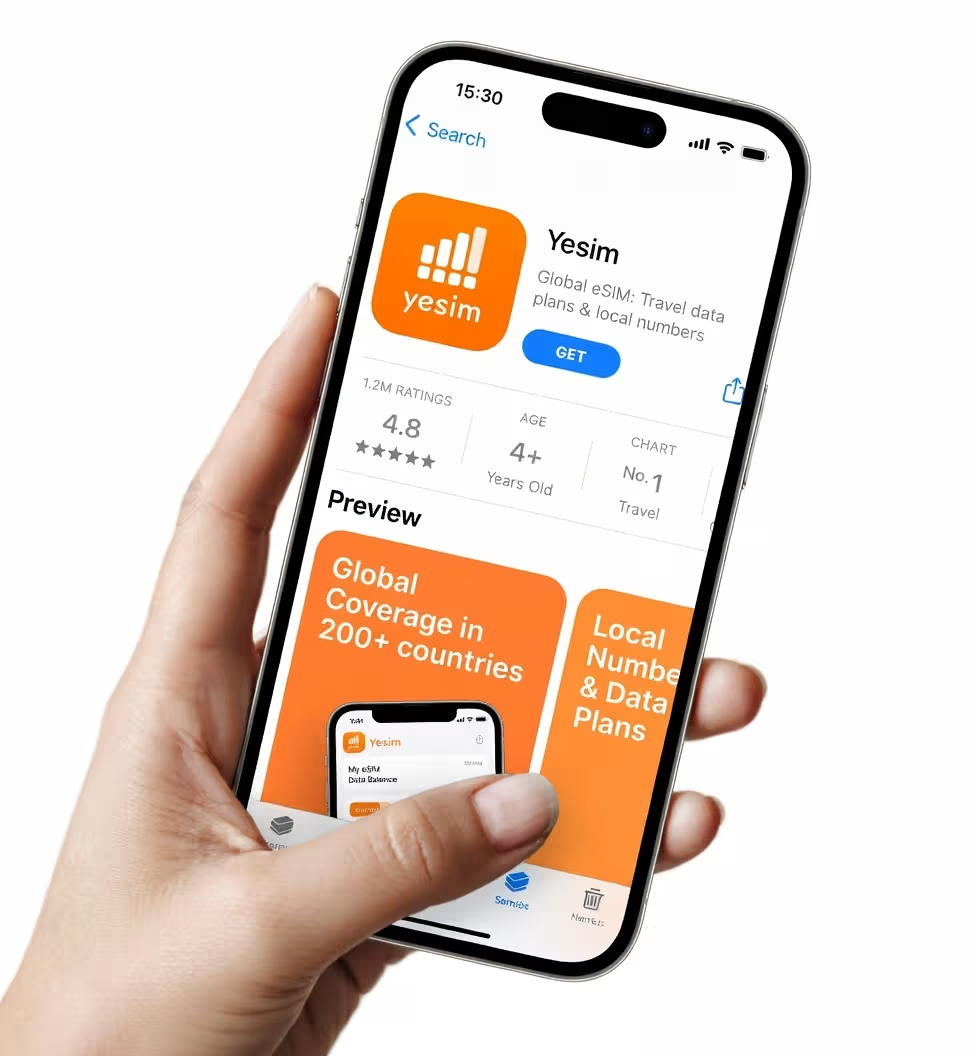
This is where Yesim’s positioning becomes interesting. Its global eSIM offer is built around prepaid mobile data for travel, with global and regional options, no long-term contract, app-based setup, and coverage across more than 200 destinations. Yesim also promotes 4G, 5G and LTE access in major travel areas, depending on destination and network availability.
That matters because the market is moving from “Can I buy data?” to “Can I understand what I bought?”
The best brands explain the uncomfortable parts
A premium eSIM experience is not only about a polished app. It is about reducing doubt.
A traveller does not really want gigabytes. They want maps to load outside the airport. They want WhatsApp to work in the taxi. They want hotel check-in, ride-hailing, payments, boarding passes and work messages to behave normally. Connectivity is emotional before it is technical.
So the best eSIM providers need to explain five things clearly: coverage, throttling, validity, hotspot use and refunds.
Coverage should not stop at “200+ destinations.” It should help users understand where the plan works, what type of plan they are buying, and whether the experience can vary between countries. Throttling should be written in normal human language, not hidden behind fair-use fog. Validity should be obvious: when the plan starts, when it ends, and what happens if the trip changes.
Hotspot rules are also becoming more important. A solo traveller may not care. A business traveller, couple, family, or digital nomad certainly will. Refunds are even more sensitive. Once an eSIM has been installed or activated, refund logic can become complicated, so brands need to be upfront.
Yesim has an advantage here if it continues leaning into practical clarity. Its app-led model, prepaid structure, global packages, and no-roaming-fee positioning already answer the first pain point. The next step for the whole category is to make the small print feel less small.
More on Alertify
Follow the latest Yesim news
eSIM updates, global connectivity insights, and travel data stories in one place.
Explore news →
Why is this bigger than roaming?
Traditional telecom players are not disappearing from this story. They still own much of the network reality behind the scenes, and many are now responding with stronger travel offers of their own. Juniper has already pointed to more mobile operators entering the travel eSIM market as competition intensifies.
People are now used to comparing connectivity like they compare flights, hotels, insurance, and airport transfers. They want control before departure. They want visible pricing. They want to avoid the old roaming anxiety. That shift is difficult to reverse.
For eSIM providers, this is good news and bad news.
The good news: the category has earned attention. The bad news: attention brings scrutiny. Travellers will not forgive eSIM brands for becoming the new version of the thing they escaped.
The trust era
The first travel eSIM wave was built on price and convenience. The next one will be built on credibility.
Yesim fits the direction of the market because it sells what modern travellers actually want: prepaid, app-based connectivity that can be arranged before the trip and used across a wide international footprint. But even strong eSlM brands will have to compete on something deeper than coverage counts.
The future winner is not simply the provider with the biggest map or the loudest “global” claim. It is the provider that makes the traveller feel informed before payment, protected after purchase, and supported if something goes wrong.
Roaming shock created the market. Trust will decide who keeps it.
Driven by wanderlust and a passion for tech, Sandra is the creative force behind Alertify. Love for exploration and discovery is what sparked the idea for Alertify, a product that likely combines Sandra’s technological expertise with the desire to simplify or enhance travel experiences in some way.