eSIM for Nokia
For a long time, eSIM felt like a feature reserved for iPhone owners, Google Pixel fans, Samsung Galaxy users, and a few premium Android devices. Nokia was not usually the first brand people mentioned when talking about digital SIM technology.
That is changing.
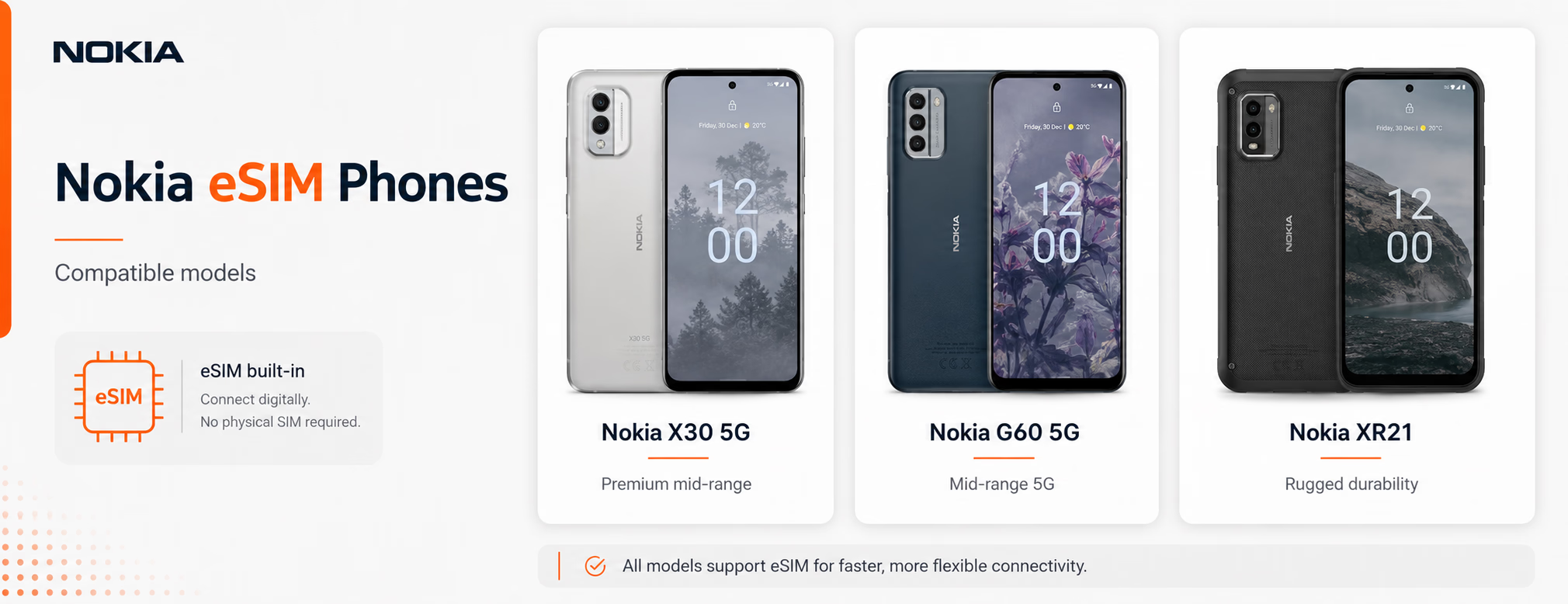
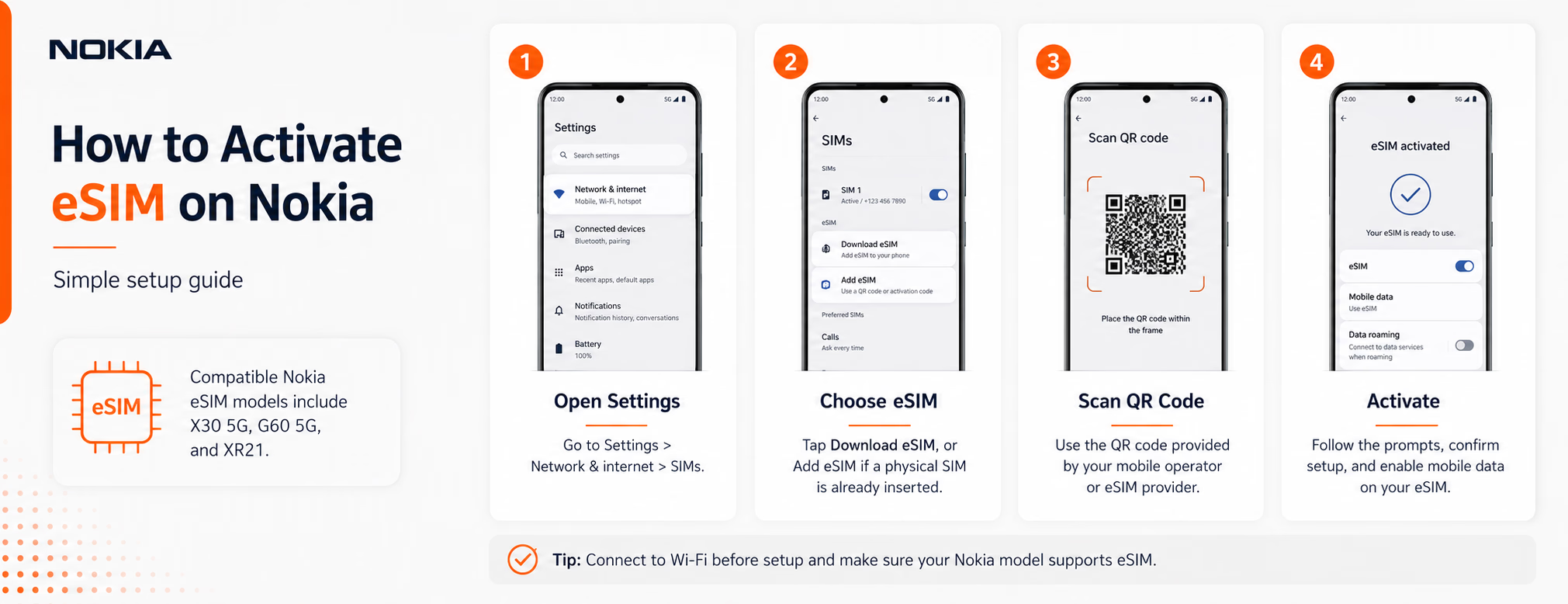
Several modern Nokia smartphones now support eSIM, including the Nokia X30 5G, Nokia G60 5G, and Nokia XR21. For travellers, business users, digital nomads, and anyone tired of swapping tiny plastic SIM cards at the airport, that matters. It means some Nokia users can now download a mobile plan directly to the phone, activate it through a QR code, and connect abroad without buying a physical SIM card.
According to HMD’s official specifications, the Nokia G60 5G includes NFC + eSIM. At the same time, the Nokia XR21 supports eSIM and nano SIM, with a maximum of two SIMs depending on the model and operator setup. HMD’s official user guides also confirm that Nokia eSIM activation requires Wi-Fi and is managed through Android’s network settings.
The Nokia eSIM phones to know
The most relevant Nokia eSIM phones right now are not many, but they cover three useful user types.
The Nokia X30 5G is probably the most polished option. It sits in that premium mid-range category where Nokia tried to combine sustainability, clean design, 5G, and long-term usability. For travellers who want a lighter, more refined device rather than a flagship phone, it makes sense.
The Nokia G60 5G is more practical. It is a mid-range 5G phone with eSIM support, a 4,500 mAh battery, USB-C, NFC, and the kind of everyday spec sheet that suits people who simply want a reliable Android phone without spending flagship money. HMD lists eSIM directly in the connectivity section, which is important because eSIM support can vary by model and region.
The Nokia XR21 is the interesting one for a different reason. It is rugged, tougher, and designed for people who are harder on their devices. Think field workers, adventure travellers, logistics teams, outdoor professionals, or anyone who does not want to baby their phone. HMD lists eSIM support alongside nano SIM options, and the device also carries IP68/IP69K protection, which puts it in a more durable category than most travel eSIM phones.
How to activate eSIM on Nokia
The process is fairly simple, assuming your Nokia model supports eSIM and your operator or eSIM provider offers a compatible plan.
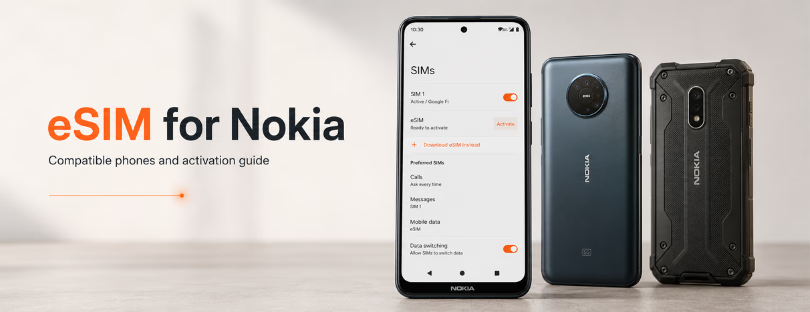
On compatible Nokia phones, go to:
Settings > Network & internet > SIMs
From there, choose Download eSIM if there is no physical SIM inserted, or Add eSIM if you already have a SIM in the phone. You will usually be asked to scan a QR code from your mobile operator or travel eSIM provider. HMD’s user guides also note that you need a Wi-Fi connection to activate an eSIM if you do not already have mobile data active.
One small but important detail: eSIM does not automatically mean your phone can run every combination at once. Some Nokia models may allow a physical SIM plus eSIM, while others depend on single-SIM or dual-SIM variants and operator support. HMD says that on single-SIM phones, only one SIM, physical or eSIM, can be active at a time, while dual-SIM models can use two physical SIMs or a physical SIM and an eSIM.
Why this matters for travellers
For travel, eSIM support on Nokia is not just a convenience feature. It changes how people use the phone abroad.
A Nokia user travelling from Europe to the United States, Turkey, Japan, or the UAE can keep their regular SIM in the phone and add a travel eSIM for data. That means no searching for a local SIM kiosk, no removing the home SIM, and no hoping airport Wi-Fi works long enough to finish setup.
It also makes Nokia more relevant in the eSIM conversation. The market has been dominated by iPhone, Samsung, and Pixel because those devices pushed eSIM into the mainstream earlier. Nokia’s role is quieter, but still useful: it brings eSIM into more affordable, practical, and durable Android devices.
That is good for adoption. eSIM should not only be a premium flagship feature. If the technology is meant to replace plastic SIM cards over time, it needs to work on mid-range and rugged phones too.
What to check before buying
Before buying a Nokia phone specifically for eSIM, check three things.
First, confirm the exact model number and regional version. eSIM support can vary depending on market, operator, and device variant.
Second, check whether your mobile operator or travel eSIM provider supports Nokia Android activation. Most QR-code eSIMs should work, but operator compatibility still matters.
Third, check whether you need dual-SIM functionality. If you want to keep your home SIM active for calls and messages while using travel eSIM data, make sure the device version supports that combination.
The real takeaway
Nokia is not leading the eSIM story in the way Apple did with eSIM-only iPhones in the United States first, but now, and in Europe, or the way Samsung and Google pushed eSIM across many Android flagships. But Nokia’s eSIM support is still meaningful because it brings the technology into a different type of device: practical, mid-range, sustainable, and rugged.
That is where eSIM adoption becomes more normal.
The Nokia X30 5G, G60 5G, and XR21 are not trying to be luxury travel phones. They are everyday Android phones that now support a more modern way to connect. For Alertify readers, that is the useful part. If you already use Nokia, or you want a phone that can handle travel connectivity without becoming another expensive flagship purchase, eSIM support is now something worth checking seriously.