If you’ve ever been there, you’re not alone. eSIM sounds simple on paper, but the reality depends heavily on one thing: your device.
So let’s break it down properly. No fluff, no generic lists, just what actually matters when it comes to eSIM compatible phones in 2026.
What “eSIM compatible” actually means
Before jumping into devices, let’s clear something up.
An eSIM-compatible phone is not just a phone that supports eSIM. It also needs:
Carrier support (not all markets enable it)
Unlocked status (locked phones can block eSIM profiles)
Updated software (older OS versions can limit functionality)
So yes, your phone might technically support eSIM, but still not work the way you expect when traveling.
That’s where most frustration comes from.
Apple: The company that forced the shift
Let’s be honest. If it weren’t for Apple, we wouldn’t be talking about eSIM this seriously.
Starting with the iPhone XS, Apple quietly introduced eSIM. Then they doubled down. And now? In some markets, physical SIM trays are disappearing completely.
eSIM-compatible iPhones
iPhone XS, XS Max, XR
iPhone 11, 11 Pro, 11 Pro Max
iPhone 12, 13, 14, 15, and newer
iPhone SE (2nd generation and newer)
If you’re using any iPhone from the last few years, you’re covered.
But here’s the real shift: Newer iPhones are designed with eSIM as the default, not the backup.
For travelers, that changes everything. No more swapping tiny plastic cards at airports. Just scan a QR code, and you’re online.
Here’s the reality: Outside Apple, Samsung, and Google, eSIM support is still fragmented.
So if you’re buying a phone specifically for travel or eSIM use, this is where you need to be careful.
Tablets, laptops, and beyond
eSIM isn’t just for phones anymore.
Devices supporting eSIM
iPads (Pro, Air, and newer standard models)
Windows laptops with cellular connectivity
Some smartwatches
This matters more than people think.
We’re moving toward a world where your connectivity isn’t tied to a single device. Your phone, laptop, and tablet can all run on the same eSIM ecosystem.
That’s where things get interesting.
Why compatibility matters more than ever
A few years ago, this was optional.
Today? It’s becoming essential.
Here’s why:
Travel is going fully digital
Airlines, hotels, payments… everything is already app-based.
Connectivity is the last piece.
eSIM removes friction:
No physical stores
No waiting
No language barriers
But only if your phone supports it properly.
Roaming costs are still broken
Even in 2026, traditional roaming is unpredictable and expensive.
eSIM gives users:
Transparent pricing
Local or regional plans
Instant activation
But again, none of that matters if your device isn’t compatible.
The ecosystem is accelerating
We’re seeing:
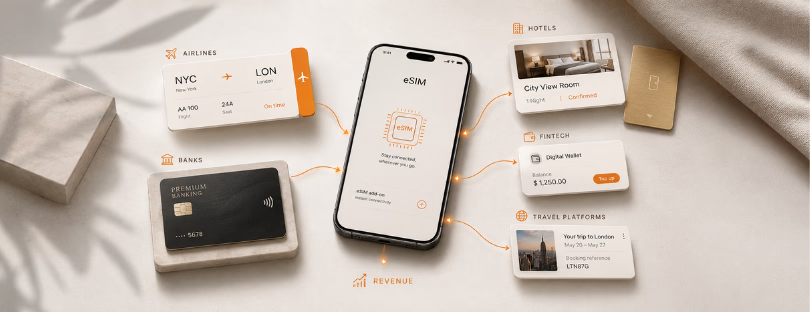
Airlines bundling eSIMs
Banks integrating connectivity
Travel platforms embedding data plans
This is no longer just telecom. It’s infrastructure.
And your phone is the entry point.
How to check if your phone supports eSIM
Simple checklist:
1. Check device settings
On most phones:
iPhone: Settings → Cellular → Add eSIM
Android: Settings → Network → SIM / eSIM
If you see an option to add eSIM, you’re good.
2. Check model number
Some devices support eSIM only in specific regions.
This is especially common with:
Samsung
Chinese brands
3. Make sure it’s unlocked
Carrier-locked phones can block eSIM usage.
This is a big one, especially with US devices.
The biggest mistake people make
They assume newer = compatible.
Not always.
A mid-range phone released in 2025 might not support eSIM, while a flagship from 2020 does.
Driven by wanderlust and a passion for tech, Sandra is the creative force behind Alertify. Love for exploration and discovery is what sparked the idea for Alertify, a product that likely combines Sandra’s technological expertise with the desire to simplify or enhance travel experiences in some way.