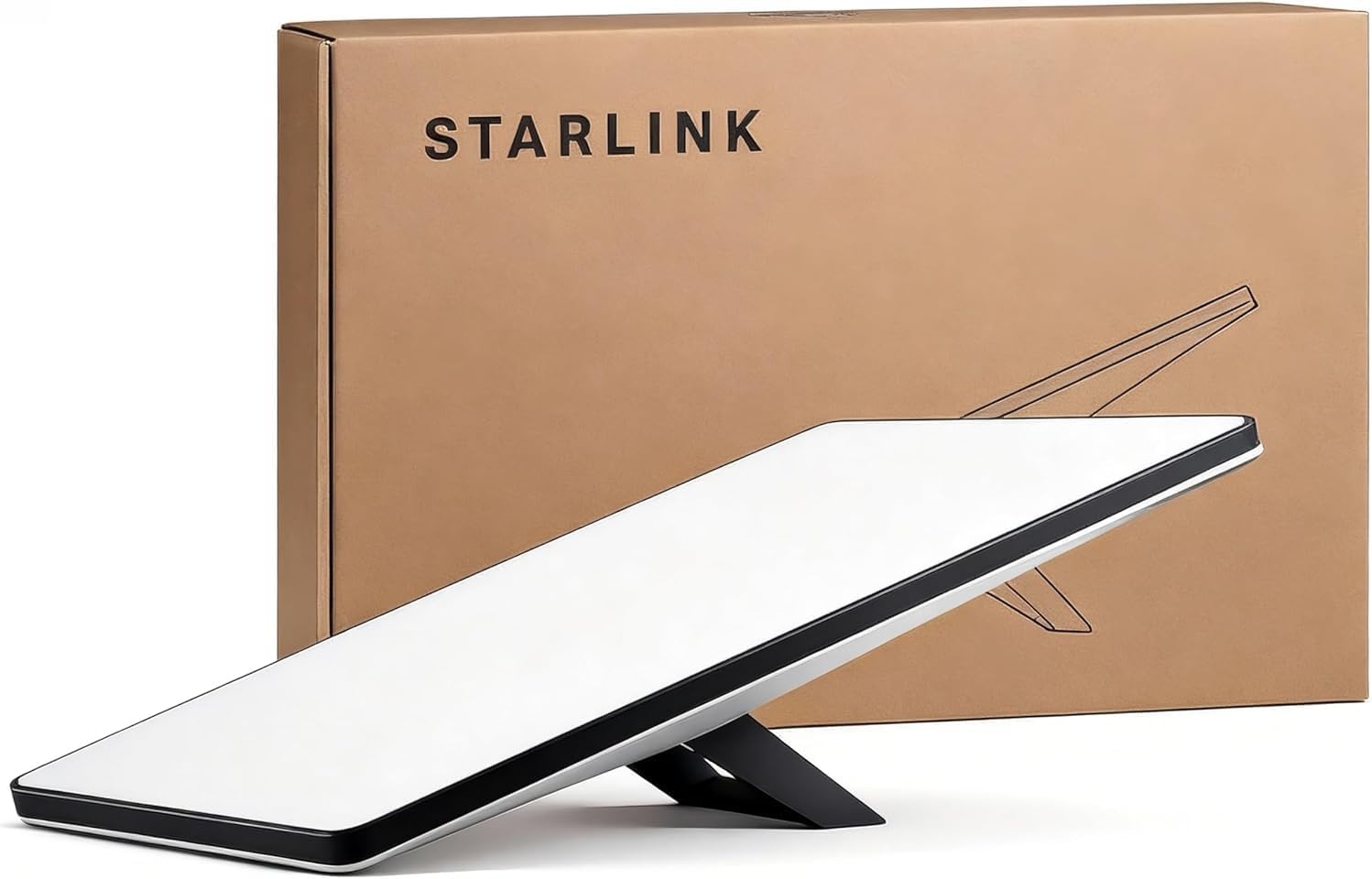
China Starlink Rival: The New Race for Satellite Internet
For years, “China Starlink” sounded like shorthand for something that might happen one day. A vague future project. A state-backed ambition. Another big constellation plan on a slide deck.
That phase is over.
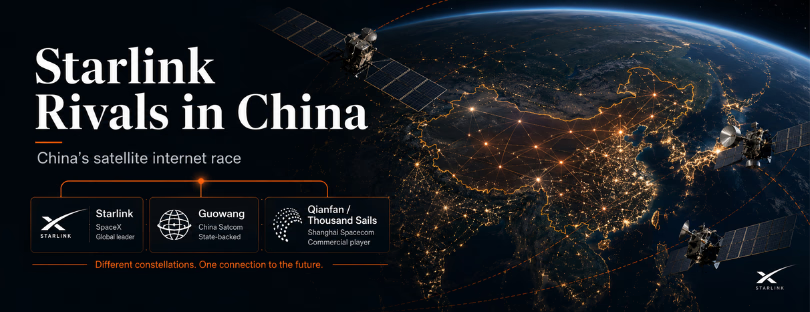
China now has several serious low Earth orbit satellite internet projects moving from policy language into actual launches. The two names to watch are Guowang, often translated as “national network,” and Qianfan, also known as Thousand Sails or SpaceSail. Both are widely seen as China’s answer to Starlink, but they are not copies in the simple sense. They reveal something bigger: satellite internet is becoming part telecom infrastructure, part geopolitical tool, part export product.
Starlink created the market conversation. China is trying to make sure it does not depend on it.
There is also a simple domestic reason this matters: Starlink is not officially available to buy or use in mainland China. Satellite coverage and legal service availability are not the same thing. Starlink satellites may pass overhead, but without local regulatory approval, the service cannot be sold as a normal consumer or business product in China. That gives Beijing’s own low-Earth-orbit projects a very clear logic: this is not only about competing with SpaceX abroad, but also about building a sovereign connectivity layer at home.
Not one Starlink, but several
The most important thing to understand is that China does not have one single Starlink rival. It has a constellation strategy.
Guowang is the more state-heavy project. It is linked to China SatNet, a state-owned enterprise created to build China’s national LEO satellite internet capability. According to analysis from IFRI, China SatNet was established in 2021 with the mission of developing the country’s “mega-constellation” program known as Guowang.
Then there is Qianfan, the more commercial and internationally visible project. It is backed by Shanghai Spacecom Satellite Technology and has been described in ITU filings and industry reporting as targeting more than 15,000 satellites over time. Wired reported that Guowang aims for nearly 13,000 satellites, while Qianfan plans more than 15,000, which shows the scale of China’s ambition.
That scale matters. Starlink is still far ahead. As of early May 2026, Space.com reported that SpaceX had deployed more than 10,000 Starlink satellites, with over 10,000 operational. China is not close to that operational footprint yet. But it is no longer standing at the starting line either.
Why Beijing cares so much
This is not only about connecting mountain villages, ships, mines, or aircraft. Those use cases matter, of course. Satellite broadband is genuinely useful where fibre, 5G, and traditional fixed networks struggle.
But China’s LEO push is also about sovereignty.
Starlink changed how governments think about connectivity. Ukraine made that obvious. Remote infrastructure, military communications, disaster response, maritime routes, border regions, and aviation are no longer just telecom questions. They are strategic questions.
For Beijing, relying on an American private company led by Elon Musk for future satellite connectivity would be politically uncomfortable at best. For countries outside China, the calculation is also changing. Some governments may want alternatives to Starlink for price reasons, regulatory reasons, or simply because they do not want one company to become the default internet layer in the sky.
That is where Qianfan becomes interesting.
Reuters reported that Brazil is expected to receive satellite internet from China’s SpaceSail in 2026, following an agreement with state-owned telecom company Telebras. The service is aimed at remote areas and public services such as schools and hospitals. This is exactly the kind of market where China’s satellite internet offer could grow: large territory, connectivity gaps, public-sector demand, and a political appetite for alternatives.
The market is getting crowded above our heads
Starlink may be the benchmark, but it is not the only comparison. Amazon’s satellite internet service, now branded Leo, is expected to launch commercially in mid-2026, with major enterprise and aviation partnerships already attached. The Guardian reported that Amazon has customers including Delta Air Lines, JetBlue, AT&T, Vodafone, DIRECTV Latin America, Australia’s national broadband network, and NASA.
Europe is also trying not to be left behind. Eutelsat, which merged with OneWeb in 2023, ordered hundreds of new satellites from Airbus to refresh and expand its LEO network. Reuters reported in January 2026 that the order covers 340 satellites, part of a broader 440-satellite renewal plan.
So the future is not “Starlink versus China.” It is Starlink, China, Amazon, Eutelsat OneWeb, regional telecom alliances, state programs, and enterprise-focused satellite networks all competing for very different customers.
That matters for Alertify readers because satellite connectivity is becoming part of the same conversation as roaming, eSIM, aviation Wi-Fi, maritime connectivity, remote work, and enterprise mobility. The traveller may not care whether a connection comes from fibre, cellular, Wi-Fi, LEO satellite, or a hybrid network. They care whether it works.
The hard part is not announcing satellites
China’s challenge is execution.
Starlink’s advantage is not only that it has many satellites. It has launch cadence, reusable rockets, ground infrastructure, terminals, distribution, software, consumer awareness, and a working commercial model. That is a brutal combination.
China has industrial capacity and state backing, but LEO satellite internet is unforgiving. You need frequent launches, reliable satellites, regulatory approvals, spectrum coordination, affordable terminals, and international partnerships. Wired reported that China’s early LEO efforts have faced issues including deployment pressure, launch bottlenecks, technical irregularities, and the need to meet ITU milestones.
This is where the “China Starlink” label becomes too lazy. Starlink is a product people can buy in many markets today. China’s constellations are still building toward that reality. The ambition is enormous, but the commercial experience is not yet comparable.
Conclusion
China’s Starlink moment is really a signal that satellite internet has entered its infrastructure era.
The first phase was about proving LEO broadband could work. Starlink did that. The second phase is about control, partnerships, and distribution. That is where China, Amazon, Eutelsat OneWeb, and others are now trying to carve out space.
For telecom and travel brands, the message is clear: connectivity is no longer neatly divided into roaming, Wi-Fi, satellite, or eSIM. Those categories are starting to blur. Airlines will compare satellite providers the way they compare payment partners. Governments will compare LEO networks the way they compare 5G vendors. Travel platforms may eventually bundle connectivity without caring whether the signal comes from a tower or a satellite overhead.
China may not have a Starlink equivalent today. But it has decided that the sky is too important to leave to SpaceX alone. And that decision will shape the next decade of global connectivity.